As concrete cures, the core tends to expand due to heat development, but the surface remains constrained and may contract or resist expansion primarily due to cooling. This conflicting behavior introduces internal tensile stresses, particularly at or near the surface, which oftentimes are the weakest part during early age.
If the tensile stresses exceed the early-age tensile capacity of the concrete, surface or internal cracking is bound to occur. So to prevent this, codes and guidelines recommend monitoring both core and surface temperatures.
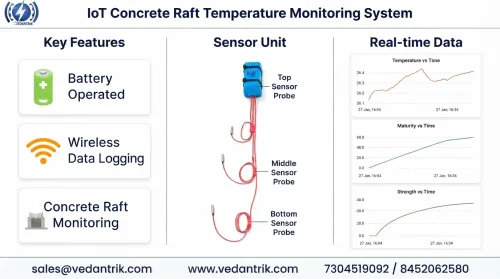
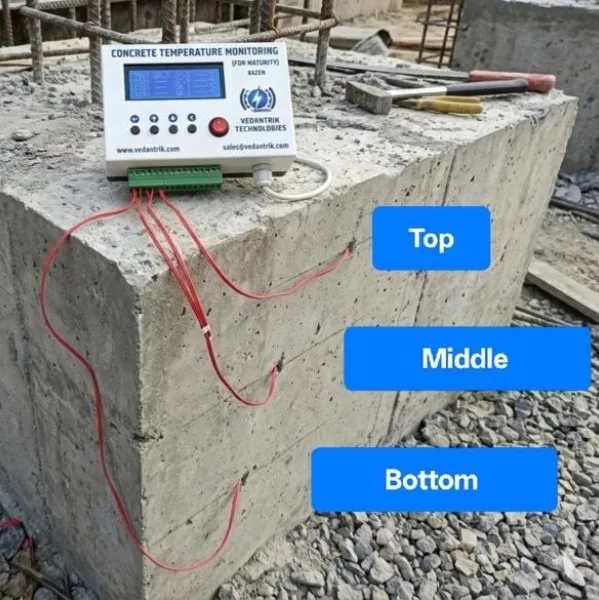
Embedded sensors (thermocouples or digital loggers) placed at typical depths e.g. near center, top and bottom, allow tracking of temperature evolution and gradients over time. ACI 207.1R-05 mentions the importance of instrumentation for mass concrete to help plan for cooling, insulation, or staged placement if necessary.
By understanding core-surface temperature behavior, engineers and site personnel can make informed decisions all aimed at minimizing the risk of thermal stress preserving structural performance and service life.
Keywords