Half-Cell Corrosion Potential (HCP) testing indicates rebar corrosion by measuring the electrical potential difference between embedded steel reinforcement and an external reference electrode.
This potential difference reflects the electrochemical activity of the steel surface. Because corrosion is an electrochemical process, the electrical potential of embedded steel changes when it transitions from a passive state to an actively corroding state. By interpreting these potentials, engineers can estimate the likelihood that corrosion is occurring.
In concrete, steel typically remains passive due to the highly alkaline environment created by hydrated cement. This passivity results in stable, relatively high electrochemical potentials.
When chlorides from deicing salts or seawater penetrate the concrete, or when carbonation reduces alkalinity, the passive layer breaks down. Corrosion begins once the local environment at the steel surface supports anodic and cathodic reactions.
These reactions alter the electrochemical potential of the steel, making it more negative.
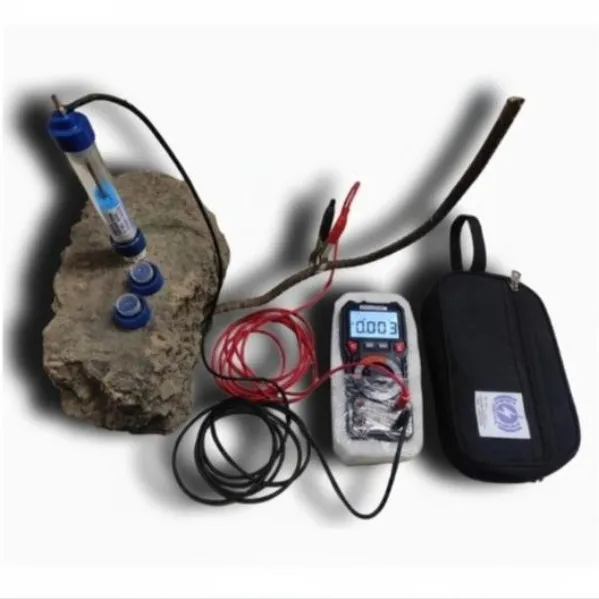
During HCP testing, a copper/copper sulfate reference electrode (CSE) is placed on the concrete surface, and the potential difference between the electrode and the steel is measured using a voltmeter.
Areas where steel is actively corroding typically exhibit potentials more negative than −350 mV (using CSE). According to ASTM C876 guidelines, more negative values indicate a higher likelihood of corrosion activity.
Conversely, potentials more positive than −200 mV generally indicate a low probability of active corrosion. Potentials between −200 mV and −350 mV fall into an uncertain range that requires additional analysis or complementary testing.
It is important to note that HCP testing identifies corrosion probability, not corrosion rate. This distinction means that a highly negative reading signals likely corrosion but does not quantify how fast the steel is deteriorating.
For this reason, engineers often combine HCP data with measurements of concrete resistivity or polarization resistance to evaluate both the potential and rate of corrosion.
HCP readings are often displayed as contour maps, which visually identify corrosion-prone zones across a structure. These maps help pinpoint localized problem areas such as joints, edges, or regions exposed to chlorides or moisture.
By identifying anodic regions (where corrosion initiates) and cathodic regions (where reactions are sustained), the test provides a clear picture of electrochemical conditions within the structure.
In summary, HCP indicates rebar corrosion by using potential measurements to infer the electrochemical state of embedded steel, making it an invaluable tool in structural diagnostics.
Keywords