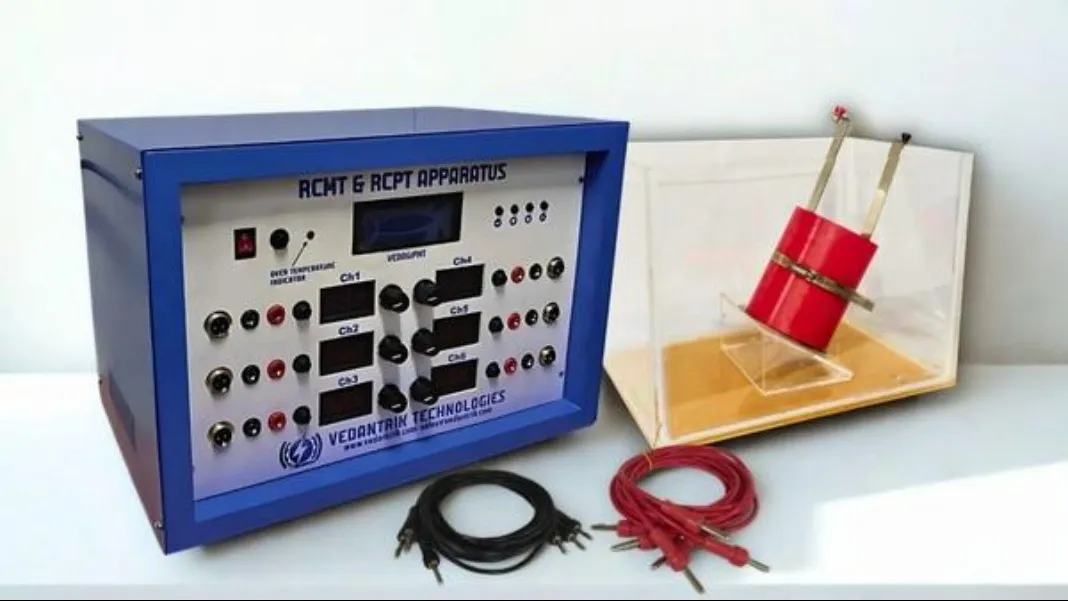
The Rapid Chloride Migration Test involves clear and systematic steps designed to ensure consistent and reliable measurement of chloride transport. The procedure begins with preparation of cylindrical concrete specimens, typically 100 mm in diameter.
After curing usually for 28 days unless otherwise specified—the cylinders are cut into 50 mm–thick discs. The lateral surfaces of each disc are sealed with epoxy to prevent lateral ion movement.
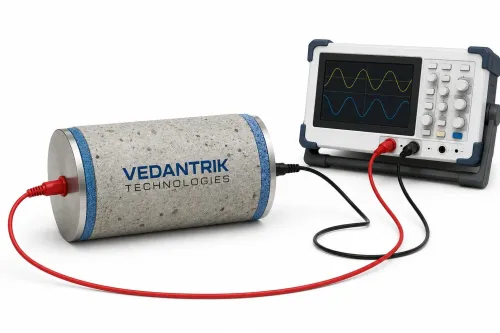
The test cell consists of two reservoirs. One side contains a 10% sodium chloride (NaCl) solution, and the other contains a 0.3 M sodium hydroxide (NaOH) solution. The disc is positioned between the reservoirs, and electrodes are placed in each solution.
A voltage source applies a direct current across the specimen, driving chloride ions from the NaCl side toward the NaOH side.
Test duration varies based on electrical resistivity.
The voltage may be adjusted according to guidance in NT Build 492 to ensure effective but controlled migration. After the test, the specimen is split axially and sprayed with silver nitrate.
The reaction between chloride ions and silver nitrate produces a visible boundary that marks chloride penetration depth. This boundary is measured at several points, and the average value is used for calculations.
Factors Controlling Accuracy
Accuracy depends on several critical factors:
1. Specimen Preparation
Proper curing, consistent dimensions, and uniform sealing are essential. Poor sealing may allow lateral flow, producing misleading results.
2. Voltage Selection
Applying too much voltage can heat the specimen and alter ion transport, while too little may slow migration excessively. Voltage must match the resistivity of the concrete.
3. Temperature Control
Temperature significantly affects ionic mobility. Monitoring temperature ensures the migration coefficient reflects actual concrete properties rather than test artifacts.
4. Correct Penetration Depth Measurement
Accurate identification of the chloride boundary is crucial. Inconsistent lighting or misinterpretation of the color change can skew results.
5. Homogeneity of Concrete
Variations in aggregate distribution or compaction can cause local differences in permeability, affecting test outcomes.
6. Operator Skill
Since RCMT involves visual assessment and manual setup, trained personnel are essential for minimizing variability.
When executed correctly, RCMT provides precise and reproducible data. Its accuracy makes it reliable for comparing mixtures, evaluating SCM performance, and predicting long-term chloride ingress.
Keywords