Managing concrete cuing temperature in hot weather conditions can become a challenging task.
Higher ambient temperature increases the rate of cement hydration, which also promotes the early age strength development of the concrete cubes. However, this can also have adverse effects, such as coarser non uniform pore structure, higher permeability, micro-cracking, all of which compromise the durability of the concrete.
As per the guidelines of IS 516, for optimal curing the temperature of the curing tank must be maintained with the range of 27+/- 2°C, ensuring ideal micro structure and strength development.
However, maintaining the temperature within the standard range can be challenging when the ambient temperature is naturally higher than the required limits.
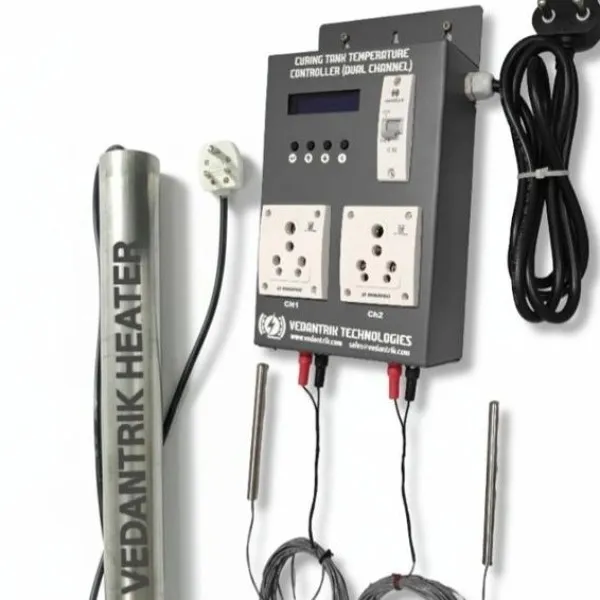
In such cases, a curing tank temperature-controller system with a chiller can be highly effective, as it cools the tank water and brings the temperature back within the standard range.
A circulation system can also be paired with temperature controller systems to maintain uniform temperature throughout the tank, preventing the formation of warmer spots that can accelerate local hydration, which can result in uneven hydration.
Failure to control temperature and moisture in hot weather can lead to a hardened surface layer that is denser and less permeable than the interior, creating differential stresses and potential micro-cracking.
Differential hydration also changes the pore structure locally, making the concrete more permeable to water and other chemical ingress, which affects final results of durability tests.
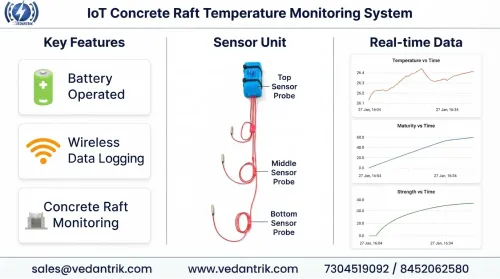
Hot-weather curing management is therefore a combination of temperature control, moisture retention, monitoring, and proactive intervention based on real-time data, ensuring that concrete develops consistently under challenging thermal conditions.
Keywords