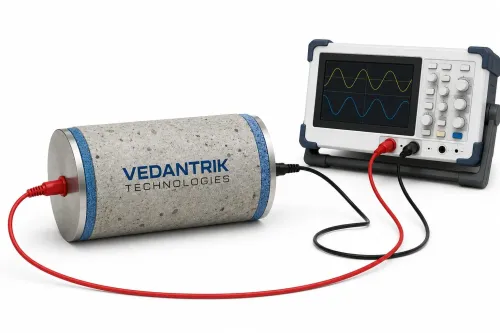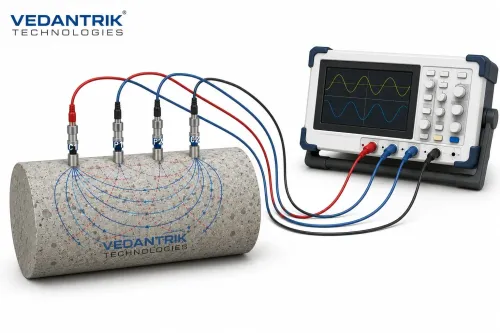
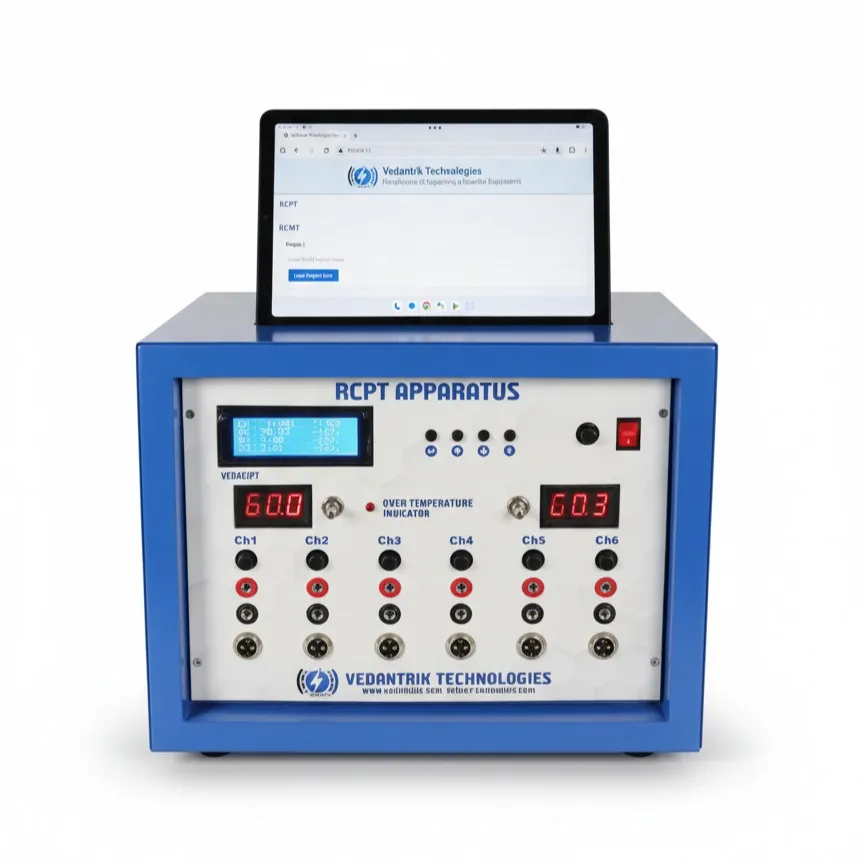
The RCPT test primarily measures the electrical conductivity of the concrete specimen, by logging the current values (in mAmp) at defined intervals throughout the test.
Temperature plays an important role in the overall test performance and accuracy of the RCPT, because it directly affects the movement of chloride ions.
During the test, current flow increases the temperature of the solution, which in turn, increases the temperature of the concrete specimen over six hours. At higher temperatures, increased ion mobility and reduced viscosity of the pore fluid, results in higher measured current and therefore higher coulombs.
This means that concrete specimens that are resistant to chloride movement may appear more permeable simply because of the temperature rise during testing.
Temperature can influence the test result in another way even before the test begins. The difference in temperature during the curing process of multiple specimens, can significantly alter results.
Hence, standardized conditions for specimen preparation and temperature control are essential to minimize variability. Even a small temperature rise of a few degrees can cause disproportionate increases in charge passed.
Ultimately, temperature is one of the most significant variables that must be managed when conducting RCPT. Proper insulation, preconditioning of specimens, and monitoring during testing help reduce temperature-related errors.
Understanding the influence of temperature allows engineers to interpret RCPT data more accurately and avoid misleading conclusions about chloride permeability and long-term durability.
Keywords