Cold weather during winters pose new challenges to concrete maturity development, because at low temperature the rate of hydration slows down and may halt completely if the temperature falls below freezing. The fall in rate of hydration also limits the rate at which the hydration products form.
This leads to delayed setting time, reduced early-age strength achievement, and slower maturity accumulation. When concrete temperatures drop below 0°C, free water can crystallize and expand within the pore structure, causing physical disruption that weakens the developing micro-structure.
From the perspective of maturity, a cold environment introduces a non-linear relationship between temperature and strength as the time proceeds. Since the Nurse-Saul equation assumes a linear maturity development above the datum temperature, it may not accurately represent the hydration progress under such low-temperature conditions due to its assumption of linear temperature dependence.
Additionally, the hydration process can halt altogether if the concrete remains below datum temperature, as it can be assumed that datum temperature sets a critical temperature threshold limit.
Crossing this limit creates a condition where maturity is no longer linear and cannot be predicted until other supplementary cementitious mixtures (SCM) such as accelerators are added into the mix.
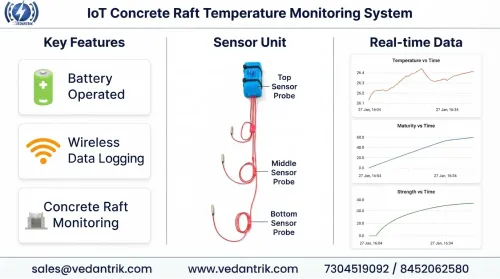
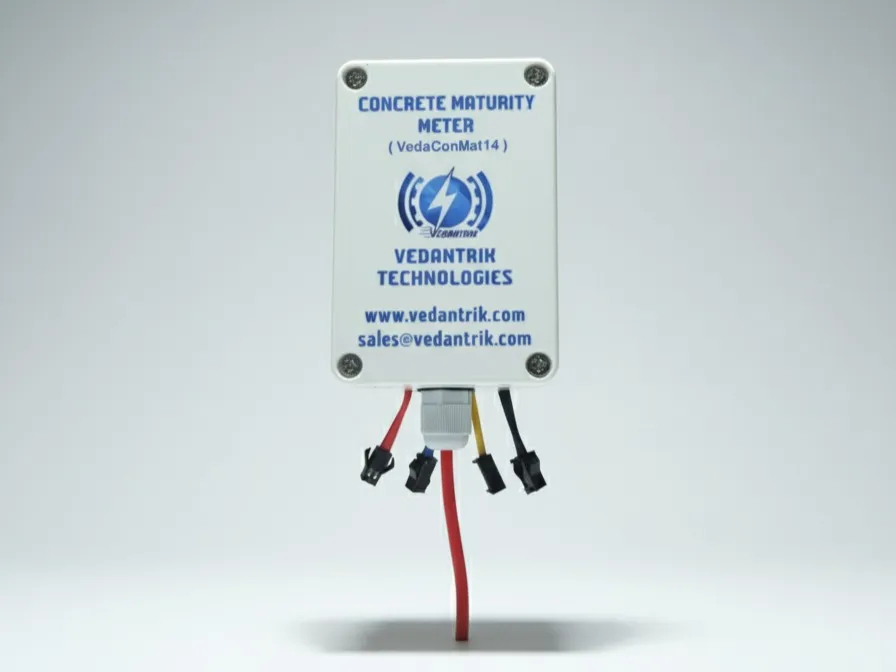
In practical conditions, winter concreting requires active temperature management such as placement of embedded sensors inside during the pouring, to instead detect the cold zone where hydration rate is comparatively slower or at halt.
Maintaining uniform temperature throughout the curing process becomes a critical task, as temperature gradients can lead to inconsistent maturity development and localized weaknesses.
During winter, retaining enough moisture also becomes challenging, as cold air even though reduces the evaporation, hinders the overall hydration process due to freezing.
The hydration products formed at low temperature show poor uniformity and porosity particularly because of uneven maturity, which further affects the long term durability and strength development.
Ultimately, while maturity is a powerful tool for winter concreting, its reliability depends heavily on accurate temperature monitoring, appropriate co-relation of maturity function, and controlled curing.
Keywords