The durability of concrete is strongly affected by how easily chloride ions can enter it. Two common laboratory methods used to measure this are the Rapid Chloride Migration Test (RCMT) and the Rapid Chloride Penetration Test (RCPT). While both tests are used for the same purpose, they work in different ways and give different types of results.
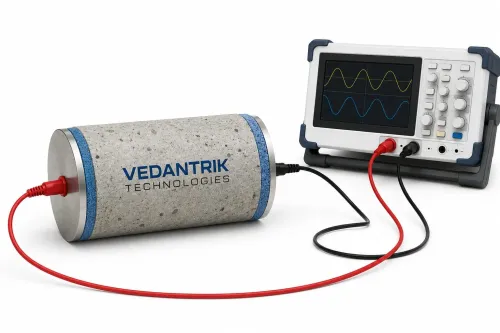
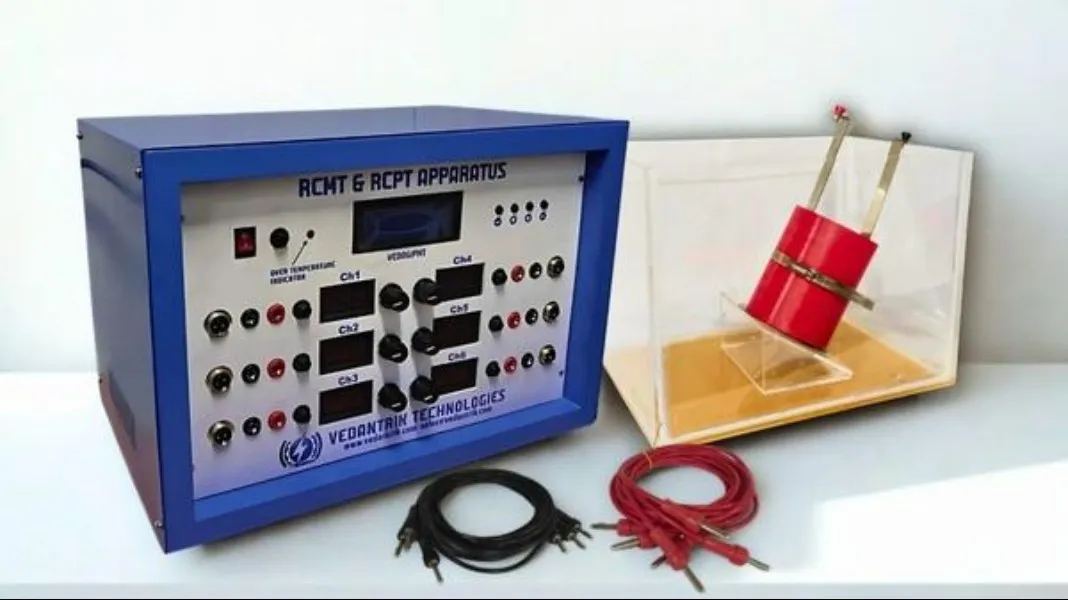
RCPT is standardized under ASTM C1202. In this test, a voltage is applied across a concrete sample, and the total electrical charge passing through it is measured in coulombs over six hours. Based on the charge passed, the concrete is classified as having low, moderate, or high permeability. However, RCPT does not directly measure chloride movement. It only measures how easily electricity passes through concrete, which depends on many factors like moisture content, temperature, and pore water chemistry.
RCMT, on the other hand, is based on NT Build 492 and directly measures chloride ion movement through concrete. In this test, chloride ions are forced through the concrete using an electric field. After testing, the depth of chloride penetration is measured, and a value called the Chloride Migration Coefficient (Dnssm) is calculated. This value directly represents how fast chlorides move inside the concrete.
The main difference is that RCPT gives an indirect electrical result, while RCMT gives a direct physical measurement of chloride movement. Because of this, RCMT is considered more accurate for studying long-term durability.
RCPT results can sometimes be misleading because concrete with higher alkali content or different moisture conditions may show higher electrical conductivity even if it has good chloride resistance. RCMT avoids this problem because it directly measures chloride penetration depth instead of electrical flow.
In practice, RCPT is often used for quick quality checks on site because it is simple and fast. RCMT is more commonly used in research laboratories, advanced material testing, and durability design because it gives more reliable and meaningful results.
Many modern durability studies prefer RCMT because it correlates better with long-term chloride diffusion behavior in real structures. This makes it more suitable for designing structures exposed to aggressive environments like marine zones and highways.
In summary, both tests are useful, but RCPT is more of a screening test, while RCMT provides a more accurate and engineering-relevant measurement of chloride resistance in concrete.
Keywords