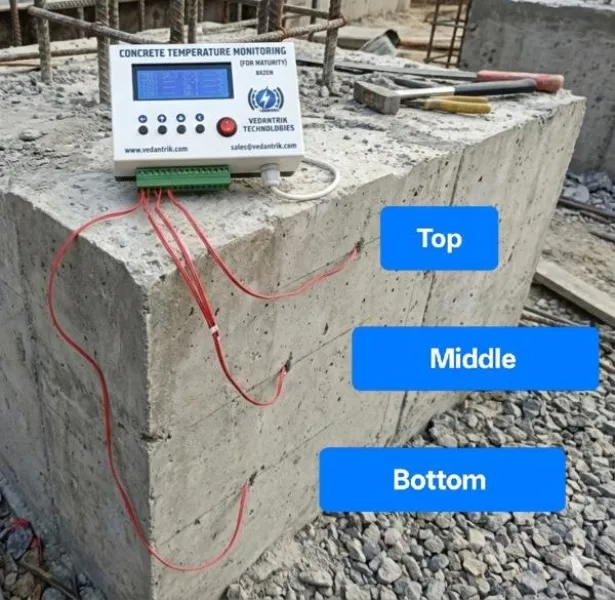
Hot weather conditions introduce unique challenges in controlling the temperature development of mass concrete. Higher or elevated temperatures generally accelerate the hydration reactions of cement, causing the internal temperature of the concrete to rise more rapidly.
The resulting high peak temperatures can generate significant thermal gradients between the concrete core and surface. These gradients often lead to early-age thermal cracking, especially when the concrete begins to cool down and retracts or shrinks after reaching its peak temperature.
In addition, rapid rise in the temperature can increase the rate of evaporation from the concrete surface, causing plastic shrinkage cracks, negatively affecting the surface durability.
The consequences of excessive heat generation are not only limited to cracking. Elevated temperatures can also influence other properties of concrete in the long term.
At higher temperatures the rate of hydration increases and may lead to uneven micro-structure development due to accelerated curing, affecting the gradual development of strength, elastic properties, and overall durability.
To effectively minimize the impact of hot weather, several strategies are commonly adopted. Chilled water or ice can be used during the curing to reduce the initial temperature rise and allow controlled removal of heat.
In some cases casting concrete during cooler periods, such as nighttime or early morning, can also minimize the heat exposure.
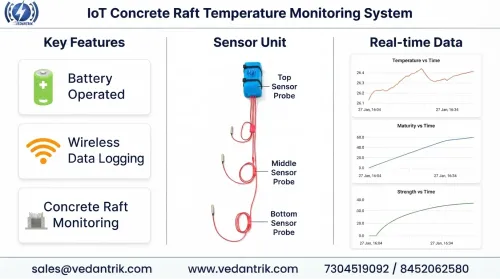
Mix design modifications, such as incorporating supplementary cementitious materials or addition of retarders can also help in controlling the heat of hydration. Continuous Monitoring of internal temperatures and surface conditions is critical to ensure that thermal stresses remain within safe limits.
In summary, hot weather significantly affects mass concrete’s natural temperature development, with risk of thermal cracking. Effective management requires a combination of mix design optimization, cooling strategies, and continuous temperature monitoring.
By implementing these measures accordingly, engineers can maintain and preserve the structural integrity, reduce potential micro-cracks development and their propagation in different areas, and ensure that the structure remains durable even under extreme heat conditions.
Keywords