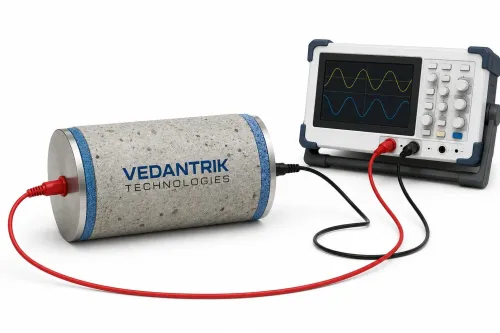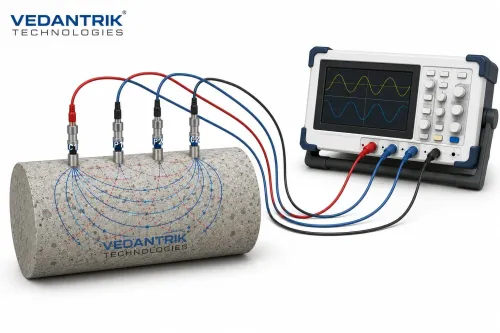
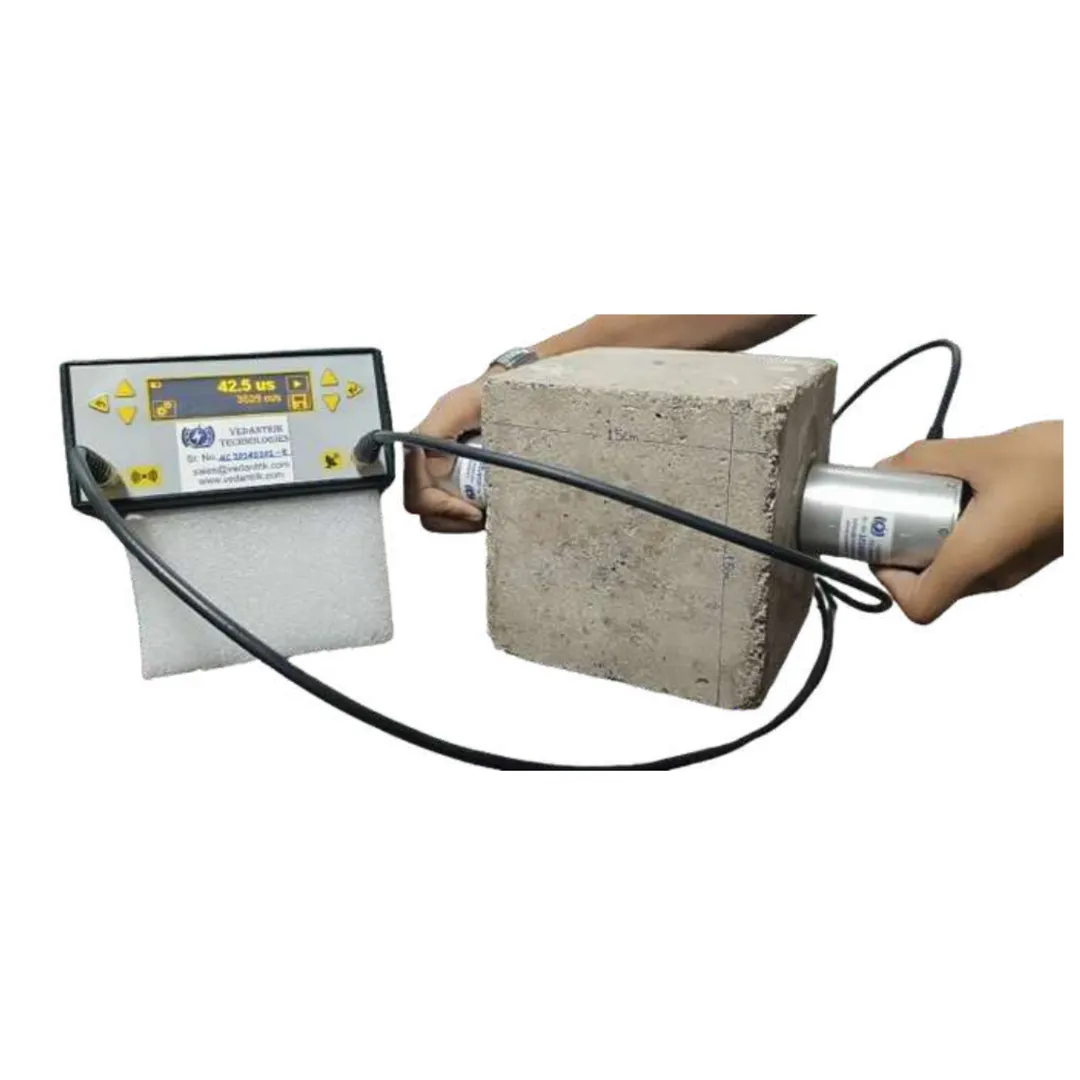
Moisture content inside concrete significantly influences the transmission of ultrasonic waves, thereby changing the calculated velocity in Ultrasonic Pulse Velocity (UPV) testing. Because of this, it is important to understand how moisture present within the concrete pores affects wave propagation.
Concrete is a porous material, and most of its pores are interconnected, forming capillaries and voids. During rainfall or exposure to rainwater, these pores often become filled with water, creating a more continuous and uniform medium through which ultrasonic waves can travel efficiently.
In contrast, when the pores contain air instead of water, the ultrasonic waves tend to scatter or get partially absorbed, which results in lower wave velocities.
As a result, concrete that is saturated with water—such as after rainfall or during monsoon exposure—often shows higher UPV values compared to dry concrete, even if both have the same material quality.
Moisture can also affect the detection of micro-cracks within concrete. In dry conditions, micro-cracks significantly slow down wave propagation. However, when concrete is saturated due to rainwater infiltration or rainfall exposure, these cracks may become filled with water, allowing ultrasonic waves to pass through more quickly and reducing their apparent effect.
Another important factor is the uneven distribution of moisture within the structure. A partially saturated concrete element—especially after rainfall where some areas are wet and others remain dry—can lead to inconsistent UPV readings depending on the test location.
When field moisture conditions vary, it may be necessary to apply corrections or use calibration curves for more accurate interpretation. Ideally, comparisons should be made between structural elements that have similar exposure to rainfall and moisture conditions.
Ultimately, moisture content remains a critical parameter in UPV testing. Accurate interpretation of results requires careful consideration of moisture effects and appropriate measures to minimize errors during testing.
Keywords