During the monsoon season, half-cell potential (HCP) readings used to check rebar corrosion in concrete can be affected by moisture, which can make results harder to interpret correctly.
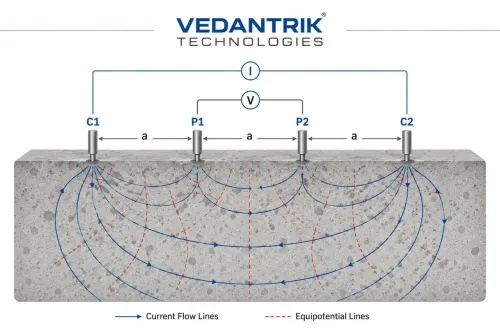
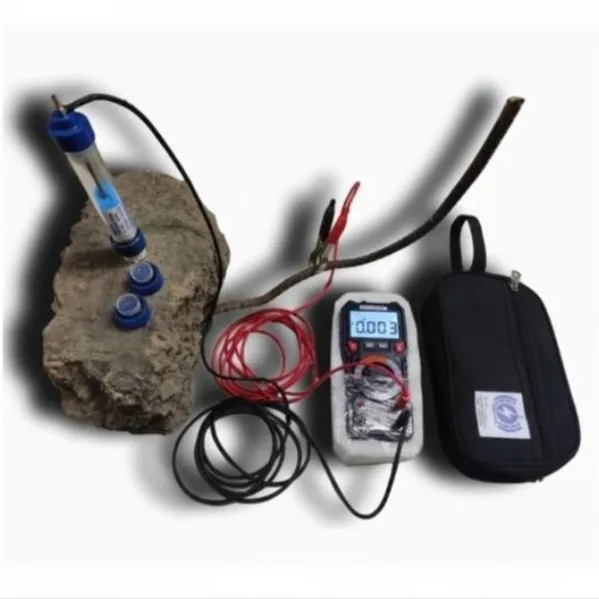
HCP testing works by measuring the electrical potential difference between the steel reinforcement and a reference electrode placed on the concrete surface. This measurement depends a lot on how much moisture is present in the concrete. In monsoon conditions, concrete absorbs a lot of water from rain and humidity, making it more conductive. Because of this, the readings often shift towards more negative values.
However, this does not always mean that corrosion has actually increased. The change in readings can simply be due to the wet condition of the concrete rather than real damage to the steel.
Another issue during monsoon is uneven wetness on the concrete surface. Some areas may be fully soaked while others are only slightly damp. This uneven moisture causes differences in conductivity, which leads to inconsistent or scattered readings when scanning a structure.
Also, when a thin layer of water forms on the surface, it can affect the electrical connection between the electrode and the concrete. This may result in unstable or misleading readings.
Monsoon conditions can also reduce oxygen movement inside concrete because pores are filled with water. This can make steel potential readings more negative, even if the corrosion rate has not actually changed.
Because of all these effects, engineers are careful when interpreting HCP results during rainy seasons. They try to test under similar moisture conditions or avoid testing during active rainfall to get more reliable results.
In short, monsoon weather does not directly change the corrosion itself, but it changes the testing conditions, which can affect how accurate the readings are.
Keywords