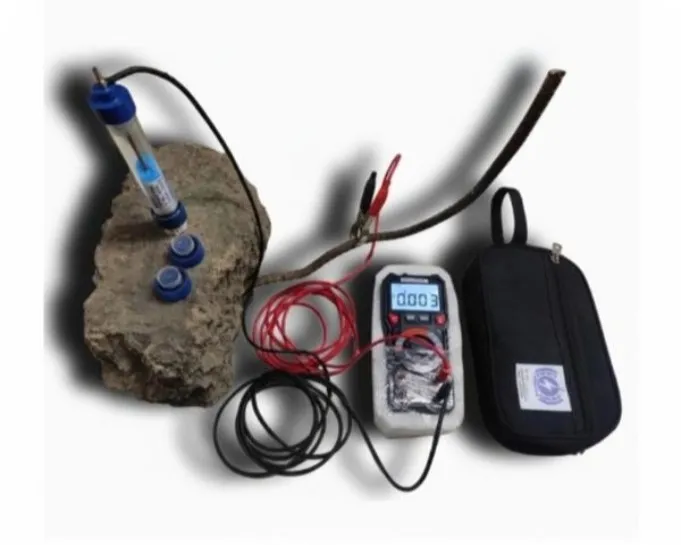
Half-cell corrosion potential testing is a widely used non-destructive technique for assessing the likelihood of corrosion in steel reinforcement embedded within concrete structures.
Corrosion of steel is a major concern in reinforced concrete because it directly compromises structural integrity, reduces strength, and shortens the service life of the structure. As steel corrodes, corrosion products form and occupy a larger volume than the original steel. This expansion generates internal tensile stresses in the surrounding concrete, which can lead to cracking, delamination, and progressive deterioration.
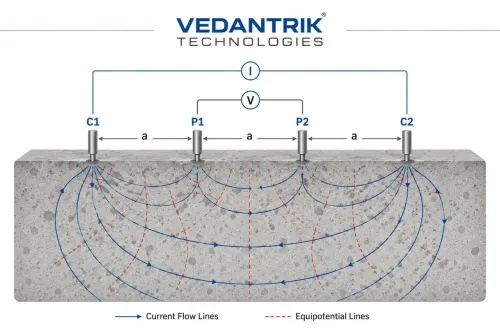
The half-cell potential test offers a practical and reliable method to estimate the probability of corrosion activity without causing any damage to the concrete. It works by measuring the electrical potential difference between a reference electrode—typically a copper/copper sulfate electrode—and the embedded reinforcing steel.
The measured potential values are then interpreted using standard guidelines such as ASTM C876, which help classify the likelihood of active corrosion in the reinforcement.
One of the key advantages of this method is its suitability for long-term monitoring. Since corrosion is a gradual and time-dependent process, repeated half-cell measurements over time allow engineers to track changes in corrosion activity and assess deterioration trends in structures.
This test is commonly included in routine inspection and maintenance programs for critical infrastructure such as bridges, tunnels, marine structures, and other reinforced concrete facilities exposed to harsh environments. The results can also be correlated with other non-destructive tests to develop a more complete understanding of structural durability.
When combined with complementary techniques, half-cell potential testing helps identify not only corrosion-prone areas but also underlying causes such as chloride ingress, carbonation, and moisture penetration.
Overall, the primary value of half-cell corrosion potential testing lies in its ability to provide quick, economical, and dependable insights into the electrochemical condition of embedded steel reinforcement.
Keywords