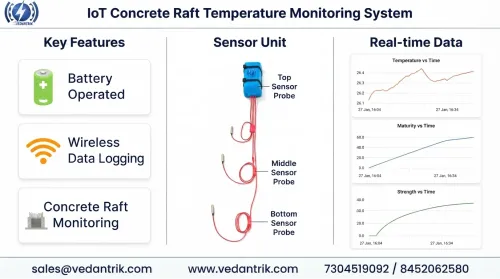
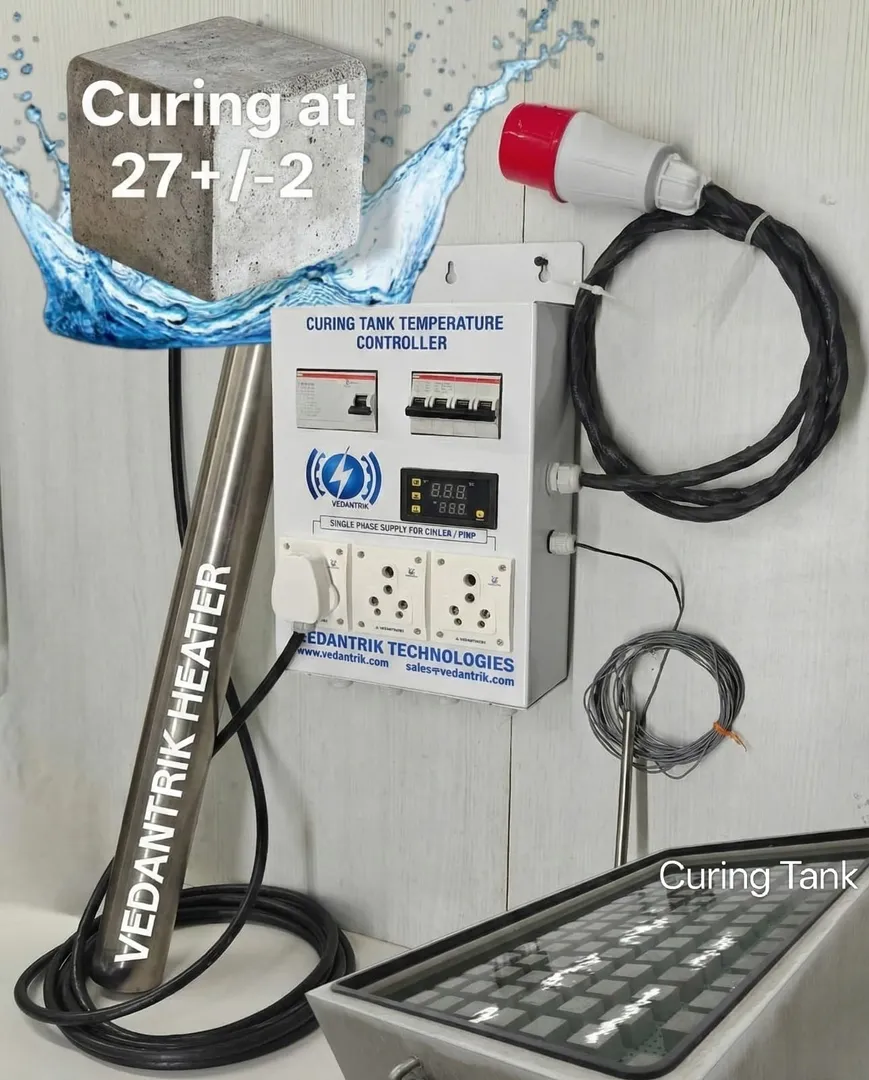
Controlling the temperature of curing tanks is very important to prevent cracks and loss of strength in concrete. Many people think curing is only about keeping concrete wet, but temperature also plays a major role in how concrete gains strength.
If the water temperature in curing tanks is not properly maintained, different parts of the concrete may cure at different rates. This uneven curing creates internal stress, which can lead to tiny cracks. Over time, these cracks make the concrete more porous, weaker, and less durable.
As per IS 516 standards, the ideal curing temperature is 27 ± 2°C. Keeping the temperature within this range helps concrete samples gain strength evenly and gives more reliable test results.
Automatic temperature controllers are often used to maintain this range. These systems switch the heater ON when the temperature falls below 25°C and turn it OFF when it goes above 29°C, keeping the water temperature stable.
Water circulation in the tank is also important because it ensures all samples are cured under the same conditions. Continuous monitoring helps maintain stable temperature throughout the process.
Without proper temperature control, concrete samples may become weaker, more porous, and less durable over time. Since cement curing produces heat during hydration, temperature changes can strongly affect how the internal structure develops.
Higher temperatures may make concrete harden faster, but they can also make the internal structure less uniform, which reduces quality. Keeping the temperature stable helps the concrete gain strength properly.
Following IS 516 temperature guidelines helps engineers get consistent and accurate test results. It also improves concrete quality and helps prevent early cracks and long-term damage.
Keywords