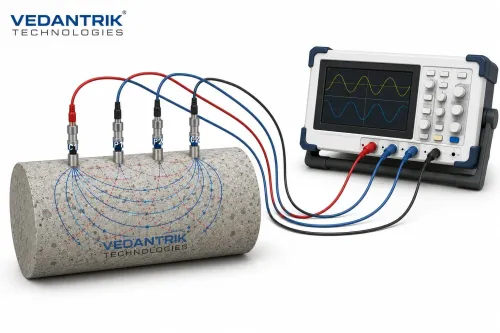
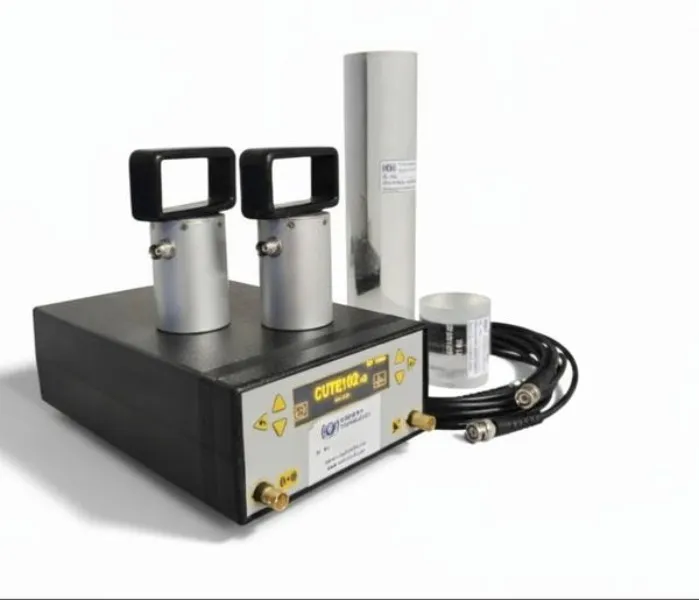
Ultrasonic Pulse Velocity (UPV) testing is a non-destructive testing method used to check the internal quality of concrete without causing any damage to the structure. It is widely used in modern infrastructure where durability, safety, and performance are critical requirements.
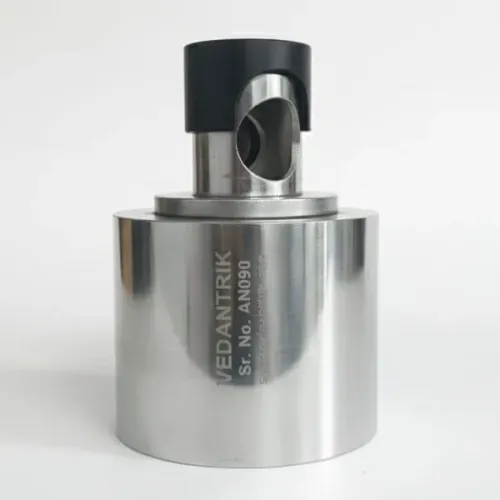
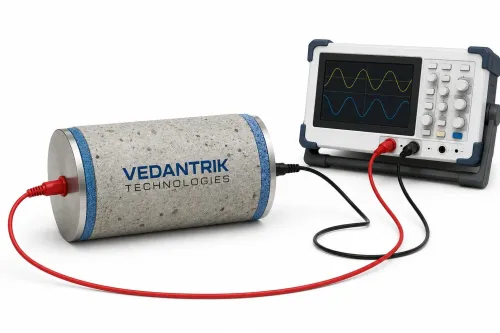
In this method, high-frequency ultrasonic pulses are transmitted through the concrete using a transmitter, and the time taken for the wave to reach the receiving transducer is recorded. The wave velocity is then calculated based on this travel time and the known distance between the transducers.
The principle of UPV testing is that sound waves travel faster in good-quality concrete that is dense, uniform, and free from defects. In contrast, the presence of cracks, voids, honeycombing, or deteriorated zones reduces the wave velocity.
Since wave velocity is influenced by properties such as density, elasticity, homogeneity, and overall internal condition, UPV provides a reliable indication of concrete quality without requiring destructive methods.
The measured velocity values are interpreted by comparing them with standard guidelines such as IS 516 (Part 5/Sec 1): 2018 and ASTM C597 to evaluate the condition and quality of concrete.
UPV testing is commonly used to detect internal defects such as cracks, voids, honeycombing, delamination, and weak zones in concrete elements. It is applied in various structures including bridges, dams, pavements, buildings, tunnels, and precast components.
In addition to defect detection, UPV is also useful for assessing concrete uniformity and monitoring deterioration in existing structures over time.
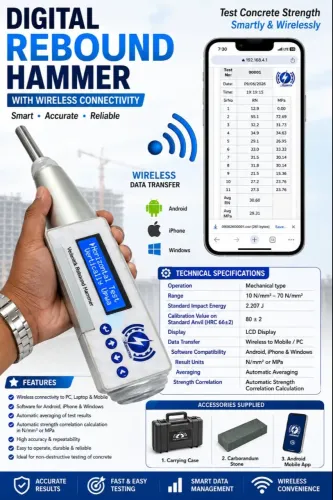
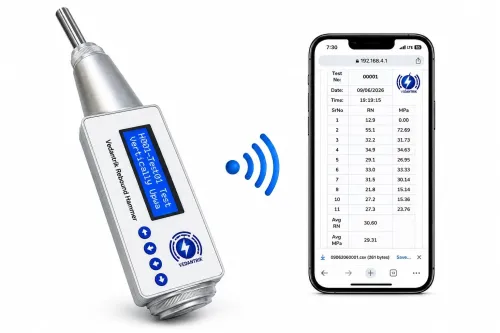
For better accuracy in structural evaluation, UPV is often used in combination with other non-destructive tests such as rebound hammer testing, half-cell potential measurement, and core sampling methods.
Keywords