Concrete resistivity testing is a widely performed non-destructive technique used to evaluate the potential durability and corrosion risk of the steel reinforcement.
The four-point (Wenner), and bulk resistivity techniques are the most commonly used techniques for evaluating the concrete resistivity. These test methods allow the engineers to correlate resistivity values with the risk of reinforcement corrosion.
Even though, both the methods mainly measure the electrical resistance or the resistivity of the concrete, they differ in their procedure, detection depth, accuracy, application and interpretation.
Understanding these differences is essential for engineers, researchers, and field operators to correctly select the most suitable method for specific applications.
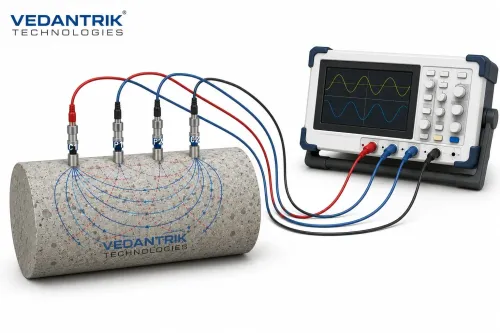
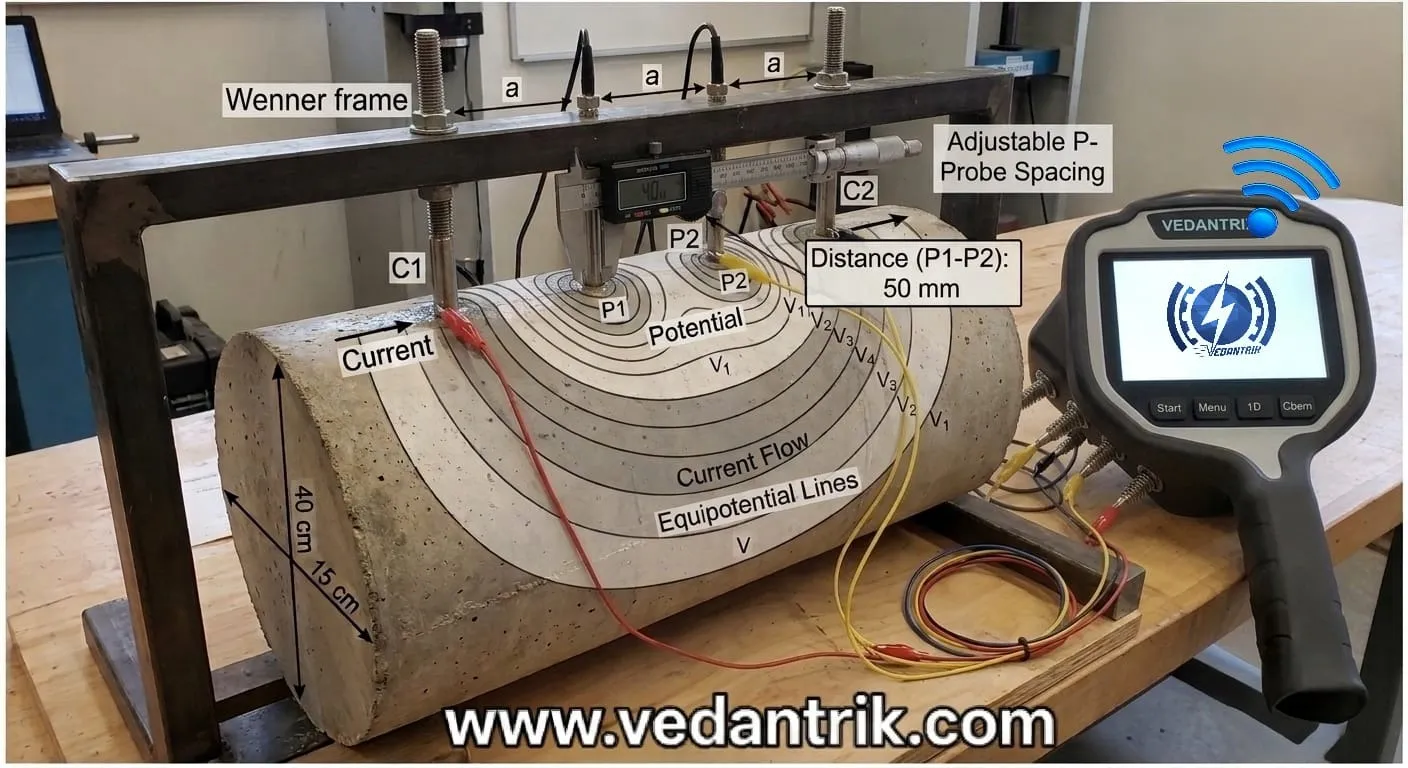
The four-point Wenner method is the most widely accepted and standardized surface resistivity technique in concrete testing. In this method, four equally spaced electrodes are placed in a linear arrangement on the concrete surface.
A current is passed through the outer electrodes, while the voltage drop is measured between the two inner electrodes. The resistivity is calculated from the measured value, which provides the indication about the internal structure of the concrete.
It is commonly used in field evaluations, durability assessments, and quality control during construction. The Wenner method can assess corrosion potential, chloride penetration resistance, and overall concrete quality.
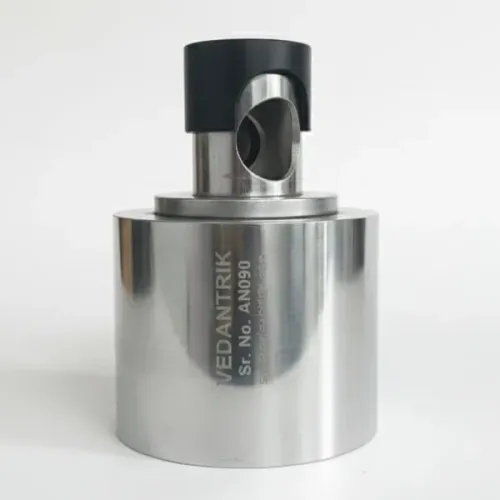
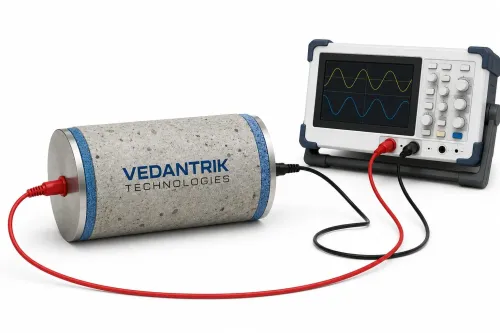
The bulk resistivity test, on the other hand, is typically performed in laboratories using cylindrical cores of concrete specimens that are saturated with water under controlled conditions before testing.
Electrodes are placed at opposite ends of the specimen, and current flows through the entire volume of concrete.
Because the test evaluates the complete internal structure, bulk resistivity provides a more accurate representation of the concrete’s pore network, moisture state, and ionic permeability.
This method is highly precise and correlates strongly with other durability tests such as RCPT and RCMT.
In summary, the Wenner method is the preferred field technique due to its reliability, and the bulk resistivity test offers the highest precision for research and laboratory durability evaluations.
Keywords