
The Chloride Migration Coefficient, written as Dnssm, is the main result obtained from the Rapid Chloride Migration Test (RCMT) as per NT Build 492. It represents how quickly chloride ions move through concrete when an electric field is applied. The unit of Dnssm is square meters per second (m²/s).
In simple terms, Dnssm tells us how resistant concrete is to chloride penetration. If the value is low, it means chloride ions move slowly, and the concrete is dense and durable. If the value is high, it means chlorides can move easily, and the concrete is more likely to suffer corrosion problems.
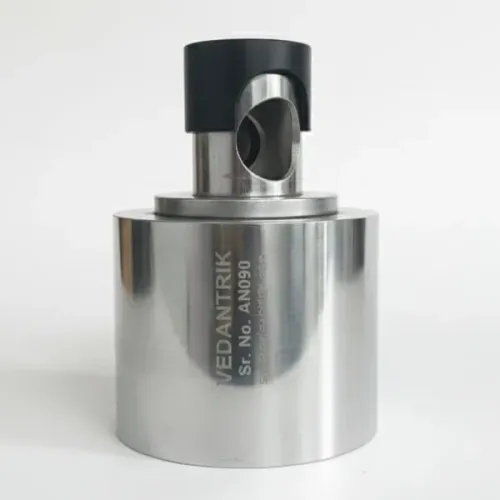
To find this value, a concrete sample is first saturated with water. Then, a voltage is applied across the sample to force chloride ions to move. After a fixed time, the concrete is split, and a special chemical solution is used to detect how far chlorides have penetrated. Based on this depth, time, voltage, and temperature, the Dnssm value is calculated using a standard formula given in NT Build 492.
Dnssm is very important in concrete durability studies because it directly relates to how long a structure will last in chloride-rich environments. For example, in marine structures or bridge decks exposed to salt, chloride ions slowly reach the steel reinforcement and start corrosion. By knowing the Dnssm value, engineers can estimate how fast this process may happen.
Concrete mix design has a strong influence on Dnssm. A lower water-cement ratio reduces pores and lowers Dnssm. Adding materials like Fly Ash, GGBS, and Silica Fume further reduces Dnssm because they make the concrete structure denser and reduce pore connectivity.
Standards like IS 456:2000 define exposure conditions and durability requirements, but they do not provide a direct value for chloride movement. Dnssm helps fill this gap by giving a measurable parameter that can be used in advanced durability design and service life prediction.
In practical engineering, Dnssm is used to compare different concrete mixes, select materials for aggressive environments, and predict long-term performance. It is especially important in modern performance-based design approaches where durability is more important than just strength.
In conclusion, Dnssm is a key parameter in modern concrete technology. It gives a clear and direct measure of chloride resistance and helps engineers design safer, stronger, and longer-lasting concrete structures.
Keywords