Mumbai
+917304519092
+917304519092

corrosion potential meter

6814772a5d263414004dd4a4 Card 2

product image
Corrosion Potential Meter

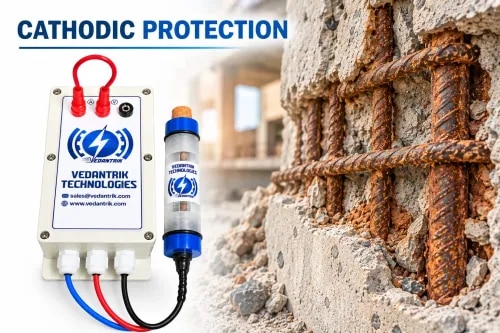
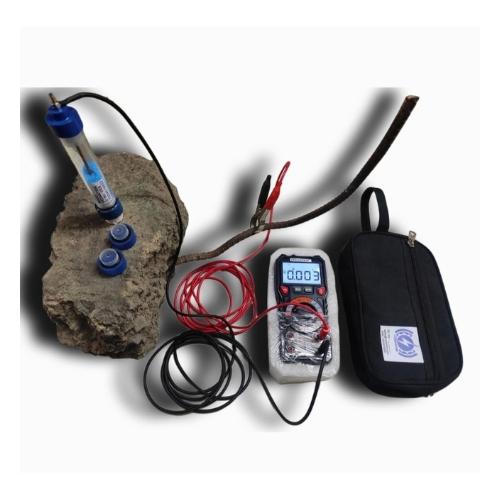
About Half cell potential test: The half cell potential test is a widely utilised, non-destructive electrochemical technique used primarily for assessing the likelihood of the corrosion activity in steel reinforcement. It is especially designed to evaluate the electrochemical potential of steel reinforcement embedded in concrete by comparing it to the reference electrode placed on the surface. The test serves as an indirect method of estimating the corrosion activity, without physically damaging the structure or extracting reinforcing bar (rebar). When the steel corrodes in concrete, it undergoes oxidation reaction, releasing electrons. These electrochemical processes generate a measurable potential difference between the embedded steel and the reference electrode. In a half cell test, a high impedance voltmeter is used to measure this potential difference , which reflects the electrochemical state of the steel. The reference electrode, typically a copper/copper sulfate (Cu/CuSO4) or a silver/silver chloride (Ag/AgCl), provides a stable known potential against which the steel’s potential can be compared. The steel reinforcement, if corroding, will show negative potential due to the anodic reactions taking place on its surface. For analysis of the obtained value it becomes necessary to understand the significance of the measured potential. According to the standards like ASTM C876, a potential value measurement that is more negative than -350 mV generally indicates high probability of corrosion activity occurring at the time of measurement. It is important to note that the test only reflects the potential of corrosion at the time of testing and does not quantify the rate and the extent of corrosion damage. Several factors can influence the test accuracy and its interpretation. Moisture content plays an important role, as higher moisture content naturally increases the ionic conductivity of the concrete. Surface conditions, such as coatings or contaminants can affect electrical conductance or measurement accuracy. Purpose of half cell potential test: 1. To detect whether corrosion activity of the steel reinforcement is actively occurring. 2. To assess the probability of corrosion in the steel reinforcement. 3. To locate corrosion prone areas across the concrete surface 4. Monitor the effectiveness of protection measures. Principle of half cell potential test: The half-cell potential test is based on the principle that the steel reinforcement embedded within the concrete matrix behaves as an electrochemical phase capable of participating in redox processes at the steel-concrete-pore solution interface. When a metallic electrode such as reinforced steel is immersed in a conductive medium an equilibrium is established between the metallic iron phase and its ionic species (Fe2+, Fe3+) present in the adjacent pore solution. This equilibrium gives rise to measurable potential difference, referred as half-cell potential, which reflects the thermodynamic tendency of the embedded steel to undergo oxidation or reduction. The underlying principle lies in the distribution of electrochemical potential at the interface between the embedded steel and the electrolyte contained within the concrete's pore structure. Concrete contains a microscopic network of interconnected pores filled with an aqueous ionic solution consisting of hydroxyl ions, alkali metals cations (Na+, K+), and dissolved oxygen and carbonates. The equilibrium potential near the steel depends on the redox state of the steel surface, ionic composition of the pore solution, and physicochemical properties of the surrounding medium. When the steel reinforcement surface is under a high alkaline environment with pH values above 12.5, the surface of the steel is covered by a thin, adherent, and protective oxide film, primarily composed of Fe2O3 or Fe3O4. This protective layer drastically reduces the rate of anodic dissolution of the iron , and the steel's potential stabilizes at a relatively nominal value (I.e., less negative value). Conversely when aggressive species such as chloride ions penetrate the concrete cover or when carbonation lowers the local pH below the threshold of passivity, this protective film becomes thermodynamically unstable. The destruction of the protective film exposes the metallic surface of the steel to direct electrochemical interaction with the pore solution, initiating the active corrosion processes characterized by the anodic dissolution of the iron into Fe2+ and Fe3+ ions. In the context of reinforced concrete, the steel does not exist as an isolated bar; rather, it constitutes a distributed electrochemical network within heterogeneous electrolytes in the concrete. The electrical continuity of the rebar and ionic conductivity of the pore solution enables establishment of galvanic cells across the concrete structure. Within such systems, spatial variations in moisture content, oxygen availability, chloride concentration and pH give rise to localized anodic and cathodic regions. Hence the half-cell potential represents the mixed potential resulting from these competing electrochemical reactions, primarily the oxidation of iron at the anodic sites and reduction of water or oxygen at cathodic sites. When measuring the electrochemical potential difference between the rebar and reference electrode which is typically as copper/copper sulfate or silver/silver chloride electrode, the concrete acts as an ionic conductor that facilitates the charge transport between the steel and the reference electrode. The measured potential is therefore an indirect reflection of the thermodynamic force for corrosion reaction occurring at the steel surface. A more negative potential corresponds to a greater tendency of anodic dissolution (i.e., active corrosion). The heterogeneous nature of concrete adds further electrochemical intricacy. Variations in pore structure, degree of saturation, and electrical resistivity across the concrete matrix causes the spatial potential gradients that are not solely attributed to corrosion activity but also the transport properties of the medium. The resistivity of the concrete governs the internal potential drop between the steel and the surface, the moisture and temperature affects the mobility of the ionic species. Hence the half-cell potential shows an integrated electrochemical response encompassing thermodynamic equilibrium, inter-facial kinetics, and ion transport across the phase. Measurement of Half-cell potential test: Measurements are generally taken on a grid pattern with spacing between 0.25m and 1.0m, depending on the required mapping resolution. The concrete surface should be moist to ensure proper electric contact, which is maintained using a wet sponge or conductive gel under the electrode. The value of potential difference (E) measured is expressed in Volts (V), more commonly recorded in millivolt with respect to reference electrodes. Components of Half-cell potential test: 1. Reference Electrode: Provides a stable, known potential for comparison. Common types include Cu/CuSO₄ for soil and Ag/AgCl for concrete. It ensures accurate and consistent readings of corrosion activity. 2. Connecting Leads: Insulated wires that connect the reference electrode and voltmeter to the metal structure. They must be low-resistance and corrosion-resistant for reliable measurements. 3. Voltmeter : Measures the potential difference between the reference electrode and the metal. A high-impedance voltmeter (over 10 MΩ) prevents current flow that could affect the true potential. 4.. Testing connection on rebar: The location on the metal (e.g., rebar or pipeline) where the measurement is taken. A clean, firm electrical connection ensures accuracy. 5. Contact Solution or Surface Preparation: A wet sponge or conductive gel is used to improve contact between the electrode and the surface, ensuring stable and accurate potential measurements. Standard Procedure: overview (As per ASTM C876, IS 516) The Half-Cell Potential Test is a non-destructive method used to assess the likelihood of corrosion activity in reinforced concrete structures. The following procedure outlines the standard method for performing the test in the field. Step 1: Surface Preparation and Grid Marking Clean the concrete surface thoroughly to remove dust, coatings, grease, or any contaminants that could hinder electrical contact. Establish a testing grid with points typically spaced between 0.5 m and 1.0 m, and clearly mark each location to ensure systematic data collection. Step 2: Exposure and Connection to Reinforcement Expose a small section of reinforcement at an appropriate location to serve as the electrical connection point. Clean the steel surface using a wire brush or sandpaper to achieve a sound metallic contact. Connect the negative terminal of a high-impedance voltmeter to the reinforcement and the positive terminal to the half-cell electrode. Step 3: Conditioning of the Test Surface If the concrete surface is dry, lightly moisten it with a damp sponge or cloth to improve electrical conductivity between the half-cell electrode and the concrete surface. Avoid excess water accumulation that could affect readings. Step 4: Placement of the Half-Cell Electrode Position the half-cell electrode (commonly copper–copper sulfate or silver–silver chloride) firmly on the first grid point, ensuring good contact with the moistened concrete surface. Maintain steady placement during the reading to ensure accuracy. Step 5: Measurement and Data Collection Record the potential difference displayed on the voltmeter once the reading stabilises. Continue moving the electrode across all marked grid points, repeating the measurement process to obtain a complete set of potential readings across the test area. Step 6: Data Interpretation and Reporting Interpret the data in accordance with ASTM C876 or other applicable standards. Areas showing more negative potentials indicate a higher probability of active corrosion, assisting in identifying zones requiring further investigation or remediation. Result interpretation of half-cell potential test: ASTM C876 and IS 516 provide guidance on conducting half-cell potential measurements and on correlating the measured potentials with the likelihood of reinforcement corrosion. The results are interpreted qualitatively using a copper sulfate electrode (CSE). The corrosion probability of reinforced concrete can be assessed using the half-cell potential measured against a copper/copper sulfate (Cu/CuSO₄) reference electrode. When the half-cell potential is more positive than -200 mV, the probability of active corrosion is less than 10%, indicating a very low corrosion risk. Potentials in the range of -200 mV to -350 mV correspond to an uncertain probability of corrosion (10–90%), representing a moderate or uncertain corrosion risk. If the half-cell potential is more negative than -350 mV, there is a greater than 90% probability of active corrosion, signifying a high corrosion risk. Factors influencing half cell potential test: a) Concrete Moisture Content: The amount of moisture in concrete significantly affects half-cell potential readings. Dry concrete can produce less negative (more positive) potentials, giving the false impression of low corrosion risk, whereas properly moist concrete provides more accurate readings. b) Type, Condition, and Coverage of Steel Reinforcement: The nature of the steel, its coating (if any), and the thickness of the concrete cover influence potential measurements. Well-protected or deeply embedded steel may show less negative potential even when corrosion is present. c) Temperature and Environmental Conditions: Temperature variations and environmental factors such as humidity can alter the electrochemical behaviour of steel and concrete, affecting potential readings. d) Surface Preparation and Contaminants: Proper surface cleaning is necessary for good electrical contact. Dust, chlorides, or other surface contaminants can interfere with electrode connection and distort results. Half-Cell potentiometer by Vedantrik technologies: Assessing the likelihood of corrosion in reinforced concrete is crucial for long-term durability. The half cell potentiometer by Vedantrik technologies is a specialised equipment designed to evaluate the likelihood of the corrosion of the steel reinforcement embedded in the concrete structures, using a non-destructive electrochemical method. The device works on half-cell potential principle, where the difference in the potential at steel reinforcement and the reference electrode indicates the probability of corrosion. The main unit includes copper/copper sulfate (Cu/CuSO₄) electrode as the reference which is placed on the exposed surface of the concrete, and connected to the multi-meter, which is in turn connected to the rebar. The meter measures the voltage generated due to the natural electrochemical process occurring at the steel surface. More negative potential measured generally indicates higher risk of corrosion, while positive potential suggests that the steel is majorly passive and protected.The device is fully compliant with ASTM C876 and IS 516, and allows systematic mapping of corrosion-prone areas, providing data for employing preventive measures, maintenance, and structural durability assessment. The Half Cell Potentiometer test measures the electrical potential difference to indicate whether steel reinforcement is at risk of corrosion. In Mumbai, where marine exposure and humidity are common, this test is particularly valuable. Vedantrik Technologies provides advanced half-cell potentiometer systems that deliver precise, reliable, and easy-to-interpret results. Widely used in research, maintenance, and quality control, these devices help engineers make informed decisions on repair and rehabilitation. By identifying corrosion activity at an early stage, the half-cell test prevents costly repairs and ensures structural longevity. It is a preferred choice for bridge inspections, marine structures, and high-rise developments. For dependable half-cell potentiometers in Mumbai, contact Vedantrik Technologies and safeguard your structures against premature corrosion. Specification and Key features: 1. Voltage Range: -999mV to +999Mv 2. Temperature Measurement range 0-100 deg Celsius (Temperature sensor given as per IS 516) 3. Accuracy: +/- 1mV 4. Power Supply: pencil cell 5. Operating Temp: 0 deg Cels to 50 deg Cels 6. Auto power cut-off to save battery 7. Back light display to use in dark 8. Hold function for stable reading 9. Removable copper assembly with two side caps to improve Life of copper rod and less consumption of copper sulphate. 10. NABL calibration certificate As a best Half Cell Corrosion Potentiometer Manufacturer in India we have supplied in Mumbai, Pune, Nashik, Aurangabad, Surat, Vadodara, Ahmedabad, Indore, Bhopal, Nagpur, Jaipur, Ludhiana, Ghaziabad, Delhi, Lucknow, Kanpur, Prayagraj, Patna, Ranchi, Dhanbad, Bengaluru, Hyderabad, Chennai, Coimbatore, Madurai, Visakhapatnam, Kolkata, and Srinagar. Also we have supplied our Range Of Products in Dubai, Abu Dhabi, the United Arab Emirates, Oman, Saudi Arabia, Kuwait, and Iran. We also serve clients in Singapore, Indonesia, Thailand, and other international locations.

Subcategory Tags

Anvil For Rebound Hammer Calibration in India Anvil For Rebound Hammer Calibration Manufacturer in India Anvil For Rebound Hammer Calibration Manufacturer in Mumbai Half-Cell Corrosion Potential Meter Manufacturer in India Half-Cell Corrosion Potential Meter manufacturer in Mumbai Half Cell Corrosion Potentiomete Concrete Half Cell Corrosion Tester Concrete Corrosion Potentiometer Half Cell Potential Tester Concrete Corrosion Measurement Device Concrete Rebar Corrosion Tester Concrete Corrosion Monitoring Equipment Concrete Corrosion Testing Instrument Copper Sulfate Half Cell Electrode Concrete Corrosion Potential Meter Concrete Durability Tester Concrete Corrosion Detection Device Reinforcement Corrosion Tester Concrete Half Cell Testing Equipment Concrete Corrosion Monitoring System Concrete Corrosion Analyzer Concrete Rebar Corrosion Measurement Equipment Concrete Structure Corrosion Tester Concrete Corrosion Evaluation Device Concrete Half Cell Potential Tester Concrete Rebar Potential Measurement Device Half Cell Potential Measurement Instrument Concrete Corrosion Analysis Equipment Concrete Durability Testing Equipment Concrete Half Cell Measurement System Concrete Potential Measurement Device Concrete Electrochemical Testing Equipment Concrete Steel Corrosion Tester Concrete Half Cell Electrode Tester Concrete Rebar Corrosion Analyzer Concrete Corrosion Inspection Instrument Reinforcement Corrosion Monitoring Equipment Concrete Surface Potential Measurement Device Concrete Corrosion Detection Instrument Concrete Corrosion Monitoring Device Half Cell Corrosion Measurement Kit Concrete Half Cell Potential Measurement System Concrete Rebar Corrosion Mapping Equipment Concrete Corrosion Evaluation Instrument Concrete Rebar Corrosion Detection Tester Concrete Corrosion Mapping Device Concrete Structure Corrosion Analyzer Concrete Electrical Potential Tester Half Cell Potential Measurement Device Concrete Rebar Potential Mapping Instrument Concrete Non Destructive Corrosion Tester Concrete Corrosion Control Equipment Concrete Half Cell Reference Electrode Concrete Rebar Corrosion Assessment Device Concrete Corrosion Measurement System Rapid Chloride Migration Test (RCMT) Apparatus Manufacturer in India Rapid Chloride Migration Test (RCMT) Apparatus Manufacturer in Mumbai Rapid Chloride Migration Test Chloride Ion Penetration Tester Concrete Chloride Tester Chloride Diffusion Test Concrete Ion Migration Tester Chloride Ion Migration Analyzer Concrete Chloride Analyzer Concrete Chloride Diffusion Tester Concrete Chloride Permeability Meter Chloride Ion Diffusion Test Equipment Concrete Durability Analyzer Rapid Chloride Diffusion Test Concrete Permeability Analyzer Chloride Ion Test Machine Concrete Ion Transport Tester Concrete Resistance Tester Concrete Electrical Conductivity Tester Concrete Durability Measurement Chloride Ion Penetration Analyzer Rapid Chloride Test Machine Concrete Ion Migration Analyzer Concrete Resistance Measurement Device Concrete Durability Evaluation System Concrete Permeability Measuring Instrument Chloride Penetration Measurement Device Concrete Diffusion Analyzer Concrete Durability Test Apparatus Cement Durability Testing Equipment Chloride Ion Resistance Tester Concrete Transport Property Tester Chloride Ion Diffusion Analyzer Concrete Durability Evaluation Tester Concrete Electrical Resistivity Tester Rapid Chloride Analyzer Chloride Ion Migration Measurement Concrete Permeability Measurement Device Cement Chloride Analyzer Concrete Ion Transport Analyzer Concrete Chloride Penetration Test Rapid Chloride Penetration Test (RCPT) Apparatus Manufacturer in India RCPT Apparatus Concrete Durability RCPT test Procedure RCPT Manufacturer RCPT calibration services RCPT result interpretation RCPT testing charges RCPT testing Services Concrete Resistivity meter RCPT manufacturer in Mumbai rcpt manual rcpt limit Rapid Chloride Penetration Test RCPT Test Equipment Concrete Chloride Penetration Tester Concrete Permeability Tester Chloride Ion Diffusion Test Concrete Ion Penetration Analyzer Chloride Permeability Test Equipment Rapid Chloride Permeability Tester Concrete Durability Testing Machine Concrete Electrical Resistance Tester Concrete Resistivity Tester Concrete Durability Measurement Device Concrete Corrosion Resistance Tester Concrete Durability Evaluation Equipment Chloride Ion Migration Test Concrete Penetration Resistance Tester Concrete Permeability Measurement Concrete Diffusion Test Apparatus Concrete Electrical Conductivity Meter Concrete Durability Test Machine RCPT Testing Apparatus Concrete Permeability Test Apparatus Concrete Durability Test Equipment Chloride Ion Diffusion Measurement Concrete Permeability Measurement System Concrete Durability Testing Instrument Concrete Chloride Resistance Tester Concrete Ion Diffusion Tester Concrete Temperature monitoring for Concrete Maturity meter Manufacturer in India Concrete Temperature monitoring for Concrete Maturity meter Manufacturer in Mumbai Mass concrete temperature Monitoring services ACI 305 Concrete curing—Cure concrete in accordance with ACI 308.1. Protection period Acceptable protection materials to prevent excessive temperature drop Maximum allowable concrete temperature Limit the maximum allowable fresh concrete temperature to 35 °C (95 °F) concrete mixture Mass Concrete Temperature Monitoring Concrete Temperature Sensor Concrete Temperature Monitoring System Concrete Curing Temperature Sensor Concrete Temperature Logger Concrete Temperature Data Logger Concrete Thermal Monitoring System Concrete Temperature Recorder Mass Concrete Temperature Sensor Concrete Curing Temperature Logger Concrete Thermal Sensor Concrete Temperature Measurement Device Concrete Temperature Monitoring Device Wireless Concrete Temperature Sensor Smart Concrete Temperature Sensor Concrete Pour Temperature Monitoring Concrete Temperature Monitoring Equipment Concrete Curing Monitoring System Concrete Internal Temperature Sensor Concrete Structure Temperature Sensor Concrete Thermal Monitoring Device Concrete Temperature Testing Equipment Concrete Heat Monitoring System Concrete Thermal Control System Concrete Temperature Tracking Device Mass Concrete Temperature Logger Concrete Heat Measurement Device Concrete Curing Data Logger Concrete Temperature Control System Concrete Temperature Measuring Instrument Concrete Pour Monitoring System Concrete Thermal Analysis Sensor Concrete Monitoring Data Logger Construction Temperature Monitoring System Concrete Maturity Temperature Sensor Concrete Temperature Recording Device Concrete Curing Temperature Monitoring Wireless Temperature Monitoring For Concrete Concrete Thermal Performance Sensor Concrete Temperature Control Logger Concrete Temperature Analysis Equipment Concrete Curing Heat Sensor Concrete Hydration Temperature Sensor Concrete Temperature Measurement System Concrete Curing Thermal Logger Concrete Internal Heat Monitoring Device Smart Temperature Sensor For Concrete Rebound hammer anvil Calibration anvil for rebound hammer Standard steel anvil rebound hammer Anvil HRC 66 Test anvil for rebound hammer India Anvil For Rebound Hammer Calibration Rebound Hammer Calibration Anvil Concrete Test Hammer Anvil Schmidt Hammer Calibration Anvil Rebound Hammer Calibration Equipment Concrete Rebound Hammer Calibration Tool Concrete Test Hammer Calibration Device Calibration Anvil For Rebound Hammer Rebound Hammer Calibration Apparatus Concrete Rebound Hammer Testing Equipment Concrete Strength Tester Calibration Anvil Concrete Hardness Tester Calibration Tool Concrete Testing Equipment Rebound Hammer Testing Anvil Concrete Hammer Calibration Device Concrete Testing Instrument Calibration Equipment For Rebound Hammer Concrete Test Anvil Standard Calibration Anvil Laboratory Calibration Anvil Concrete Rebound Test Anvil Rebound Hammer Accessory Concrete Testing Calibration Device Rebound Hammer Calibration Kit Concrete Surface Testing Equipment Concrete Strength Testing Equipment Concrete Hammer Calibration Block Concrete Impact Testing Equipment Concrete Calibration Equipment Concrete Test Hammer Accessories High Precision Calibration Anvil Concrete Laboratory Equipment Construction Material Testing Equipment Rebound Hammer Calibration Standard Concrete Test Hammer Standard Anvil Concrete Testing Calibration Instrument Rebound Hammer Calibration Machine Concrete Strength Measurement Equipment Concrete Hardness Testing Device Concrete Test Equipment For Calibration Cement Testing Calibration Anvil Concrete Hammer Calibration Standard Concrete Rebound Hammer Calibration Block Testing Anvil For Schmidt Hammer Concrete Quality Testing Equipment Rebound Hammer Test Calibration Tool Concrete Testing Calibration Tool Construction Testing Calibration Equipment Concrete Test Hammer Calibration Accessory Laboratory Concrete Calibration Equipment Curing Tank Temperature Controller Concrete Curing, IS 516 Curing Tank Temperature Monitoring Temperature Monitoring Controller Smart Temperature Controller Device Temperature Controller in India Curing Tank Heater Controller Concrete Curing Tank Cement Curing Tank Concrete Curing Equipment Laboratory Curing Tank Digital Curing Tank Concrete Curing Tank Controller Water Bath Temperature Controller Concrete Curing System Cement Testing Equipment Concrete Curing Temperature Controller Concrete Water Tank Concrete Curing Bath Automatic Curing Tank Thermostatic Curing Tank Concrete Temperature Controller Digital Temperature Controller Cement Curing Equipment Concrete Curing Temperature Control System Water Tank Temperature Controller Laboratory Water Bath Controlled Temperature Curing Tank Cement Curing Water Bath Concrete Curing Tank With Heater Concrete Testing Water Bath Concrete Temperature Control Unit Digital Concrete Curing System Concrete Test Curing Tank Concrete Sample Curing Tank Concrete Specimen Curing Tank Thermostatic Water Bath For Concrete Concrete Curing Device Concrete Curing Temperature Regulation System Concrete Curing Bath Controller Concrete Temperature Regulation Equipment Laboratory Temperature Controller Concrete Test Equipment For Curing Automatic Temperature Controlled Tank Concrete Testing Bath Controller Concrete Curing Temperature Equipment Concrete Temperature Maintenance System Concrete Temperature Control Machine Concrete Curing Water Bath Controller Rebound Hammer Schmidt Hammer Concrete rebound hammer Non-destructive test concrete Rebound hammer in India Rebound hammer in Mumbai Concrete Strength Rebound Hammer Schmidt Rebound Hammer Concrete Test Hammer Concrete Strength Tester Concrete Hardness Tester Concrete Surface Hardness Tester Concrete Strength Testing Hammer Concrete Quality Tester Concrete Hardness Testing Tool Building Material Tester Concrete Strength Measurement Tool Concrete Surface Tester Portable Rebound Hammer Manual Rebound Hammer Digital Concrete Hammer Concrete Hardness Measuring Device Civil Engineering Testing Equipment Construction Material Tester Concrete Compressive Strength Tester Concrete Hardness Measuring Instrument High Precision Rebound Hammer Non Destructive Concrete Tester Concrete Strength Measuring Device Concrete Surface Hardness Meter Civil Engineering Test Instrument Concrete Testing Machine Cement Structure Tester Digital Concrete Rebound Hammer Concrete Strength Analyzer Concrete Strength Evaluation Tool Portable Concrete Tester Construction Quality Testing Tool Concrete Material Testing Equipment Concrete Non Destructive Testing Tool Concrete Strength Inspection Device Concrete Quality Measurement Tool Concrete Surface Impact Tester Concrete Strength Evaluation Equipment Concrete Hardness Measurement Equipment Concrete Maturity Meter Concrete Maturity Monitoring System Concrete Maturity Device in India Concrete Maturity Device in Mumbai Real Time Concrete Maturity Monitoring Maturity In Mass Concrete Concrete Strength Maturity Curve Concrete Maturity Testing Digital Maturity Meter Wireless Concrete Sensor Concrete Curing Monitor Smart Concrete Sensor Concrete Maturity System Concrete Strength Monitor Concrete Monitoring Device Concrete Data Logger Concrete Strength Estimator Concrete Quality Sensor Concrete Maturity Logger Real Time Concrete Sensor Wireless Maturity Meter Concrete Temperature Meter Concrete Maturity Device Concrete Maturity Indicator Concrete Maturity Equipment Concrete Strength Measurement Smart Maturity Sensor Concrete Quality Monitor Concrete Strength Tracking Concrete Hardening Sensor Concrete Temperature Tracking Concrete Performance Monitor Concrete Test Equipment Civil Engineering Sensor Concrete Curing Measurement Concrete Curing Analyzer Concrete Strength Sensor Concrete Curing Data System Cement Maturity Meter Concrete Maturity Technology Concrete Maturity Analyzer Concrete Curing Control System Ultrasonic Pulse Velocity Test Ultrasonic Pulse Velocity Device UPV Concrete Test UPV Non‐destructive Testing Concrete UPV Device in Mumbai UPV Testing Machine Portable Ultrasonic Pulse Meter Ultrasonic Pulse Velocity Equipment Ultrasonic Pulse Velocity in India Ultrasonic Pulse Velocity in Mumbai Ultrasonic Pulse Velocity Meter Concrete Ultrasonic Tester Ultrasonic Concrete Tester Concrete Pulse Velocity Tester Concrete Ultrasonic Pulse Velocity Tester Ultrasonic Concrete Testing Equipment Concrete Non Destructive Tester Ultrasonic Pulse Velocity Testing Machine Ultrasonic Concrete Testing Instrument Ultrasonic Non Destructive Testing Equipment Ultrasonic Pulse Velocity Analyzer Concrete Velocity Measurement Device Ultrasonic Concrete Testing Device Concrete Structure Testing Equipment Concrete Quality Testing Instrument Ultrasonic Pulse Velocity Apparatus Concrete Integrity Tester Ultrasonic Concrete Analyzer Concrete Evaluation Equipment Concrete Crack Detection Tester Ultrasonic Testing For Concrete Concrete Non Destructive Testing Instrument Concrete Defect Detection Equipment Concrete Strength Evaluation Device Ultrasonic Wave Tester For Concrete Ultrasonic Concrete Measuring Instrument Concrete Condition Monitoring Device Concrete Ultrasonic Measurement Equipment Portable Ultrasonic Pulse Velocity Tester Digital Ultrasonic Pulse Velocity Meter Concrete Pulse Velocity Measuring Instrument Concrete Quality Measurement Equipment Concrete NDT Testing Equipment Concrete Crack Analyzer Ultrasonic Pulse Velocity Testing Instrument Concrete Integrity Measurement Device Ultrasonic Concrete Test Meter Concrete Non Destructive Test Device Ultrasonic Concrete Pulse Analyzer Concrete Wave Velocity Tester Calibration rod for UPV UPV calibration rod UPV equipment calibration standard rod UPV calibration rod in India UPV calibration rod in Mumbai Calibration Rod For Ultrasonic Pulse Velocity Meter Ultrasonic Pulse Velocity Meter Calibration Rod Concrete Ultrasonic Tester Calibration Rod Ultrasonic Testing Calibration Rod Concrete Testing Equipment Calibration Rod Ultrasonic Concrete Calibration Rod Concrete Pulse Velocity Tester Calibration Rod Ultrasonic Pulse Velocity Tester Calibration Rod Concrete Non Destructive Tester Calibration Rod Ultrasonic Pulse Velocity Testing Equipment Calibration Rod Concrete Ultrasonic Pulse Velocity Calibration Rod Ultrasonic Testing Equipment Calibration Rod Concrete Quality Tester Calibration Rod Concrete Strength Tester Calibration Rod Ultrasonic Pulse Velocity Analyzer Calibration Rod Concrete Velocity Measurement Calibration Rod Ultrasonic Concrete Testing Device Calibration Rod Concrete Structure Testing Calibration Rod Ultrasonic Tester Calibration Rod For Concrete Concrete Integrity Tester Calibration Rod Concrete Crack Detection Calibration Rod Concrete Non Destructive Testing Equipment Calibration Rod Concrete Homogeneity Tester Calibration Rod Concrete Defect Detection Calibration Rod Concrete Strength Evaluation Device Calibration Rod Ultrasonic Wave Tester Calibration Rod Concrete Testing Machine Calibration Rod Ultrasonic Concrete Measuring Instrument Calibration Rod Concrete Condition Monitoring Device Calibration Rod Concrete Ultrasonic Measurement Equipment Calibration Rod Portable Ultrasonic Pulse Velocity Tester Calibration Rod Concrete Pulse Velocity Measuring Instrument Calibration Rod Concrete Quality Measurement Equipment Calibration Rod Concrete NDT Testing Equipment Calibration Rod Concrete Crack Analyzer Calibration Rod Ultrasonic Pulse Velocity Testing Instrument Calibration Rod Concrete Durability Tester Calibration Rod Concrete Integrity Measurement Device Calibration Rod Construction Material Testing Equipment Calibration Rod Civil Engineering Test Equipment Calibration Rod Ultrasonic Concrete Test Meter Calibration Rod Ultrasonic Concrete Pulse Analyzer Calibration Rod Concrete Structural Evaluation Tester Calibration Rod Concrete Wave Velocity Tester Calibration Rod Digital Concrete Ultrasonic Tester Calibration Rod Concrete Ultrasonic Test Equipment Calibration Rod Concrete Structural Integrity Calibration Rod Ultrasonic NDT Calibration Rod For Concrete Concrete Maturity Concrete Maturity Method Concrete Maturity Testing, Maturity Method Concrete Strength Maturity Sensor for Concrete Nurse-Saul Maturity Formula Temperature & Time Factor Method Concrete Maturity How To Calibrate Concrete Maturity Weighted Maturity Function Concrete ASTM C1074 Maturity Method Datum Temperature Concrete Maturity Temperature Sensor in Concrete Maturity Real Time Concrete Maturity Monitoring, Maturity In Mass Concrete Concrete Strength Monitoring using concrete maturity meter Mass concrete temperature monitoring Nurse Saul Maturity Arrhenius maturity method Equivalent age what is concrete maturity how calibrate concrete maturity meter how to use concrete maturity meter can maturity meter reduce cube Dependency Curing tank temperature control system Concrete laboratory curing equipment Three phase curing tank heater Single phase curing tank heater SS316 immersion heater for curing tank Concrete curing tank heater NABL curing tank temperature controller Concrete cube curing tank controller Curing tank temperature controller
Phone Number

Email Address sales@vedantrik.com

Mon-Thu: 10 AM - 2 PM • Fri: 3 PM - 7AM

Other Website Visit our other website
Address 311, Sagar Industrial Estate, Western Express Hwy, opp. Dahisar toll Naka, Diamond Industrial Estate, Dahisar East, Mumbai, Maharashtra 400068, India

Mumbai, India, 400068