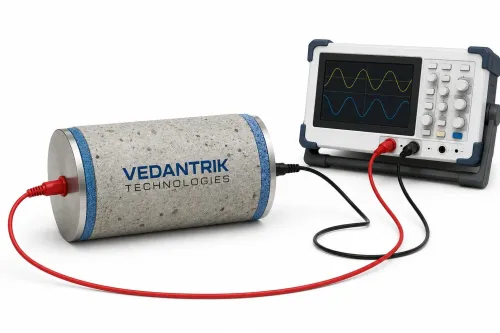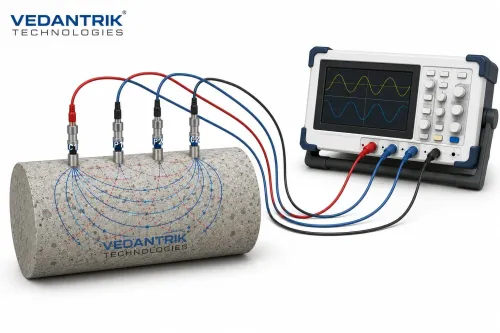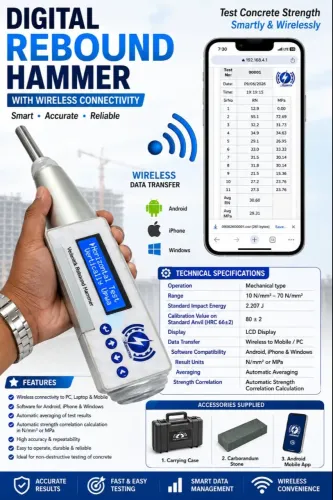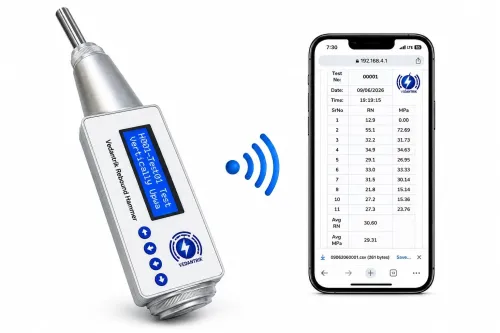
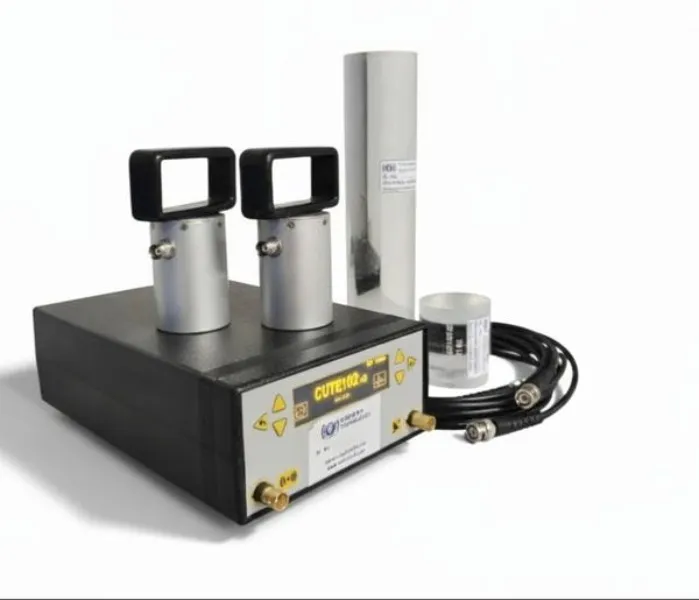
Ultrasonic Pulse Velocity (UPV) testing is widely used to assess the quality and uniformity of concrete without causing damage. However, several errors can affect the accuracy of results if proper procedures are not followed. According to IS 516 (Part 5 / Section 1: 2021) and ASTM C597, correct test conditions and surface preparation are essential for reliable readings.
One of the most common errors is poor surface contact between the transducers and concrete. If the surface is rough, dusty, or uneven, the ultrasonic signal may not transmit properly, leading to lower velocity readings. This can be avoided by cleaning the surface and using a proper coupling agent like grease or gel to ensure full contact.
Another major error is incorrect transducer alignment. Misalignment of transmitter and receiver reduces signal strength and increases travel time, which affects the calculated velocity. Proper alignment in direct transmission mode should always be maintained as recommended in ASTM C597.
The moisture condition also significantly affects results. Wet concrete generally shows higher pulse velocity compared to dry concrete. Therefore, comparisons should only be made under similar moisture conditions, as suggested in IS 516 (Part 5 / Section 1: 2021) guidelines.
Reinforcement interference is another issue. Steel bars in concrete can increase pulse velocity and give misleading results. Testing locations should be selected carefully to avoid direct contact with reinforcement whenever possible.
By following standard procedures, ensuring proper surface preparation, and maintaining consistent test conditions, most errors in UPV testing can be minimized.
Keywords