For Half Cell Potential Tests to be useful, measurements must be consistent and repeatable. Repeatability refers to the ability to obtain similar results when measurements are repeated under the same conditions.
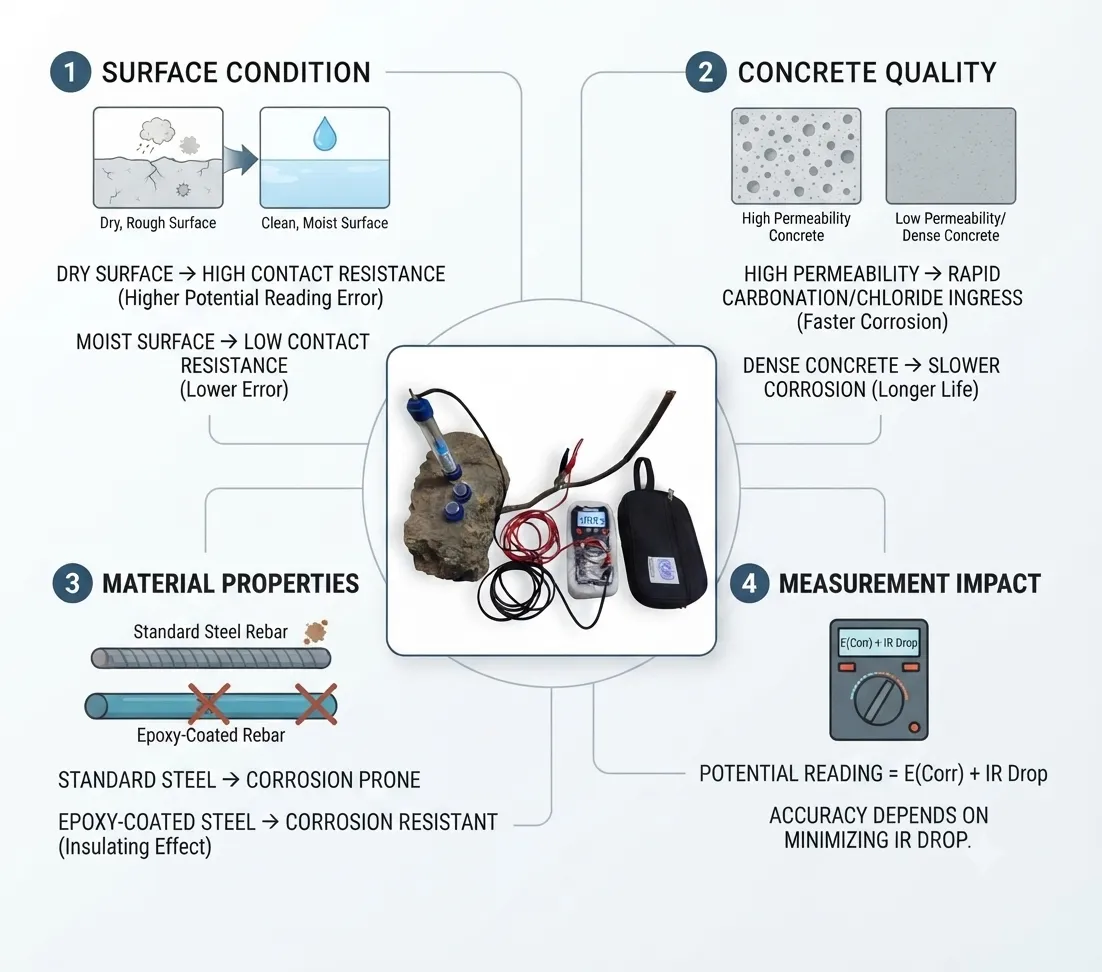
One of the most important factors affecting repeatability is concrete moisture content. Even small changes in moisture distribution can influence electrical conductivity and alter measured potentials. Tests conducted during dry conditions may produce different results from those conducted after rainfall or surface wetting.
The condition of the reference electrode is another critical factor. Electrodes that are damaged, contaminated, improperly stored, or poorly maintained can produce inaccurate readings. Regular inspection and calibration are therefore essential.
Electrical continuity within the reinforcement network must also be verified before testing begins. If reinforcement bars are not electrically connected, measurements may not represent the actual corrosion condition of the structure.
Other factors affecting consistency include electrode placement, grid spacing, measurement sequence, operator experience, environmental conditions, and instrument accuracy. Standardized testing procedures help minimize these sources of variability and improve confidence in the collected data.
Keywords