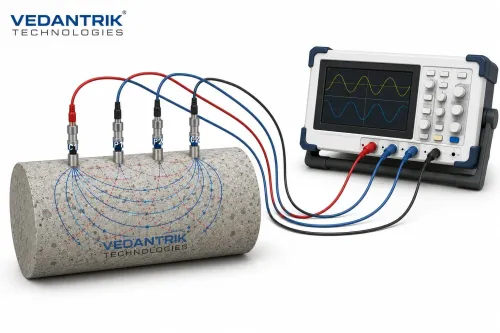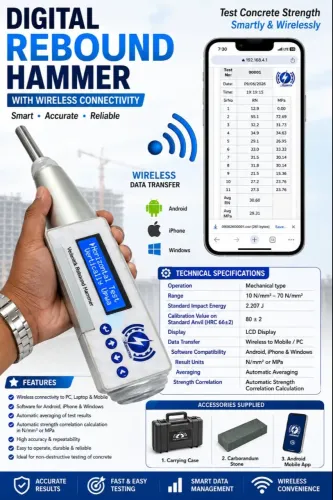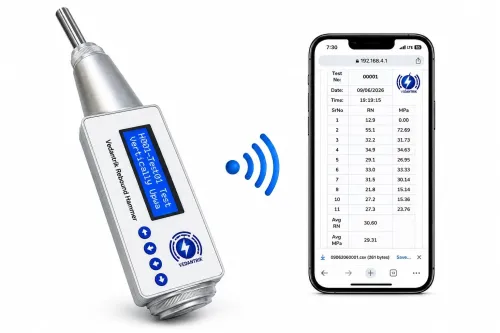
Mass concrete structures such as raft foundations, pile caps, piles, footings, dams, and large industrial foundations release a significant amount of heat during cement hydration. This heat generation causes a rise in internal concrete temperature and often leads to a temperature difference between the core and surface of the structure.
If this temperature gradient becomes too high, it can induce thermal stresses within the concrete, increasing the risk of cracking and long-term durability issues.
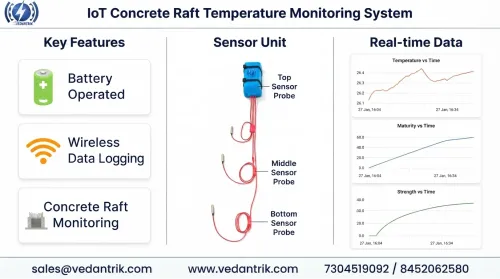
To manage these challenges, continuous temperature monitoring during the curing process is essential. A wireless mass concrete temperature monitoring system provides a reliable and efficient way to track internal temperature in real time, while also enabling strength estimation through the concrete maturity method.
This system is designed for contractors, consultants, infrastructure developers, and quality control engineers who require precise temperature and strength data during large concrete pours to improve decision-making and construction control.
Traditional mass concrete monitoring systems rely on wired thermocouples connected to data loggers. These setups are often complex, costly, and vulnerable to damage during construction activities due to extensive cabling.
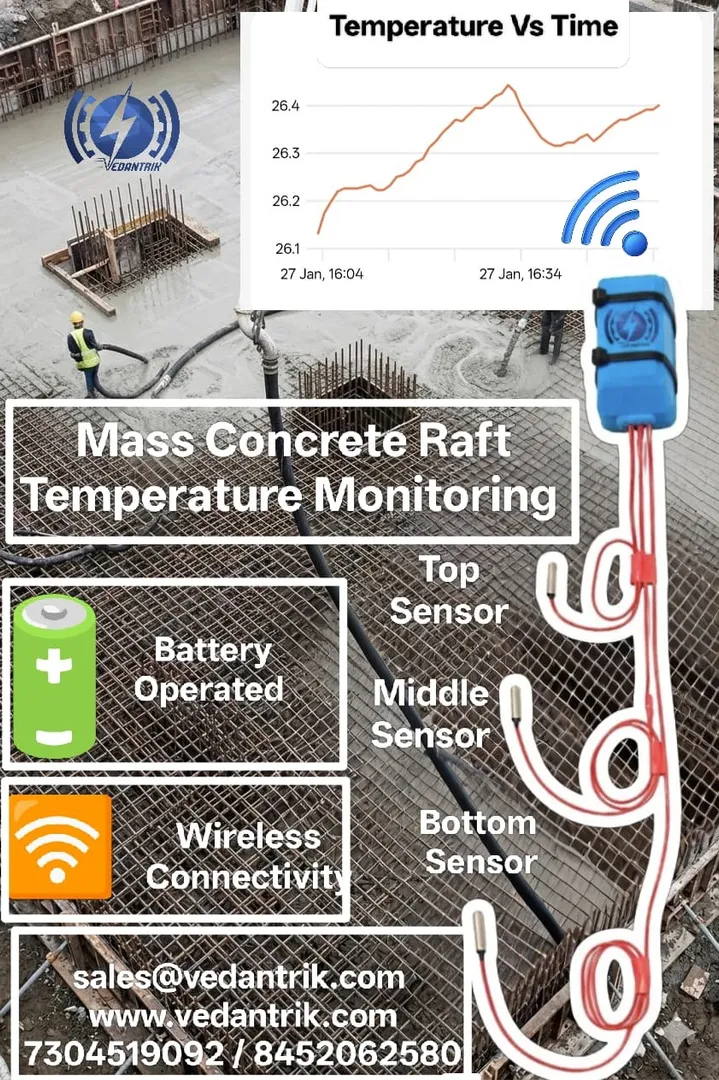
In contrast, wireless systems use compact, battery-operated sensors embedded directly into the concrete, removing the need for external wiring. These sensors continuously measure internal temperature and transmit data in real time, allowing engineers to monitor curing conditions effectively and make timely decisions regarding formwork removal, curing control, and construction scheduling.
The system also supports the concrete maturity method, which estimates in-situ compressive strength based on the temperature history of concrete. By combining temperature data with maturity calculations, engineers can estimate strength development in real time, determine safe stripping times for formwork, reduce reliance on traditional cube or cylinder testing, and accelerate construction processes while maintaining safety.
Such maturity-based monitoring is widely used in bridges, dams, high-rise buildings, and other infrastructure projects where early-age strength control is critical.
A key feature of this system is its wireless, battery-powered sensor technology. These low-cost sacrificial sensors are embedded within the concrete and remain permanently in place after casting, eliminating the need for reusable probes or long cable networks.
This significantly simplifies installation, reduces maintenance requirements, and lowers overall monitoring costs while improving efficiency.
By using this system, construction teams can effectively prevent thermal cracking, monitor internal temperature in real time, estimate strength development accurately, optimize formwork removal timing, and enhance overall structural quality and durability.
Overall, wireless temperature monitoring combined with the maturity method offers a practical and efficient solution for managing mass concrete behavior and ensuring safer, faster, and more reliable construction outcomes.
Keywords