Corrosion of steel reinforcement of the concrete has become one of the major concerns in modern day infrastructure.
Hence evaluating the risk of corrosion has become the utmost requirement in industries and laboratories, to prevent deterioration and increase the durability and service life of the concrete structures.
The Wenner four point probe testing is the most widely used method for evaluating the concrete resistivity because it offers a rapid, non destructive and reliable way of measurement of electrical conductance of the concrete, which is directly related with its corrosion potential.
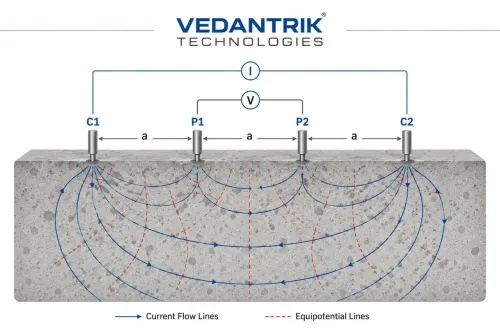
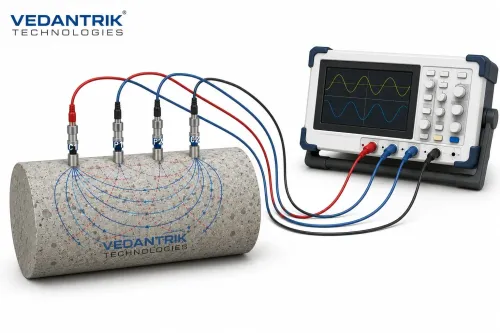
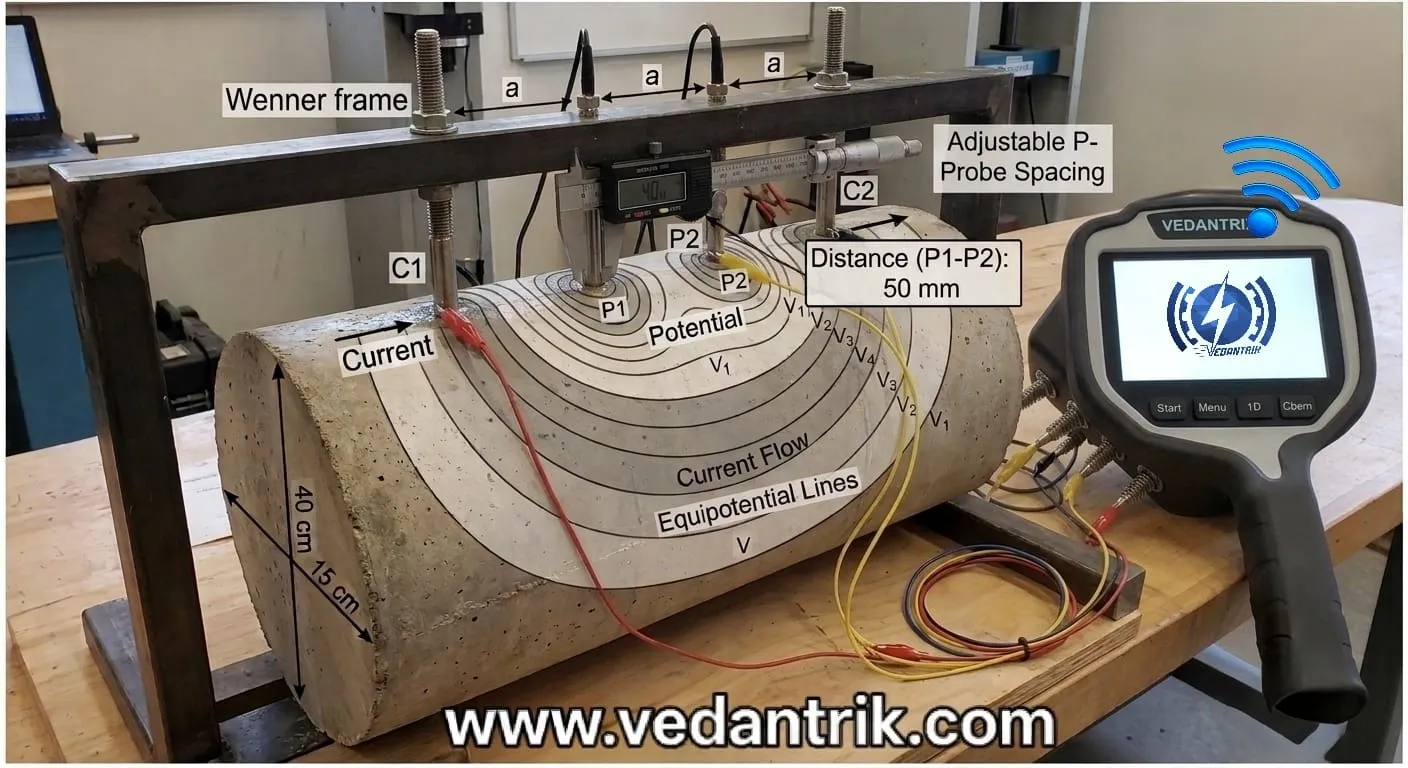
The Wenner method is performed by placing four equally spaced electrodes on the concrete surface. An electrical current is applied through the two outer electrodes, and the voltage is measured across the inner electrodes.
The resistance is then calculated from the measured values, and by taking the distance value between the probes the final resistivity of the concrete can be calculated.
High resistivity values indicate low ionic mobility, suggesting that corrosion is unlikely. Low resistivity indicates an environment where electrochemical processes can proceed faster, increasing corrosion risk.
There are several reasons the Wenner probe method is favored in the field. It requires no cores or destructive removal of samples. This makes it ideal for evaluating bridges, buildings, and big infra structures where regular testing is essential but destructive methods are impractical.
Another advantage of the Wenner method is its strong correlation with other corrosion-related tests. For example, resistivity values complement half-cell potential measurements, which indicate the likelihood of active corrosion in reinforcing steel.
When both tests are used together, engineers gain a more complete understanding of corrosion conditions. Surface resistivity can also be used to support service-life predictions, as it provides input data for chloride diffusion models.
Environmental factors do affect surface resistivity, and field technicians must consider moisture, temperature, and surface cleanliness when interpreting results.
Wet concrete typically shows lower resistivity values, indicating higher corrosion potential. For this reason, standardized testing procedures require surface preparation, consistent probe spacing, and multiple readings.
Overall, the Wenner four-point resistivity test is widely used in the field because it combines simplicity, accuracy, and diagnostic value. It enables engineers to identify high-risk areas, plan maintenance strategies, and ensure the long-term performance of reinforced concrete infrastructure.
Keywords