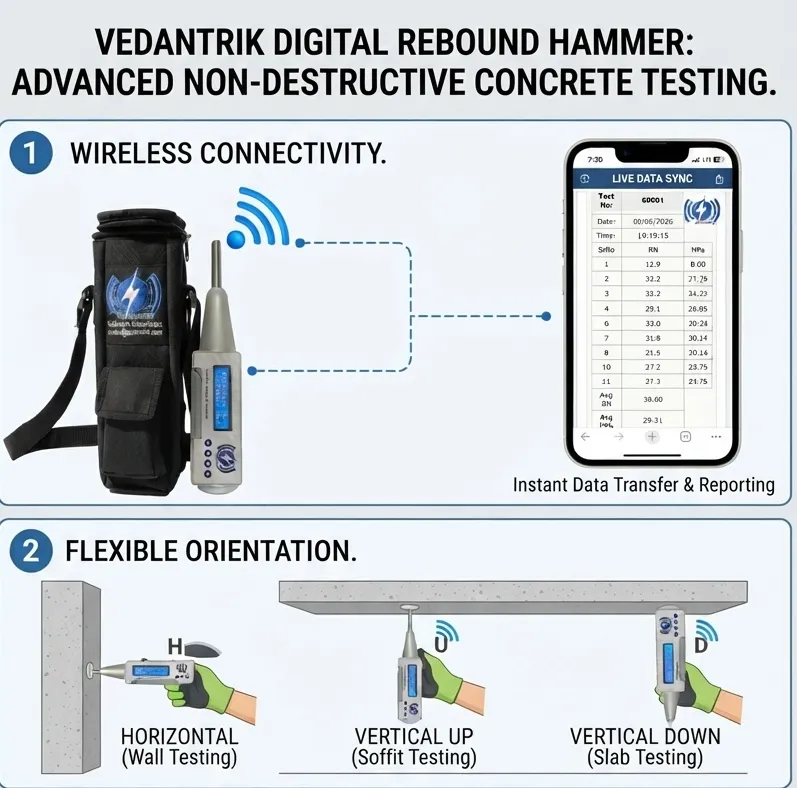
Digital Rebound Hammer testing is one of the most widely used non-destructive testing (NDT) methods for evaluating the quality and uniformity of concrete structures. It provides a quick assessment of concrete hardness by measuring the rebound value of a spring-controlled mass striking against the concrete surface. Unlike conventional rebound hammers, digital rebound hammers automatically record, process, and store test data, improving efficiency and reducing manual errors.
However, the accuracy of digital rebound hammer results depends strongly on proper calibration and standardization of the instrument. Without regular calibration and adherence to standard testing procedures, the measured rebound values may not represent the actual condition of concrete. Therefore, calibration and standardization are essential steps to ensure reliable and consistent concrete evaluation.
Need for Calibration in Digital Rebound Hammer
Calibration is the process of checking and adjusting the accuracy of a measuring instrument by comparing its readings with a known reference value. In a digital rebound hammer, calibration ensures that the rebound values displayed by the device are accurate and within acceptable limits.
During testing, several mechanical and electronic components influence the readings, including:
- Spring mechanism condition
- Impact energy consistency
- Sensor accuracy
- Digital processing system
- Display and data recording unit
Over time, repeated impacts, environmental exposure, and mechanical wear can affect the performance of these components. A calibrated instrument helps identify such deviations and maintains measurement accuracy.
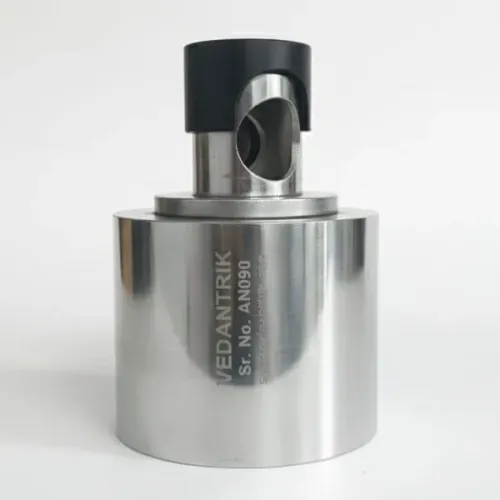
Calibration is generally performed using a standard test anvil. The rebound value obtained from the digital rebound hammer is compared with the standard reference value of the anvil. If significant variation is observed, the instrument requires adjustment or servicing.
Role of Standardization in Testing
Standardization refers to following established procedures, guidelines, and testing methods to achieve uniform results. For rebound hammer testing, standard procedures are provided in codes such as IS 13311 (Part 2):1992 – Non-Destructive Testing of Concrete: Rebound Hammer Method.
Standardization ensures that:
- The testing method remains consistent between different locations.
- Results obtained by different operators are comparable.
- Concrete strength estimation is based on reliable procedures.
- Errors due to improper testing techniques are minimized.
A standardized test considers factors such as test surface preparation, impact direction, number of readings, spacing between test points, and interpretation of rebound values.
Effect of Improper Calibration on Results
An incorrectly calibrated digital rebound hammer can produce misleading results. If the instrument gives higher rebound values than the actual value, it may indicate higher concrete strength than what exists. This can create a false sense of structural safety.
Similarly, lower readings may result in unnecessary repair or replacement decisions, increasing project costs.
Incorrect calibration may affect:
- Estimation of compressive strength
- Structural assessment decisions
- Quality control reports
- Repair and rehabilitation planning
Therefore, calibration should be carried out periodically and whenever the instrument is exposed to extreme conditions or mechanical damage.
Importance of Operator Training and Standard Procedures
Even a properly calibrated digital rebound hammer can produce inaccurate results if operated incorrectly. The skill and understanding of the operator play an important role in obtaining reliable measurements.
Operators must understand:
- Correct positioning of the instrument
- Proper surface preparation
- Required number of readings
- Avoidance of damaged or unsuitable testing areas
- Correct interpretation of digital output
Training helps reduce variations caused by human factors and improves the reliability of test results.
Integration of Digital Features with Standardization
Modern digital rebound hammers include advanced features such as automatic angle correction, data storage, statistical analysis, and connectivity with computer systems. These features improve testing efficiency but must be used according to standardized procedures.
Digital data management allows engineers to:
- Maintain testing records
- Compare results from different locations
- Generate detailed reports
- Monitor structural conditions over time
However, digital processing cannot compensate for incorrect testing conditions or poor calibration. The accuracy of the final result still depends on proper testing practice.
Conclusion
Calibration and standardization are fundamental requirements for obtaining accurate results from digital rebound hammer testing. A calibrated instrument ensures measurement reliability, while standardized procedures ensure consistency and proper interpretation of results.
For effective concrete evaluation, engineers must combine a properly calibrated digital rebound hammer with trained operators and approved testing guidelines. This approach improves confidence in structural assessment and supports safe decision-making in construction, maintenance, and rehabilitation projects.
Keywords