Half-cell corrosion potential is a non-destructive testing method mainly used to find the likelihood of steel corrosion in reinforced concrete structures. It helps engineers check the condition of steel reinforcement inside concrete without damaging the structure.
Corrosion of steel inside concrete is a serious problem because it gradually reduces the strength and safety of the structure, which also shortens its service life. When steel corrodes, the rust products occupy more volume than the original steel. This causes expansion, which creates internal pressure in the surrounding concrete. As a result, cracks can form, the concrete may start to separate (delamination), and the overall strength of the structure can decrease.
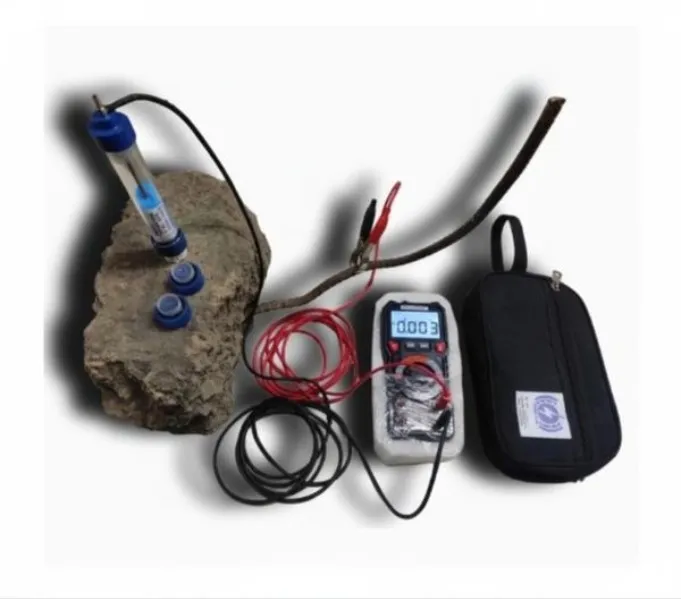
The half-cell corrosion potential test is a simple and effective way to estimate whether corrosion is likely to be active. It works by measuring the electrical potential difference between a reference electrode—usually a copper/copper sulfate electrode and the steel reinforcement embedded in concrete.
These measured values are then compared with standard guidelines such as ASTM C876 to judge the probability of corrosion. Based on the results, engineers can understand whether corrosion is unlikely, possible, or highly likely.
One important benefit of this test is that it can be used for long-term monitoring. Since corrosion develops slowly over time, repeated tests taken over months or years help engineers track how the corrosion condition is changing in a structure.
Because of this, many organizations use half-cell potential testing in regular inspection programs for bridges, tunnels, marine structures, and other important reinforced concrete buildings. The results can also be compared across different areas of the same structure to identify problem zones.
When used along with other testing methods, it helps engineers not only locate corrosion-prone areas but also understand possible causes like chloride penetration, carbonation, or moisture presence.
Overall, half-cell corrosion potential testing is important because it provides a quick, low-cost, and reliable way to assess the corrosion condition of steel inside concrete structures.
Keywords