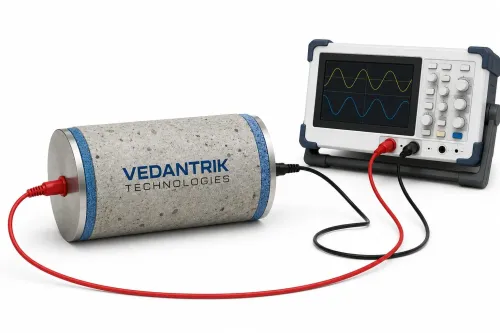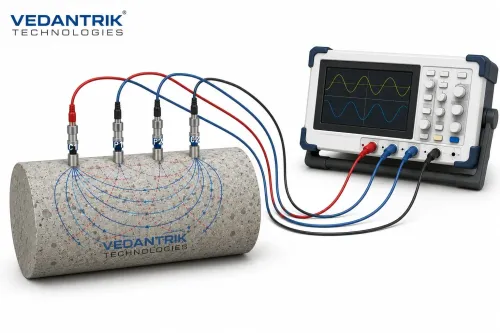
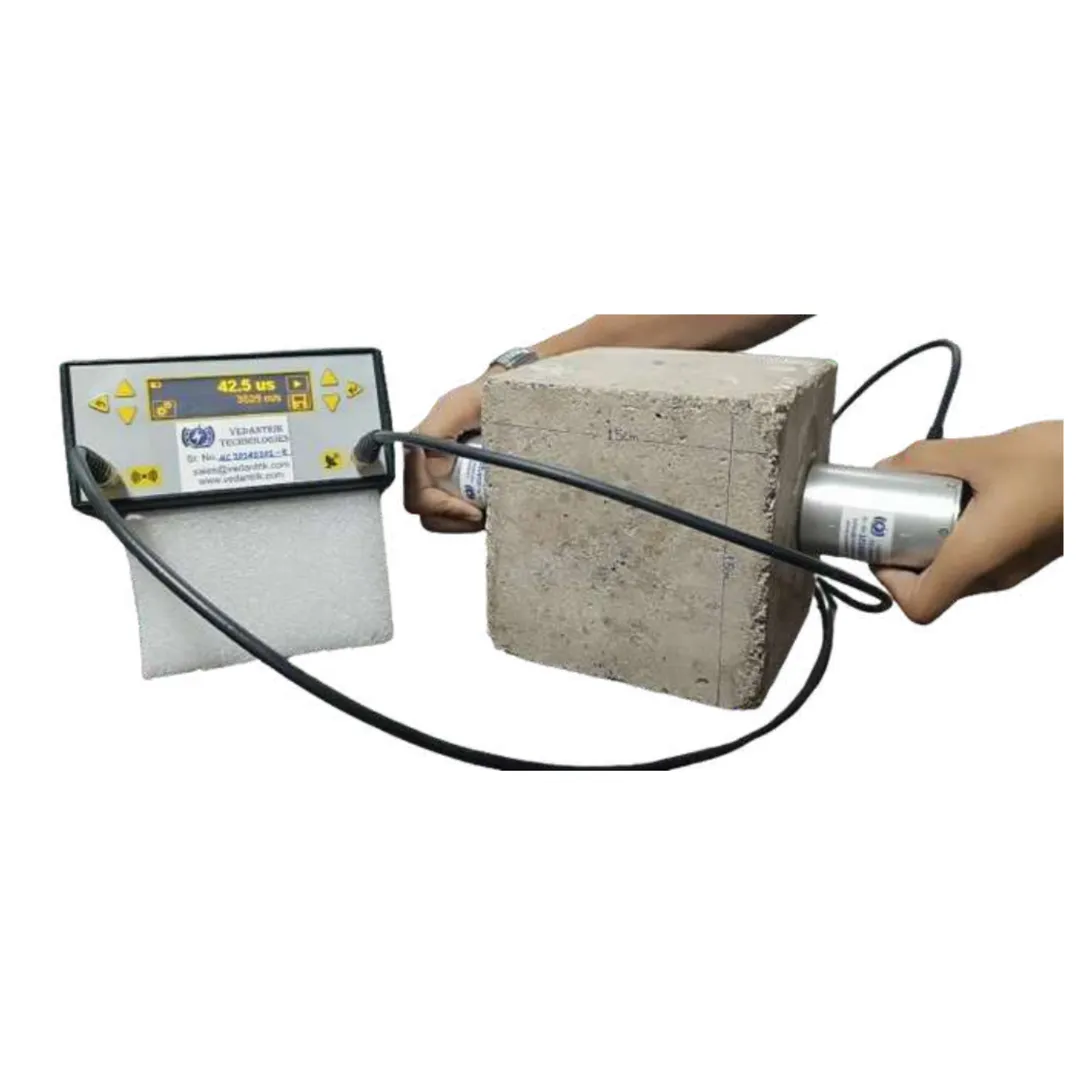
During Ultrasonic Pulse Velocity (UPV) testing, operators may face issues such as signal loss, excessive noise, or unstable readings. These problems are generally related to coupling quality, surface condition, instrument settings, or calibration. Guidance fromIS 516 (Part 5 / Section 1: 2021) and ASTM C597 emphasizes proper setup and calibration to ensure reliable results.
Signal loss is one of the most common issues. It occurs when the ultrasonic wave fails to properly travel from the transmitter to the receiver. This can happen due to poor coupling, rough concrete surfaces, excessive path length, or internal defects such as cracks and voids. Applying a suitable coupling gel, ensuring firm probe contact, and selecting an appropriate test path can significantly reduce signal loss.
Noise in the signal is another challenge. Electrical interference, unstable probe pressure, or loose connections can introduce unwanted fluctuations in the waveform. Keeping cables secure, avoiding proximity to high-power electrical equipment, and maintaining steady probe pressure helps in reducing noise and improving signal clarity.
A very useful modern feature in UPV instruments is the Burst Mode. In this mode, the instrument sends a short, high-energy pulse instead of a continuous signal. This improves the strength and clarity of the ultrasonic wave, especially in poor-quality or highly attenuating concrete.
Burst Mode is particularly helpful when testing thick sections, older concrete, or concrete with internal voids where standard pulse transmission may result in weak or unclear signals. By increasing the energy of each pulse and improving signal-to-noise ratio, Burst Mode helps in obtaining more stable and readable waveforms, leading to more reliable velocity calculations.
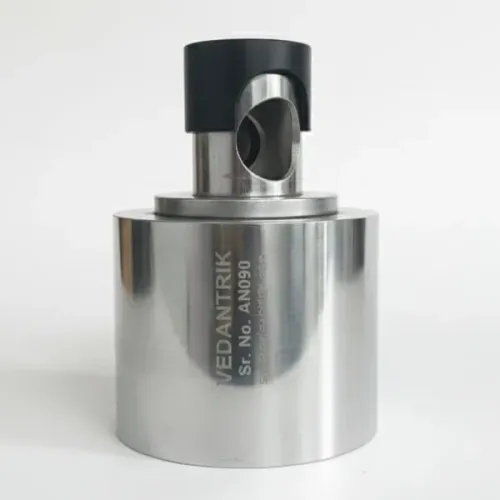
Calibration issues can also lead to incorrect readings. If the instrument is not properly calibrated using a standard calibration bar, velocity results may be inaccurate. Both IS 516 (Part 5 / Section 1: 2021) and ASTM C597 recommend routine calibration before testing to ensure measurement accuracy.
Battery instability, loose connectors, or improper settings can further affect signal quality. Regular maintenance and correct instrument setup are essential to avoid such issues.
By checking coupling conditions, ensuring proper calibration, using features like Burst Mode effectively, and following standard procedures, most UPV testing problems can be efficiently diagnosed and resolved.
Keywords