Reinforcing steel embedded in concrete is normally protected by a thin passive oxide layer that forms naturally on its surface. This protective layer shields the steel from the alkaline pore solution within the concrete. However, aggressive substances such as chloride ions and carbon dioxide (CO₂) can penetrate the concrete and damage this passive layer, exposing the steel to moisture and oxygen and creating conditions for corrosion to begin.
Corrosion starts when iron atoms in the steel lose electrons and become iron ions. These electrons are consumed by oxygen and water, producing hydroxyl ions (OH⁻). The iron ions then react with these hydroxyl ions to form iron oxides and hydroxides, commonly known as rust. As corrosion develops, anodic and cathodic regions form on the steel surface, creating localized electrochemical cells and generating an electrical potential.
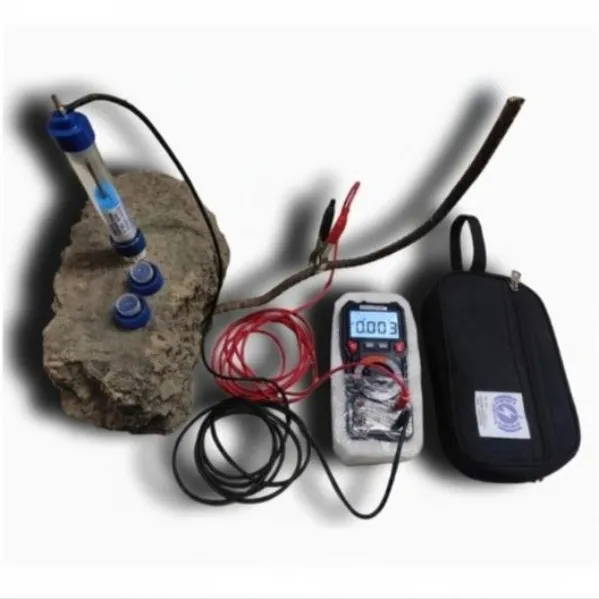
The half-cell corrosion potential test measures this electrical potential by connecting the reinforcing steel to a reference electrode, most commonly a copper/copper sulfate (Cu/CuSO₄) electrode. The measured voltage difference between the steel and the reference electrode provides information about the electrochemical condition of the reinforcement.
By taking measurements at multiple locations on the concrete surface, engineers can create a potential map of the structure and identify areas where corrosion is more likely to be occurring. It is important to note that the half-cell potential test does not measure the corrosion rate directly; instead, it indicates the probability of active corrosion within the reinforcement.
In general, more negative potential values indicate a greater likelihood of corrosion activity, while more positive values suggest a lower probability of active corrosion. Guidance for conducting the test and interpreting the results is provided in ASTM International ASTM C876.
According to ASTM C876, potential readings more negative than −350 mV indicate a high probability of active corrosion. Values between −200 mV and −350 mV represent uncertain conditions where corrosion may or may not be occurring. Readings more positive than −200 mV indicate a low probability of active corrosion.
The half-cell corrosion potential test is widely used because it is non-destructive, relatively simple to perform, and suitable for evaluating large areas of a structure. It is particularly valuable for assessing the condition of aging concrete infrastructure, including bridges, parking structures, and marine facilities where reinforcement corrosion is a major durability concern