
Introduction
Digital Rebound Hammer testing is a widely used non-destructive testing method for evaluating the quality and uniformity of concrete structures. It provides an indirect estimation of concrete compressive strength by measuring the rebound value produced when a spring-controlled mass impacts the concrete surface.
Although digital rebound hammers provide faster data collection, automatic calculations, and improved record keeping compared to conventional instruments, the accuracy of test results depends on several external and internal factors. Understanding these factors is essential for correct interpretation of rebound values and avoiding incorrect conclusions about concrete strength.
The rebound value represents the surface hardness of concrete and does not directly measure compressive strength. Therefore, proper testing conditions, calibration, and interpretation methods are necessary to obtain meaningful results.
1. Concrete Surface Condition
The condition of the concrete surface has a major influence on rebound hammer readings. A smooth, clean, and properly prepared surface provides more reliable results compared to rough or damaged surfaces.
Factors such as:
- Surface roughness
- Presence of loose particles
- Paint coatings
- Plaster layers
- Surface cracks
- Uneven areas
can affect the impact response and produce inaccurate readings.
Before testing, the surface should be cleaned and prepared to remove loose material and irregularities. Testing should preferably be carried out on a flat and solid concrete area to ensure proper contact between the hammer and surface.
2. Moisture Condition of Concrete
The moisture content of concrete significantly affects rebound values. Wet concrete surfaces generally produce lower rebound readings compared to dry surfaces because moisture reduces surface hardness.
Concrete conditions can be classified as:
- Dry concrete
- Moist concrete
- Water-saturated concrete
When comparing test results, similar moisture conditions should be maintained wherever possible. If testing is performed on wet concrete, the results should be interpreted carefully because they may underestimate the actual concrete strength.
3. Age of Concrete
The age of concrete influences its hardness and strength development. As concrete matures, hydration continues, causing an increase in strength and surface hardness.
However, older concrete may also experience:
- Carbonation of the surface layer
- Weathering effects
- Surface deterioration
Carbonation increases surface hardness and can result in higher rebound values than expected. Therefore, age-related effects should be considered while estimating compressive strength from rebound readings.
4. Carbonation Effect
Carbonation is a chemical reaction between carbon dioxide in the atmosphere and cement compounds present in concrete. It creates a harder surface layer that can increase rebound hammer readings.
In carbonated concrete:
- Surface hardness may be higher
- Rebound values may appear greater
- Estimated strength may be overestimated
For accurate assessment, engineers should consider carbonation depth and, if necessary, use additional testing methods to confirm the results.
5. Type of Aggregate Used in Concrete
The type and properties of aggregates influence the rebound response of concrete. Different aggregates have different hardness characteristics, which affect the impact energy absorption.
Concrete containing hard aggregates may produce higher rebound values, while softer aggregates may produce lower readings.
Factors related to aggregates include:
- Aggregate type
- Aggregate size
- Distribution within concrete
- Aggregate hardness
Therefore, strength estimation curves developed for one type of concrete may not always provide accurate results for another type of concrete.
6. Impact Direction and Testing Angle
The direction in which the rebound hammer is applied affects the measured rebound value due to the effect of gravity on the internal hammer mechanism.
Common testing directions include:
- Horizontal testing
- Vertical upward testing
- Vertical downward testing
- Inclined testing
Digital rebound hammers often include automatic angle correction features, but the operator must still follow proper testing orientation. Incorrect positioning can introduce errors in recorded values.
7. Concrete Mix Characteristics
Concrete composition plays an important role in rebound hammer results. Variations in mix design can affect surface hardness and rebound response.
Important factors include:
- Cement content
- Water-cement ratio
- Admixtures
- Curing conditions
- Compaction quality
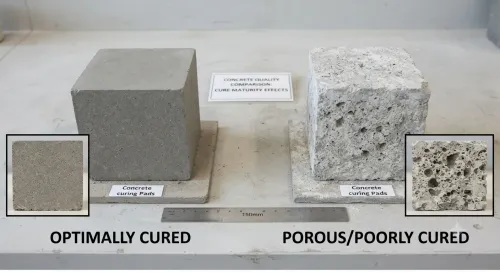
Concrete with a lower water-cement ratio generally develops higher strength and hardness, resulting in higher rebound values. Poor compaction or inadequate curing can reduce surface hardness and produce lower readings.
8. Number and Distribution of Test Readings
Reliable interpretation requires multiple readings from different points rather than depending on a single measurement.
During testing:
- Multiple readings should be taken from a selected area.
- Abnormal values should be reviewed or discarded according to standard procedures.
- Average rebound value should be calculated.
Proper distribution of test points helps identify variations in concrete quality and provides a more accurate representation of the structure.
9. Calibration and Instrument Condition
The accuracy of digital rebound hammer results depends on the condition and calibration status of the instrument.
Possible causes of inaccurate readings include:
- Mechanical wear
- Sensor malfunction
- Improper calibration
- Damage due to impact or storage conditions
Regular calibration using a standard reference anvil is necessary to maintain reliability.
Interpretation of Digital Rebound Hammer Results
The rebound value obtained from testing is generally converted into estimated compressive strength using standard calibration curves. These curves provide a relationship between rebound number and concrete strength.
However, engineers should understand that rebound hammer results provide an estimation and should not be considered an exact measurement of strength.
For important structural evaluations, rebound hammer testing may be combined with other methods such as:
- Ultrasonic Pulse Velocity (UPV) testing
- Core testing
- Visual inspection
Following guidelines such as IS 13311 (Part 2):1992 helps ensure proper testing and interpretation.
Conclusion
Digital rebound hammer testing is an efficient method for evaluating concrete quality, but the accuracy of results depends on several influencing factors. Surface condition, moisture, concrete age, carbonation, aggregate type, testing direction, and calibration status can significantly affect rebound values.
Proper understanding of these factors allows engineers to interpret results correctly and make reliable decisions regarding structural quality, maintenance, and repair. Digital rebound hammer results should always be evaluated with engineering judgment and supported by appropriate testing standards.
Keywords