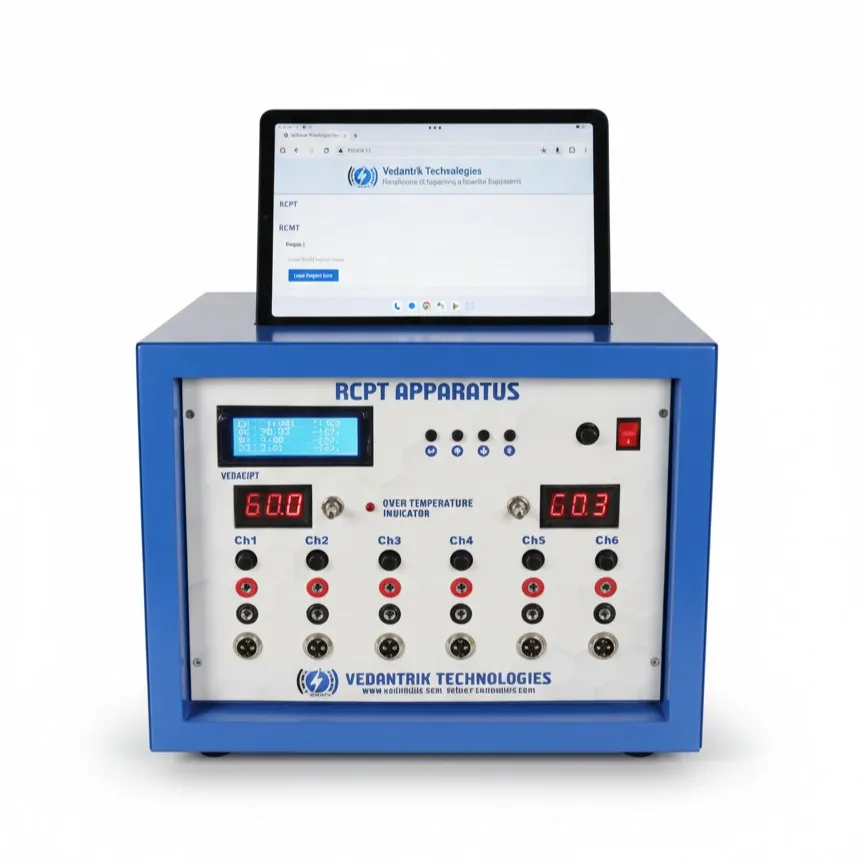
In the Rapid Chloride Permeability Test (RCPT) as per ASTM C1202, most errors occur during specimen preparation rather than during the actual testing, and these mistakes can significantly distort the measured charge passed. One common mistake operators make is improper curing of concrete specimens before testing.
If specimens are tested before they have reached the specified curing age or if curing conditions such as temperature and humidity are not consistent, the internal pore structure is not fully developed, leading to misleading results.
Another frequent issue is improper cutting of the concrete disc specimens, where operators fail to maintain the required thickness tolerance or produce uneven, chipped, or rough surfaces. Cutting without adequate cooling can also introduce microcracks due to heat generation, which can artificially increase permeability readings.
Another major error is failure to properly prepare and condition the specimen surfaces. Operators sometimes do not remove laitance or weak surface layers when required, and residual slurry or dust from cutting is not thoroughly cleaned, both of which can interfere with electrical conductivity and skew results. Improper sealing of the specimen sides with epoxy is also a serious issue; even small gaps, pinholes, or incomplete coating can allow current to bypass the intended flow path, resulting in falsely high permeability values.
Saturation of specimens is another critical step where mistakes are common. Inadequate vacuum saturation, insufficient soaking time, or trapped air in pores leads to incomplete saturation, which can either increase or decrease measured charge depending on the condition, making results highly inconsistent. Similarly, allowing specimens to dry out after saturation or delaying the test after conditioning changes the internal moisture state and affects conductivity.
Handling errors also contribute significantly to unreliable results. Specimens may get scratched, chipped, or cracked during transport or cleaning, introducing artificial flow paths. Incorrect specimen dimensions, especially variations in thickness or mixing up orientation of cast surfaces, further reduce repeatability and comparability.
Temperature differences between saturation and testing stages, if not properly controlled, also influence ionic movement through the pore solution and lead to variability in results. Overall, most operator mistakes in RCPT specimen preparation stem from poor control of curing, cutting, saturation, sealing, and handling processes, all of which directly affect the continuity and conductivity of the pore network in concrete and therefore the final test outcome.
Keywords