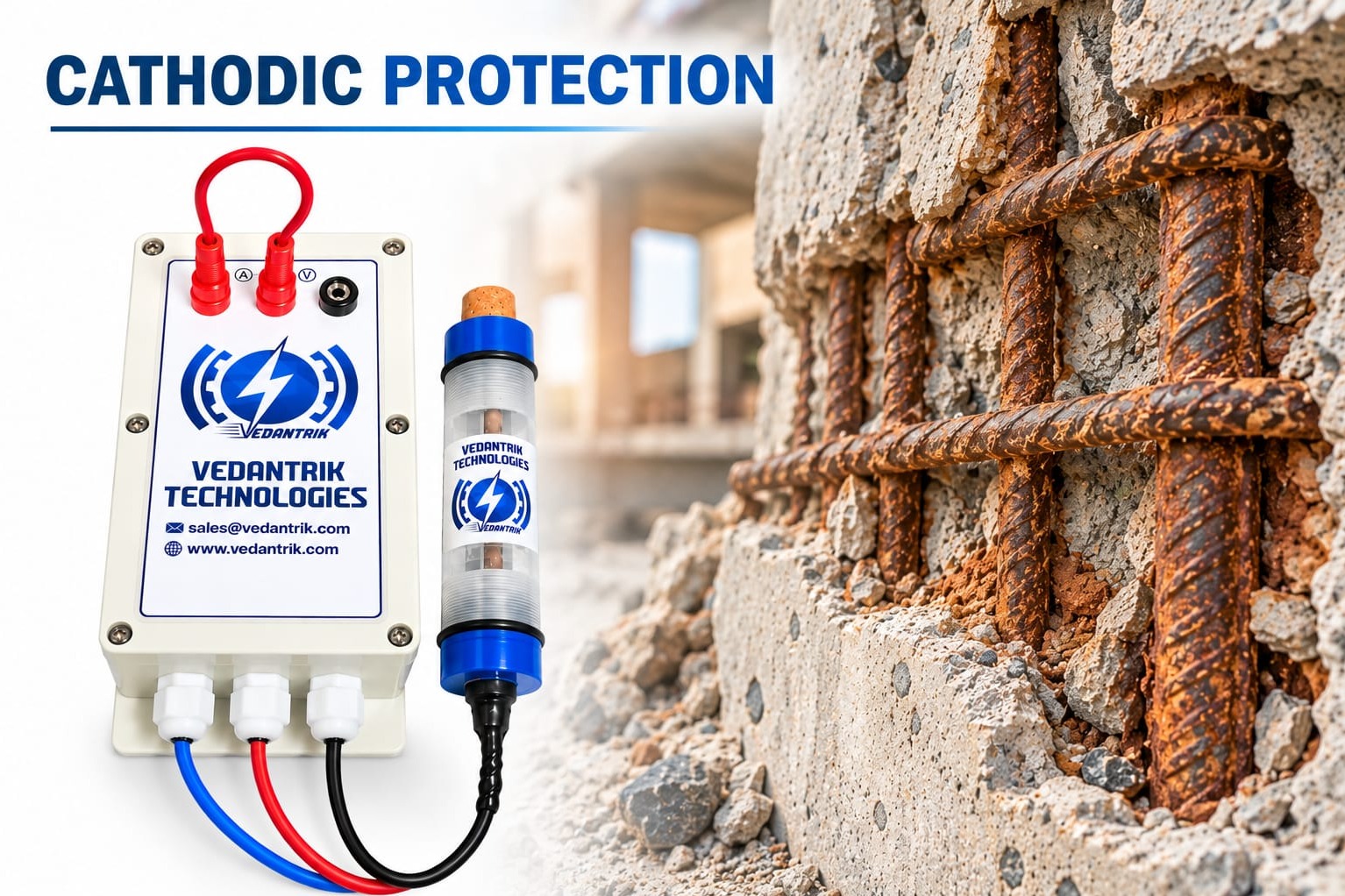
Cathodic protection (CP) systems are designed to prevent corrosion of steel by controlling electrochemical reactions, but their effectiveness is heavily dependent on careful monitoring of current and potential.
Without regular observation, a CP system may fail to provide protection or, overprotect the steel, leading to unwanted damage to the metal structure. Monitoring ensures that the steel remains in the cathodic state, extending service life and reducing maintenance costs.
In CP systems, current is supplied to the steel either through sacrificial anodes or impressed current anodes. The current protects the steel by supplying electrons to counteract corrosion.
Potential refers to the voltage of the steel relative to a reference electrode, often a copper/copper sulfate electrode in concrete or soil. The potential indicates whether the steel is at cathodic state to prevent initiation of corrosion. By tracking both parameters, engineers can assess the performance of the CP system in real time.
If the current is too low, some areas of steel may become anodic and begin to corrode. For example, in reinforced concrete, uneven distribution of current can leave regions that are isolated prone to corrosion.
Similarly, measuring steel potential helps determine if the protective current is sufficient; potentials more negative than a specified threshold indicate effective cathodic protection.
Continuous monitoring ensures that the system responds appropriately to changes in environmental conditions, such as moisture levels, chloride penetration, or seasonal temperature shifts.
Excessive CP current can also be harmful. Over protection can lead to hydrogen evolution at the steel surface, potentially causing cracking, or damage to concrete. By monitoring current and potential, engineers can adjust the system to maintain optimal levels, avoiding structural harm while still preventing corrosion.
Monitoring helps identify issues with CP components, such as failing anodes, broken wiring, or insufficient power supply in impressed current systems. Sudden changes in steel potential or a drop in current may indicate system failure or interference from stray currents. Early detection allows timely maintenance, preventing localized corrosion and extending the system’s lifespan.
Many infrastructure projects require CP monitoring to meet design codes, safety standards, or warranty conditions. This is particularly important in bridges, tunnels, pipelines, and marine structures, where structural failure due to corrosion could have severe consequences.
In summary, monitoring current and potential is a critical component of any cathodic protection system. It ensures that the steel remains fully protected against corrosion, prevents over protection, detects system malfunctions, and maintains compliance with safety and design standards.
Without proper monitoring, even a well-designed CP system can fail, leading to expensive repairs, structural damage, and reduced service life. Regular observation and adjustment make CP a reliable, long-term solution for preserving steel structures in aggressive environments.
Keywords