Mumbai
+917304519092
+917304519092

concrete diffusion analyzer

6814772a5d263414004dd4a4 Card 2

product image
Rapid Chloride Migration Test Apparatus

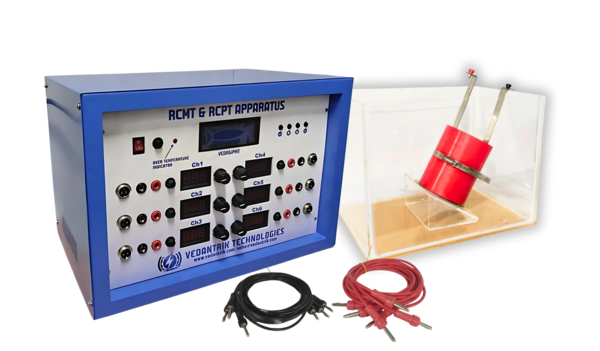
Rapid Migration Penetration Test (RCMT) When it comes to assessing the durability of reinforced concrete, the Rapid Chloride Migration Test (RCMT) has become a preferred method across engineering projects. Unlike RCPT, which measures electrical charge passing through concrete, RCMT evaluates chloride migration under an applied electric field. This approach provides faster and more reliable results, making it a valuable tool for both research laboratories and quality control departments. Rapid chloride migration test (RCMT) is a test performed for determination of the chloride migration Coefficient in concrete, mortar or cement-based repair Materials from non steady-state migration experiments. A concrete core of 100 mm diameter and 50 mm thickness is placed inside a rubber sleeve, which separates two compartments, one side is filled with sodium chloride (NaCl) solution (connected to the anode) and the other with sodium hydroxide (NaOH) solution (connected to the cathode). The sample is placed such that the bottom is in contact with the NaCl solution, and the top is in contact with the NaOH solution. An initial voltage of 30V is applied, and the initial current is recorded. Based on this value the RCMT apparatus recommends the next voltage and test duration as per NT BUILD 492. At the end of the test, the final temperature of the system is logged. The concrete sample is then split, and the internal surface is sprayed with silver nitrate. This reacts with the chloride ions to form a white precipitate, marking the depth of chloride penetration. This depth is used to calculate the chloride migration coefficient, which helps determine the concrete’s ability to resist chloride-induced corrosion. Purpose of RCMT in Concrete testing: The results are crucial for: 1. Assessing concrete’s ability to resist migration of chloride ions, which is critical for concrete durability. 2. Assessing the long-term durability and predicting the service life of concrete structures, especially in environments with high chloride exposure, like coastal regions. 3. Provides a standardised method to evaluate concrete’s transport properties, making it useful for both research and construction application. 4. Evaluating and ensuring the quality of concrete mixes during construction. 5. Studying the effectiveness of different concrete mix designs and admixtures. 6. Quality control tool for comparing different mix designs in terms of durability. 7. Helps in optimising concrete mix for structures exposed to aggressive environments. Principle of RCMT: The Rapid Chloride Migration Test (RCMT), developed under Nordic Concrete Research Framework and standardised as NT BUILD 492, is an electrochemical cell test design conducted to determine the chloride ion migration coefficient of the concrete. The main principle behind this test is the establishment of external applied voltage potential across the specimen which causes the migration of chloride ions through the saturated pore structure of the concrete, which is directly associated with its durability performance in log-term, specially in relation to the chloride induced corrosion of the embedded steel reinforcements (Rebar). The electrical potential induces a non- steady state migration condition, where the chloride ion transport is primarily by the migration rate rather than concentration driven steady state diffusion. The test is conducted for a fixed duration typically ranging from 6 to 96 hours. After the test completion the specimen is axially slit, and the internal surface is sprayed by 0.1 M silver nitrate (AgNO3) solution. The silver nitrate reacts with the chloride ions to form silver chloride (AgCl) which appears as a white precipitate marking the penetration depth of chloride. This depth is measured at multiple radial points to calculate the average penetration depth (Xd). The average penetration depth obtained is used in conjunction with other parameters such as applied voltage, initial current, initial and final temperature, and test duration to calculate the non-steady state chloride migration coefficient (Dnssm) as per NT BUILD 492. The test assumes negligible ion interaction and linear electric potential drop across the specimen. However, other ions may participate in charge transport, although differences in their mobility add negligible interference as the chloride determination is due to selective precipitation reaction between chloride and AgNO3. This way the RCMT provides a quantifiable and reproducible measurement of chloride ion migration, serving as method for performance based evaluation of different concrete mixes, especially those incorporating supplementary cement materials (SCMs), chemical admixture, or concrete specimens subjected to different curing conditions. The derived migration coefficient serves as an indicator for concrete’s long-term chloride diffusion behaviour to predict durability of concrete over decades. Measurement of RCMT: The final calculation combines the average penetration depth with other parameters such as applied voltage, initial current, initial and final temperature, and test duration to calculate the non-steady state chloride migration coefficient (Dnssm) as per NT BUILD 492. The formula to calculate the non-steady state migration coefficient (as per NT BUILD 492) is given below. Dnssm = (0.0239 ∗ (273 + T) ∗ L/ (U−2)t) * (xd −0.0238 ∗ √(273 + T)∗ L∗ Xd / √U−2 ) Where: Dnssm: non-steady-state migration coefficient, m2/s; z: absolute value of ion valence, for chloride, z = 1; F: Faraday constant, F = 9.648 ×10⁴ J/(V·mol); U: absolute value of the applied voltage, V; R: gas constant, R = 8.314 J/(K·mol); T: average value of the initial and final temperatures in the anolyte solution, K; L: thickness of the specimen, m; Xd: average value of the penetration depths, m; t: test duration in hours Components of RCMT: 1. Vacuum desiccator and pump: For vacuum saturation of the specimen (<50 mm of Hg). 2. RCMT test Chamber: Holds the concrete specimen and creates chambers for NaCl and NaOH solutions. 3. Concrete Specimen: The sample to be tested for chloride ion permeability. Cylindrical core of standard dimension 100 mm diameter and 50 mm thickness. 4. 10% Sodium Chloride (NaCl) Solution: Placed in the chamber; source of chloride ions. 5. 0.3 N Sodium Hydroxide (NaOH) Solution: Placed to above specimen in sleeve; completes the electrical circuit. 6. Silver nitrate, AgNO₃: Used to spray split specimen surface for chloride penetration detection. 7. Silicone rubber sleeve: Covers specimen sides; inner/outer diameter. 8. Stainless steel clamp: Secures sleeve and specimen, prevents leakage. 9. Electrodes: Transfer electrical current into the solutions. 10. Power Supply (DC Voltage Source): Provides constant 0-60V across the specimen during the test. 11. Temperature sensor/ thermocouples: To monitor temperature, accuracy ±1 °C. 12. Ammeter (Current Meter): Measures the current passing through the specimen to calculate charge passed. 13. Data Acquisition system: Records current over time to compute total charge passed (in coulombs). Standard procedure: Overview (as per NT BUILD 492) 1. Sample Preparation Concrete specimens are prepared by cutting or coring cylindrical samples of 100 mm diameter and 50 mm thickness (±2 mm). These are typically taken from cast cubes, cylinders, or field cores. The side surfaces are sealed using rubber sleeves, epoxy, or similar material to ensure that chloride can only enter the concrete from the exposed circular faces. Specimens should be cured for a minimum of 28 days, and surface carbonation or contamination should be removed before testing. 2. Preconditioning / Saturation To ensure accurate and repeatable results, the specimen must be fully saturated. This is done using a vacuum saturation method where the specimens are placed in a container filled with saturated calcium hydroxide [Ca(OH)₂] solution. A vacuum (≤ 50 mm of Hg) is applied for 3 hours to remove air from the concrete pores. After the vacuum is released, the specimens remain submerged in the solution for an additional 18 ± 2 hours. This step ensures the pore system is completely filled with liquid, simulating worst-case chloride ingress conditions. 3. Test Assembly The saturated specimen is mounted in a migration cell, with its ends exposed to two different solutions, Cathode chamber (negative side) is filled with 10% NaCl (sodium chloride) solution. The Anode chamber (positive side) is filled with 0.3 N NaOH (sodium hydroxide) solution. Each chamber contains a stainless steel electrode (plate or mesh), and the entire setup is sealed to prevent leakage. The arrangement ensures unidirectional ion movement through the concrete. 4. Applying the Electric Field Initially 30 volts DC is applied across the specimen using an external power supply. The test duration ranges from 6 to 96 hours, depending on initial current value. The electric field forces chloride ions to migrate from the catholyte (NaCl) into the concrete. During the test, the initial current, temperature, and voltage are recorded. 5. Splitting and Chloride Detection After the test completion, the specimen is removed and split axially to expose the internal surface. The freshly split face is sprayed with 0.1 M silver nitrate (AgNO₃) solution. This reacts with any chlorides present, forming a white precipitate of silver chloride, clearly showing the depth of chloride penetration. 6. Measurement of Chloride Migration Using a scale, the depth of the white chloride front is measured at ten evenly spaced points across the diameter of the specimen. The average penetration depth (Xd) is calculated from these readings, which serves as a basis for computing the chloride migration coefficient. 7. Calculation of Migration Coefficient The chloride migration coefficient (Dnssm) is calculated using a standard equation provided in NT BUILD 492. The formula uses inputs such as the average penetration depth, test voltage, duration, specimen thickness, and temperature. This coefficient quantifies the rate of chloride migration under test conditions and serves as a key indicator of concrete durability. Result Interpretation of RCMT: The main results of the RCMT is the chloride migration coefficient (Dnssm), which is expressed in: x * 10-12 m2/s Lower values represent better resistance to chloride penetration, which corresponds to higher durability. While NT BUILD 492 provides the procedure and the formula for calculating the non-steady state chloride migration coefficient (Dnssm), it does not define specific limits for durability classification. Therefore, the interpretation of the results must be done by referring to relevant research literature or guidelines provided by other institutions. Factors influencing RCMT results: 1. Influence of Moisture Content: The test results are highly affected by the moisture content, and may lead to current fluctuations ultimately skewing the final results of the test. 2. Effect of Admixtures: Use of chemical or supplementary cementitious materials (SCMs) like silica fume, fly ash may reduce the pore size of the concrete sample, increasing the resistance to movement of chloride ion. 3. Pore structure and connectivity: The size , distribution, and inter connectivity of pores determine how easily chloride ions can move through the concrete. 4. Temperature effect: Rise in temperature increases the diffusion rate of the chloride ions, leading to higher measured migration of the chloride ions. It also affects the micro-structures in the concrete changing the final result, leading to false interpretation. Rapid Chloride Migration Test (RCMT) Apparatus by Vedantrik Technologies Durability of concrete depends on its resistance to chloride ingress, and the Rapid Chloride Migration Test (RCMT) is one of the most effective methods to measure it. Unlike traditional long-duration permeability tests, RCMT delivers quicker results by monitoring the migration of chloride ions under an applied electric field. This makes it a practical choice for both research laboratories and on-site quality control. Rapid chloride migration test (RCMT) apparatus by Vedantrik Technologies is laboratory device specially made for determination of the chloride migration Coefficient in concrete, mortar or cement- based repair Materials from non-steady-state migration experiments. A concrete core of 100 mm diameter and 50 mm thickness is placed inside a rubber sleeve, which separates two compartments, one side is filled with sodium chloride (NaCl) solution (connected to the anode) and the other with sodium hydroxide (NaOH) solution (connected to the cathode). The sample is placed such that the bottom is in contact with the NaCl solution, and the top is in contact with the NaOH solution. An initial voltage of 30V is applied, and the initial current is recorded. Based on this value the RCMT apparatus automatically recommends the next voltage and test duration as per NT BUILD 492 At the end of the test, the machine logs the final temperature of the system. The concrete sample is then split, and the internal surface is sprayed with silver nitrate. This reacts with the chloride ions to form a white precipitate, marking the depth of chloride penetration. This depth is used to calculate the chloride migration coefficient, which helps determine the concrete’s ability to resist chloride-induced corrosion. The RCMT machine is available in different channel options—3, 4, 6, 8, or 12—to allow multiple samples to be tested simultaneously. Key Features of Vedantrik RCPT Apparatus 1. Protection against power cut: Any power interruption during the test can affect the results. However, Vedantrik RCMT is equipped with an intelligent power recovery system that automatically tracks the progress and resumes the test from the exact point of interruption. 2. Automated voltage & test duration recommendation: Based on the initial current value the Vedantrick RCMT automatically calculates and recommends the next voltage along with total test duration. 3. Automatic final temperature capture: In RCMT both the initial and final temperature are required in the final calculation. To simplify the process Vedantrik RCMT apparatus automatically logs the final temperature value at the conclusion of each test. 4. In-built voltage stabiliser: Vedantrik RCMT features an advanced micro-controller based power electronics for precise voltage regulation. 5. Uninterrupted wireless connectivity: Vedantrik RCPT equipment features wireless connectivity, typically via in-built Hot-Spot, which allows for remote data access. 6. Multi-device compatibility: Vedantrik RCPT wireless feature is compatible with a range of devices, including PCs, laptops, Android mobile phones, and iPhones, ensuring that users can access and share data regardless of their operating system. 7. Protection: Vedantrik RCPT apparatus provides short circuit and over current over voltage protection. 8. Web-based software: Vedantrik RCMT comes with powerful web-based software that can be accessed by connecting via Hot-Spot with a range of devices, including PCs, laptops, Android mobile phones, and iPhones to access the data in real time. 9. In-built data acquisition system: Vedantrik RCMT features in-built data acquisition system that captures and stores all the test data, without the need for internet connection. In Mumbai’s construction industry, where large-scale infrastructure projects require high standards of durability, RCMT helps ensure concrete can withstand aggressive environments. At Vedantrik Technologies, advanced RCMT testing equipment is developed to support engineers in achieving accurate results that comply with global standards. With user-friendly interfaces, precise control systems, and dependable output, their instruments have become a trusted choice for builders and testing labs. RCMT plays a vital role in evaluating how effectively supplementary cementitious materials and admixtures improve resistance to chloride penetration. By integrating RCMT in routine quality checks, engineers can make informed decisions about mix design, durability enhancement, and long-term cost savings. For reliable RCMT equipment in Mumbai, partner with Vedantrik Technologies. Get in touch today to explore solutions that ensure your concrete structures remain strong and corrosion-resistant for decades. Technical Specifications: a) Voltage: 0-80V DC ± 0.1V b) Current measurement accuracy: ± 1mA c) Tank suitable for NaCl and NaOH to conduct RCMT as per NT Build 492. d) Ambient Temperature: 20-25°C. e) Temperature sensing with individual sensor slot accuracy ± 1°C. f) Input Voltage: 230V-265V. As a best RCMT Rapid Chloride Migration test system Manufacturer in India we have supplied in Mumbai, Pune, Nashik, Aurangabad, Surat, Vadodara, Ahmedabad, Indore, Bhopal, Nagpur, Jaipur, Ludhiana, Ghaziabad, Delhi, Lucknow, Kanpur, Prayagraj, Patna, Ranchi, Dhanbad, Bengaluru, Hyderabad, Chennai, Coimbatore, Madurai, Visakhapatnam, Kolkata, and Srinagar. Also we have supplied our RCMT Rapid Chloride Migration Test system including Dubai, Abu Dhabi, the United Arab Emirates, Oman, Saudi Arabia, Kuwait, and Iran. We also serve clients in Singapore, Indonesia, Thailand, and other international locations.

Subcategory Tags

Anvil For Rebound Hammer Calibration in India Anvil For Rebound Hammer Calibration Manufacturer in India Anvil For Rebound Hammer Calibration Manufacturer in Mumbai Half-Cell Corrosion Potential Meter Manufacturer in India Half-Cell Corrosion Potential Meter manufacturer in Mumbai Half Cell Corrosion Potentiomete Concrete Half Cell Corrosion Tester Concrete Corrosion Potentiometer Half Cell Potential Tester Concrete Corrosion Measurement Device Concrete Rebar Corrosion Tester Concrete Corrosion Monitoring Equipment Concrete Corrosion Testing Instrument Copper Sulfate Half Cell Electrode Concrete Corrosion Potential Meter Concrete Durability Tester Concrete Corrosion Detection Device Reinforcement Corrosion Tester Concrete Half Cell Testing Equipment Concrete Corrosion Monitoring System Concrete Corrosion Analyzer Concrete Rebar Corrosion Measurement Equipment Concrete Structure Corrosion Tester Concrete Corrosion Evaluation Device Concrete Half Cell Potential Tester Concrete Rebar Potential Measurement Device Half Cell Potential Measurement Instrument Concrete Corrosion Analysis Equipment Concrete Durability Testing Equipment Concrete Half Cell Measurement System Concrete Potential Measurement Device Concrete Electrochemical Testing Equipment Concrete Steel Corrosion Tester Concrete Half Cell Electrode Tester Concrete Rebar Corrosion Analyzer Concrete Corrosion Inspection Instrument Reinforcement Corrosion Monitoring Equipment Concrete Surface Potential Measurement Device Concrete Corrosion Detection Instrument Concrete Corrosion Monitoring Device Half Cell Corrosion Measurement Kit Concrete Half Cell Potential Measurement System Concrete Rebar Corrosion Mapping Equipment Concrete Corrosion Evaluation Instrument Concrete Rebar Corrosion Detection Tester Concrete Corrosion Mapping Device Concrete Structure Corrosion Analyzer Concrete Electrical Potential Tester Half Cell Potential Measurement Device Concrete Rebar Potential Mapping Instrument Concrete Non Destructive Corrosion Tester Concrete Corrosion Control Equipment Concrete Half Cell Reference Electrode Concrete Rebar Corrosion Assessment Device Concrete Corrosion Measurement System Rapid Chloride Migration Test (RCMT) Apparatus Manufacturer in India Rapid Chloride Migration Test (RCMT) Apparatus Manufacturer in Mumbai Rapid Chloride Migration Test Chloride Ion Penetration Tester Concrete Chloride Tester Chloride Diffusion Test Concrete Ion Migration Tester Chloride Ion Migration Analyzer Concrete Chloride Analyzer Concrete Chloride Diffusion Tester Concrete Chloride Permeability Meter Chloride Ion Diffusion Test Equipment Concrete Durability Analyzer Rapid Chloride Diffusion Test Concrete Permeability Analyzer Chloride Ion Test Machine Concrete Ion Transport Tester Concrete Resistance Tester Concrete Electrical Conductivity Tester Concrete Durability Measurement Chloride Ion Penetration Analyzer Rapid Chloride Test Machine Concrete Ion Migration Analyzer Concrete Resistance Measurement Device Concrete Durability Evaluation System Concrete Permeability Measuring Instrument Chloride Penetration Measurement Device Concrete Diffusion Analyzer Concrete Durability Test Apparatus Cement Durability Testing Equipment Chloride Ion Resistance Tester Concrete Transport Property Tester Chloride Ion Diffusion Analyzer Concrete Durability Evaluation Tester Concrete Electrical Resistivity Tester Rapid Chloride Analyzer Chloride Ion Migration Measurement Concrete Permeability Measurement Device Cement Chloride Analyzer Concrete Ion Transport Analyzer Concrete Chloride Penetration Test Rapid Chloride Penetration Test (RCPT) Apparatus Manufacturer in India RCPT Apparatus Concrete Durability RCPT test Procedure RCPT Manufacturer RCPT calibration services RCPT result interpretation RCPT testing charges RCPT testing Services Concrete Resistivity meter RCPT manufacturer in Mumbai rcpt manual rcpt limit Rapid Chloride Penetration Test RCPT Test Equipment Concrete Chloride Penetration Tester Concrete Permeability Tester Chloride Ion Diffusion Test Concrete Ion Penetration Analyzer Chloride Permeability Test Equipment Rapid Chloride Permeability Tester Concrete Durability Testing Machine Concrete Electrical Resistance Tester Concrete Resistivity Tester Concrete Durability Measurement Device Concrete Corrosion Resistance Tester Concrete Durability Evaluation Equipment Chloride Ion Migration Test Concrete Penetration Resistance Tester Concrete Permeability Measurement Concrete Diffusion Test Apparatus Concrete Electrical Conductivity Meter Concrete Durability Test Machine RCPT Testing Apparatus Concrete Permeability Test Apparatus Concrete Durability Test Equipment Chloride Ion Diffusion Measurement Concrete Permeability Measurement System Concrete Durability Testing Instrument Concrete Chloride Resistance Tester Concrete Ion Diffusion Tester Concrete Temperature monitoring for Concrete Maturity meter Manufacturer in India Concrete Temperature monitoring for Concrete Maturity meter Manufacturer in Mumbai Mass concrete temperature Monitoring services ACI 305 Concrete curing—Cure concrete in accordance with ACI 308.1. Protection period Acceptable protection materials to prevent excessive temperature drop Maximum allowable concrete temperature Limit the maximum allowable fresh concrete temperature to 35 °C (95 °F) concrete mixture Mass Concrete Temperature Monitoring Concrete Temperature Sensor Concrete Temperature Monitoring System Concrete Curing Temperature Sensor Concrete Temperature Logger Concrete Temperature Data Logger Concrete Thermal Monitoring System Concrete Temperature Recorder Mass Concrete Temperature Sensor Concrete Curing Temperature Logger Concrete Thermal Sensor Concrete Temperature Measurement Device Concrete Temperature Monitoring Device Wireless Concrete Temperature Sensor Smart Concrete Temperature Sensor Concrete Pour Temperature Monitoring Concrete Temperature Monitoring Equipment Concrete Curing Monitoring System Concrete Internal Temperature Sensor Concrete Structure Temperature Sensor Concrete Thermal Monitoring Device Concrete Temperature Testing Equipment Concrete Heat Monitoring System Concrete Thermal Control System Concrete Temperature Tracking Device Mass Concrete Temperature Logger Concrete Heat Measurement Device Concrete Curing Data Logger Concrete Temperature Control System Concrete Temperature Measuring Instrument Concrete Pour Monitoring System Concrete Thermal Analysis Sensor Concrete Monitoring Data Logger Construction Temperature Monitoring System Concrete Maturity Temperature Sensor Concrete Temperature Recording Device Concrete Curing Temperature Monitoring Wireless Temperature Monitoring For Concrete Concrete Thermal Performance Sensor Concrete Temperature Control Logger Concrete Temperature Analysis Equipment Concrete Curing Heat Sensor Concrete Hydration Temperature Sensor Concrete Temperature Measurement System Concrete Curing Thermal Logger Concrete Internal Heat Monitoring Device Smart Temperature Sensor For Concrete Rebound hammer anvil Calibration anvil for rebound hammer Standard steel anvil rebound hammer Anvil HRC 66 Test anvil for rebound hammer India Anvil For Rebound Hammer Calibration Rebound Hammer Calibration Anvil Concrete Test Hammer Anvil Schmidt Hammer Calibration Anvil Rebound Hammer Calibration Equipment Concrete Rebound Hammer Calibration Tool Concrete Test Hammer Calibration Device Calibration Anvil For Rebound Hammer Rebound Hammer Calibration Apparatus Concrete Rebound Hammer Testing Equipment Concrete Strength Tester Calibration Anvil Concrete Hardness Tester Calibration Tool Concrete Testing Equipment Rebound Hammer Testing Anvil Concrete Hammer Calibration Device Concrete Testing Instrument Calibration Equipment For Rebound Hammer Concrete Test Anvil Standard Calibration Anvil Laboratory Calibration Anvil Concrete Rebound Test Anvil Rebound Hammer Accessory Concrete Testing Calibration Device Rebound Hammer Calibration Kit Concrete Surface Testing Equipment Concrete Strength Testing Equipment Concrete Hammer Calibration Block Concrete Impact Testing Equipment Concrete Calibration Equipment Concrete Test Hammer Accessories High Precision Calibration Anvil Concrete Laboratory Equipment Construction Material Testing Equipment Rebound Hammer Calibration Standard Concrete Test Hammer Standard Anvil Concrete Testing Calibration Instrument Rebound Hammer Calibration Machine Concrete Strength Measurement Equipment Concrete Hardness Testing Device Concrete Test Equipment For Calibration Cement Testing Calibration Anvil Concrete Hammer Calibration Standard Concrete Rebound Hammer Calibration Block Testing Anvil For Schmidt Hammer Concrete Quality Testing Equipment Rebound Hammer Test Calibration Tool Concrete Testing Calibration Tool Construction Testing Calibration Equipment Concrete Test Hammer Calibration Accessory Laboratory Concrete Calibration Equipment Curing Tank Temperature Controller Concrete Curing, IS 516 Curing Tank Temperature Monitoring Temperature Monitoring Controller Smart Temperature Controller Device Temperature Controller in India Curing Tank Heater Controller Concrete Curing Tank Cement Curing Tank Concrete Curing Equipment Laboratory Curing Tank Digital Curing Tank Concrete Curing Tank Controller Water Bath Temperature Controller Concrete Curing System Cement Testing Equipment Concrete Curing Temperature Controller Concrete Water Tank Concrete Curing Bath Automatic Curing Tank Thermostatic Curing Tank Concrete Temperature Controller Digital Temperature Controller Cement Curing Equipment Concrete Curing Temperature Control System Water Tank Temperature Controller Laboratory Water Bath Controlled Temperature Curing Tank Cement Curing Water Bath Concrete Curing Tank With Heater Concrete Testing Water Bath Concrete Temperature Control Unit Digital Concrete Curing System Concrete Test Curing Tank Concrete Sample Curing Tank Concrete Specimen Curing Tank Thermostatic Water Bath For Concrete Concrete Curing Device Concrete Curing Temperature Regulation System Concrete Curing Bath Controller Concrete Temperature Regulation Equipment Laboratory Temperature Controller Concrete Test Equipment For Curing Automatic Temperature Controlled Tank Concrete Testing Bath Controller Concrete Curing Temperature Equipment Concrete Temperature Maintenance System Concrete Temperature Control Machine Concrete Curing Water Bath Controller Rebound Hammer Schmidt Hammer Concrete rebound hammer Non-destructive test concrete Rebound hammer in India Rebound hammer in Mumbai Concrete Strength Rebound Hammer Schmidt Rebound Hammer Concrete Test Hammer Concrete Strength Tester Concrete Hardness Tester Concrete Surface Hardness Tester Concrete Strength Testing Hammer Concrete Quality Tester Concrete Hardness Testing Tool Building Material Tester Concrete Strength Measurement Tool Concrete Surface Tester Portable Rebound Hammer Manual Rebound Hammer Digital Concrete Hammer Concrete Hardness Measuring Device Civil Engineering Testing Equipment Construction Material Tester Concrete Compressive Strength Tester Concrete Hardness Measuring Instrument High Precision Rebound Hammer Non Destructive Concrete Tester Concrete Strength Measuring Device Concrete Surface Hardness Meter Civil Engineering Test Instrument Concrete Testing Machine Cement Structure Tester Digital Concrete Rebound Hammer Concrete Strength Analyzer Concrete Strength Evaluation Tool Portable Concrete Tester Construction Quality Testing Tool Concrete Material Testing Equipment Concrete Non Destructive Testing Tool Concrete Strength Inspection Device Concrete Quality Measurement Tool Concrete Surface Impact Tester Concrete Strength Evaluation Equipment Concrete Hardness Measurement Equipment Concrete Maturity Meter Concrete Maturity Monitoring System Concrete Maturity Device in India Concrete Maturity Device in Mumbai Real Time Concrete Maturity Monitoring Maturity In Mass Concrete Concrete Strength Maturity Curve Concrete Maturity Testing Digital Maturity Meter Wireless Concrete Sensor Concrete Curing Monitor Smart Concrete Sensor Concrete Maturity System Concrete Strength Monitor Concrete Monitoring Device Concrete Data Logger Concrete Strength Estimator Concrete Quality Sensor Concrete Maturity Logger Real Time Concrete Sensor Wireless Maturity Meter Concrete Temperature Meter Concrete Maturity Device Concrete Maturity Indicator Concrete Maturity Equipment Concrete Strength Measurement Smart Maturity Sensor Concrete Quality Monitor Concrete Strength Tracking Concrete Hardening Sensor Concrete Temperature Tracking Concrete Performance Monitor Concrete Test Equipment Civil Engineering Sensor Concrete Curing Measurement Concrete Curing Analyzer Concrete Strength Sensor Concrete Curing Data System Cement Maturity Meter Concrete Maturity Technology Concrete Maturity Analyzer Concrete Curing Control System Ultrasonic Pulse Velocity Test Ultrasonic Pulse Velocity Device UPV Concrete Test UPV Non‐destructive Testing Concrete UPV Device in Mumbai UPV Testing Machine Portable Ultrasonic Pulse Meter Ultrasonic Pulse Velocity Equipment Ultrasonic Pulse Velocity in India Ultrasonic Pulse Velocity in Mumbai Ultrasonic Pulse Velocity Meter Concrete Ultrasonic Tester Ultrasonic Concrete Tester Concrete Pulse Velocity Tester Concrete Ultrasonic Pulse Velocity Tester Ultrasonic Concrete Testing Equipment Concrete Non Destructive Tester Ultrasonic Pulse Velocity Testing Machine Ultrasonic Concrete Testing Instrument Ultrasonic Non Destructive Testing Equipment Ultrasonic Pulse Velocity Analyzer Concrete Velocity Measurement Device Ultrasonic Concrete Testing Device Concrete Structure Testing Equipment Concrete Quality Testing Instrument Ultrasonic Pulse Velocity Apparatus Concrete Integrity Tester Ultrasonic Concrete Analyzer Concrete Evaluation Equipment Concrete Crack Detection Tester Ultrasonic Testing For Concrete Concrete Non Destructive Testing Instrument Concrete Defect Detection Equipment Concrete Strength Evaluation Device Ultrasonic Wave Tester For Concrete Ultrasonic Concrete Measuring Instrument Concrete Condition Monitoring Device Concrete Ultrasonic Measurement Equipment Portable Ultrasonic Pulse Velocity Tester Digital Ultrasonic Pulse Velocity Meter Concrete Pulse Velocity Measuring Instrument Concrete Quality Measurement Equipment Concrete NDT Testing Equipment Concrete Crack Analyzer Ultrasonic Pulse Velocity Testing Instrument Concrete Integrity Measurement Device Ultrasonic Concrete Test Meter Concrete Non Destructive Test Device Ultrasonic Concrete Pulse Analyzer Concrete Wave Velocity Tester Calibration rod for UPV UPV calibration rod UPV equipment calibration standard rod UPV calibration rod in India UPV calibration rod in Mumbai Calibration Rod For Ultrasonic Pulse Velocity Meter Ultrasonic Pulse Velocity Meter Calibration Rod Concrete Ultrasonic Tester Calibration Rod Ultrasonic Testing Calibration Rod Concrete Testing Equipment Calibration Rod Ultrasonic Concrete Calibration Rod Concrete Pulse Velocity Tester Calibration Rod Ultrasonic Pulse Velocity Tester Calibration Rod Concrete Non Destructive Tester Calibration Rod Ultrasonic Pulse Velocity Testing Equipment Calibration Rod Concrete Ultrasonic Pulse Velocity Calibration Rod Ultrasonic Testing Equipment Calibration Rod Concrete Quality Tester Calibration Rod Concrete Strength Tester Calibration Rod Ultrasonic Pulse Velocity Analyzer Calibration Rod Concrete Velocity Measurement Calibration Rod Ultrasonic Concrete Testing Device Calibration Rod Concrete Structure Testing Calibration Rod Ultrasonic Tester Calibration Rod For Concrete Concrete Integrity Tester Calibration Rod Concrete Crack Detection Calibration Rod Concrete Non Destructive Testing Equipment Calibration Rod Concrete Homogeneity Tester Calibration Rod Concrete Defect Detection Calibration Rod Concrete Strength Evaluation Device Calibration Rod Ultrasonic Wave Tester Calibration Rod Concrete Testing Machine Calibration Rod Ultrasonic Concrete Measuring Instrument Calibration Rod Concrete Condition Monitoring Device Calibration Rod Concrete Ultrasonic Measurement Equipment Calibration Rod Portable Ultrasonic Pulse Velocity Tester Calibration Rod Concrete Pulse Velocity Measuring Instrument Calibration Rod Concrete Quality Measurement Equipment Calibration Rod Concrete NDT Testing Equipment Calibration Rod Concrete Crack Analyzer Calibration Rod Ultrasonic Pulse Velocity Testing Instrument Calibration Rod Concrete Durability Tester Calibration Rod Concrete Integrity Measurement Device Calibration Rod Construction Material Testing Equipment Calibration Rod Civil Engineering Test Equipment Calibration Rod Ultrasonic Concrete Test Meter Calibration Rod Ultrasonic Concrete Pulse Analyzer Calibration Rod Concrete Structural Evaluation Tester Calibration Rod Concrete Wave Velocity Tester Calibration Rod Digital Concrete Ultrasonic Tester Calibration Rod Concrete Ultrasonic Test Equipment Calibration Rod Concrete Structural Integrity Calibration Rod Ultrasonic NDT Calibration Rod For Concrete Concrete Maturity Concrete Maturity Method Concrete Maturity Testing, Maturity Method Concrete Strength Maturity Sensor for Concrete Nurse-Saul Maturity Formula Temperature & Time Factor Method Concrete Maturity How To Calibrate Concrete Maturity Weighted Maturity Function Concrete ASTM C1074 Maturity Method Datum Temperature Concrete Maturity Temperature Sensor in Concrete Maturity Real Time Concrete Maturity Monitoring, Maturity In Mass Concrete Concrete Strength Monitoring using concrete maturity meter Mass concrete temperature monitoring Nurse Saul Maturity Arrhenius maturity method Equivalent age what is concrete maturity how calibrate concrete maturity meter how to use concrete maturity meter can maturity meter reduce cube Dependency Curing tank temperature control system Concrete laboratory curing equipment Three phase curing tank heater Single phase curing tank heater SS316 immersion heater for curing tank Concrete curing tank heater NABL curing tank temperature controller Concrete cube curing tank controller Curing tank temperature controller
Phone Number

+917304519092

Email Address sales@vedantrik.com

Mon-Thu: 10 AM - 2 PM • Fri: 3 PM - 7AM

Other Website Visit our other website
Address 311, Sagar Industrial Estate, Western Express Hwy, opp. Dahisar toll Naka, Diamond Industrial Estate, Dahisar East, Mumbai, Maharashtra 400068, India

Mumbai, India, 400068