Mumbai
+917304519092
+917304519092

concrete strength measuring device

6814772a5d263414004dd4a4 Card 2

product image
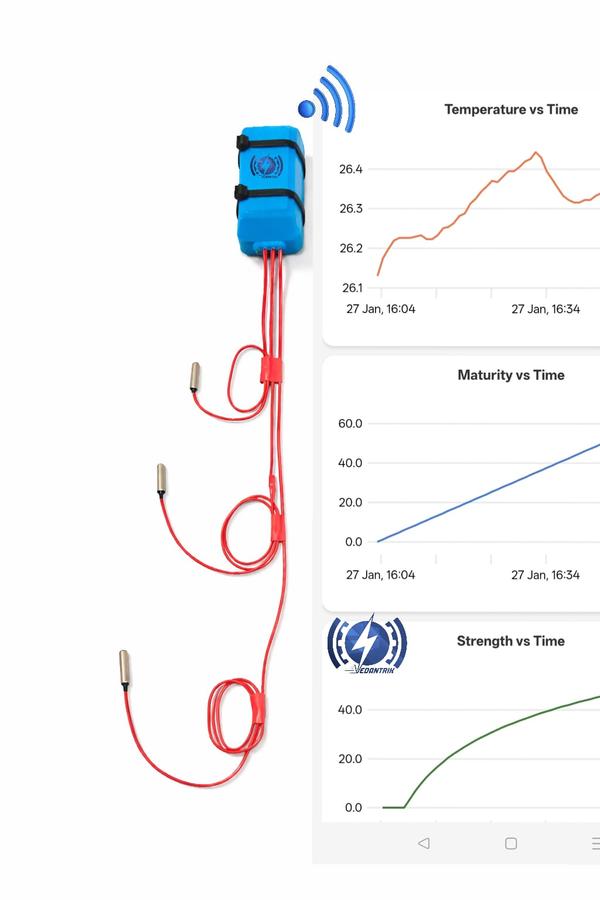
Concrete Maturity meter

Wireless Mass Concrete Temperature Monitoring & Maturity Sensor – VedaLite by Vedantrik Technologies For Temperature controlled concrete and other concrete members. Mass concrete elements such as rafts of High rise buildings, dams, thick foundations, piers, piles, and hot-block castings generate significant internal heat due to the exothermic hydration of cement. If this heat is not properly monitored, thermal gradients develop between the core and surface, leading to thermal stresses, micro-cracking, reduced durability, and long-term structural risks. International standards such as ASTM C1074 (Concrete Maturity Method) explain how temperature history can be used to calculate maturity and strength development using scientific models like the Nurse–Saul and Arrhenius equations. This method allows engineers to predict real-time strength, optimize curing, and make informed decisions about formwork removal and prestressing operations. Introducing VedaLite – Wireless Concrete Temperature & Maturity Sensor VedaLite by Vedantrik Technologies (Mumbai, India) is an advanced wireless concrete temperature monitoring and maturity system designed for mass concrete, high-rise buildings, infrastructure, and precast applications worldwide. This innovative single wireless module is capable of measuring temperature at four critical locations simultaneously and also gives the Idea of thermal gradient: - Ambient temperature - Top of the concrete - Middle of the concrete - Bottom of the concrete This multi-point sensing approach ensures accurate thermal profiling of rafts, dams, foundations, piers, piles, and thick structural elements. Why Wireless Monitoring is Superior Traditional wired temperature monitoring systems face multiple challenges: - Signal errors due to long wire lengths - Wire damage during reinforcement and concreting - Data loss or inaccurate readings - Complex installation and maintenance VedaLite wireless technology eliminates these problems by: - Removing long wire runs - Preventing damage during casting - Ensuring reliable, uninterrupted data - Reducing installation time and labour costs Economical Single-Module Multi-Point Monitoring Unlike conventional systems that require multiple sensors and cables, VedaLite uses a single compact module to monitor four critical points. This makes it: - More economical - Faster to deploy - Easier to manage on large sites - Ideal for high-rise rafts, dams, and infrastructure projects Battery-Operated – No 24/7 Power Dependency VedaLite operates on a long-lasting battery for up to 60 days, which: - Eliminates the need for continuous power supply - Reduces site dependency on generators - Ensures uninterrupted monitoring even in remote locations Real-Time Data, Memory & Graphical Analysis The system features: - Inbuilt memory for continuous data logging - Temperature vs. time graphical representation - Wireless connectivity with mobile phones and laptops - Real-time monitoring from anywhere on site This allows engineers to: - Track temperature rise and fall - Control thermal gradients - Prevent cracking - Make informed construction decisions Sacrificial and Reusable System Options Vedantrik offers flexible solutions: - Low-cost sacrificial wirless Concrete temperature multi-point sensing modules for single-use projects (mostly prefferd as No huge investment or high upfront cost involved) - Reusable transmitter modules where only the sensors are sacrificial and transmitter is Re-Usable with extra cost. This provides cost-effective solutions for both large infrastructure and repetitive construction projects. Maturity & Strength Monitoring for Structural Concrete When used in: - Columns - Beams - Slabs - Precast elements - In-situ structures - PT slabs The same module can provide: - Concrete maturity values - Real-time strength estimation - Reduced dependence on cube testing - Accurate formwork removal timing - Safer prestressing operations As per ASTM C1074, a maturity-strength correlation is established for the specific mix design, enabling reliable strength predictions from day one. Applications - High-rise raft foundations - Mass concrete structures - Dams and spillways - Bridge piers and pile caps - Deep foundations and piles - Hot-weather concrete - Precast plants - PT slabs and structural elements Why Choose Vedantrik Technologies - Wireless, cable-free monitoring - Economical multi-point sensing - Up to 60-day battery operation - Real-time mobile and laptop connectivity - Inbuilt data memory and graphs - Sacrificial and reusable options - Suitable for mass and structural concrete - Developed and deployed in major infrastructure projects Vedantrik Technologies – Mumbai, India Delivering advanced wireless concrete monitoring solutions for projects across India and worldwide.

6814772a5d263414004dd4a4 Card 2

product image
Rebound Hammer

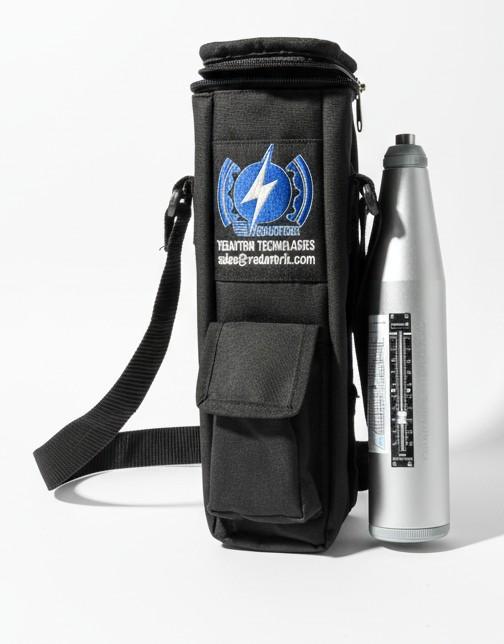
Rebound Hammer Based on the Schmidt mechanism, Vedantrik technologies has developed a compact, durable, and user friendly Rebound Hammer for reliable on-site concrete strength estimation. The instrument complies with various national and international standards like IS-516, ASTM C805, DIN 1048, and BS1881 to ensure consistent and accurate results. The Rebound Hammer is used for non-destructive assessment of concrete quality and uniformity. During the test, the plunger of the hammer is pressed against the surface of the concrete, releasing the spring controlled mass that impacts the surface. The extent of rebound, measured as the rebound number, is directly related to the surface hardness of the concrete. Hence a higher rebound number indicates a harder and stronger concrete. Each hammer is calibrated to ensure the rebound number accurately represents the stiffness of the spring and hardness of the concrete surface. The compressive strength of the concrete can be determined by correlating the average rebound number with the standard graph provided with the hammer. This enables engineers and site professionals to perform quick, reliable, and non-destructive evaluation of concrete strength directly on-site, helping in quality control and uniformity checks across structures. About Rebound Hammer Test: The rebound hammer test, also known as Schmidt hammer test, is a non-destructive testing (NDT) used to assess the compressive strength and surface hardness of the concrete. It was first developed by Ernst Schmidt in the 1950s and has since become one of the most common and widely used tests for compressive strength evaluation of concrete. The main instrument consists of a spring-controlled mass called a plunger that slides on a calibrated scale within the main body. When the plunger of the main body is pressed against a solid surface such as concrete, the spring loaded mass is released, striking the steel plunger in contact with the concrete surface. The mass then rebounds with a consistent and reproducible velocity, and the extent of the rebound is measured on the scale to get the rebound number. This rebound number is then empirically correlated to the compressive strength of the concrete, which is obtained using standard calibration charts or curves provided by National & International standards IS-516, ASTM C805, DIN 1048, and BS1881. The working of the rebound hammer test is based on the elastic rebound of the surface, which depends on the hardness and stiffness of the material being tested. A harder surface will cause greater rebounds, indicating the stronger and denser nature of the concrete, while lower rebounds indicate the opposite. The test is performed by holding the hammer perpendicular to the surface of concrete, ensuring good contact between the plunger and the surface. Multiple readings (usually 9-10 readings) are taken at different points on the same area, to get the average rebound value,for strength estimation. This practice minimises the error and improves the accuracy of the process. However it must be taken into consideration that the test primarily measures the surface hardness, which can be influenced by a variety of factors, and therefore, is an indirect method that requires correlation with laboratory test results. The rebound hammer test can be used in both horizontal and vertical positions, but corrections must be applied depending on the orientation of the hammer, since the gravitational force influences the rebound reading. Furthermore, the calibration of the rebound hammer is also essential before testing to ensure accuracy and consistency in results. The calibration is typically done using a standard steel anvil. The interpretation of the test result is done using standard guidelines given by IS-516, ASTM C805, DIN 1048, and BS1881. Purpose of Rebound Hammer test: 1. To estimate the compressive strength of the concrete without damaging the structure. 2. Helps identify variations in concrete quality across different areas. 3. To estimate the surface hardness of the concrete. 4. Allows comparison between old and new concrete structures for maintenance and repairs. Principle of Rebound Hammer Test: The rebound hammer test or Schmidt hammer test is fundamentally based on the principle of surface hardness measurement and the correlation between the elastic properties of concrete and its compressive strength. The underlying mechanism involves the kinetic interaction between a standardised mass, which is propelled by a calibrated spring mechanism, and the concrete surface. The extent to which this mass rebounds after the impact is quantified as rebound number, which serves as an indirect indicator of the materials elastic stiffness and surface hardness. These surface mechanical properties are directly linked to the concrete’s density, degree of compaction, and the continuity of the cementitious matrix, all of which in conjunction influence the compressive strength. When the impact energy is applied on the surface of the concrete surface, a portion of this energy is absorbed within the near-surface zone, resulting in micro-elastic deformation and localised stress wave propagation. The remaining portion of the impact energy is restored as rebound energy, which propels the hammer backward. The magnitude of the rebound energy is controlled by the concrete’s capacity to elastically store and release strain energy. In denser and more homogeneous concrete, with well hydrated cementitious matrix and strong inter-facial transition zone, the deformation is majorly elastic and reversible leading to higher rebound value. In addition, the local stiffness of the impact region determines the proportion of impact energy that is elastically returned. The relationship can be conceptually linked to the material’s stress-strain response under short duration. Although the rebound process does not represent the true static compression, the local stress distribution beneath the contact point momentarily reaches the magnitude approach the true compressive strength of the surface layer. Consequently, the rebound number acts as an indirect measurement of the mechanical integrity, particularly within the depth of 10-20 mm at the contact surface. The rebound value is sensitive to cementitious matrix, aggregate characteristics, along with hardness, angularity and gradation. Hence, the stress wave generated during the impact propagates through the heterogeneous micro-structures, encountering reflection and attenuation at the materials interface. Moreover the materials surface condition and moisture state, affects the damping characteristics of the concrete. Therefore, a dry concrete, due to reduced capillary saturation and higher stiffness at the inter-facial zones yield higher rebound number. Whereas a saturated concrete surface facilitates localised energy absorption at the damped regions lowering stiffness at the inter-facial zones yielding a lower rebound number. As such, the estimation of strength of concrete by rebound hammer method cannot be held to be very accurate and probable accuracy of prediction of concrete strength in a structure is ± 25 percent. Measurement of rebound Hammer test: The measurement in a rebound hammer test is taken in terms of the rebound number, which indicates the hardness of the concrete surface. Multiple readings (usually 10 to 12) are taken on a selected area of the concrete surface. The average rebound number is then calculated after discarding any unusually high or low readings. This average value represents the surface hardness of the concrete and is later correlated with compressive strength using a calibration chart or curve provided by the hammer manufacturer or established as per IS 13311 (Part 2):1992. Corrections are applied for the angle of testing (horizontal, upward, or downward), surface condition, and moisture content before interpreting the final result. Components of rebound hammer 1. Rebound Hammer (Schmidt Hammer): The main testing instrument contains a spring-loaded mass and plunger used to impact the concrete surface and measure the rebound number. 2. Concrete Surface (Test Area): The prepared surface of the concrete member (wall, slab, beam, or column) on which the test is conducted. 3. Calibration Anvil: A standard steel anvil used for periodic calibration of the rebound hammer to ensure accuracy and consistency of readings. 4. Correction Charts / Graphs: Reference charts (provided by the manufacturer or as per IS 13311) used to adjust rebound numbers for testing angle (horizontal, vertical upward/downward) and surface condition, and to correlate them with compressive strength. Standard procedure: Overview 1. Surface Preparation The concrete surface should be clean, smooth, and free from dust, loose particles, or plaster. Rough or uneven areas should be leveled to ensure accurate readings. 2. Positioning the Hammer Hold the rebound hammer perpendicular to the test surface. Note the orientation whether it's horizontal, vertical upward, or vertical downward as it affects the reading. 3. Taking Readings Press the hammer plunger against the surface and release it to impact the concrete. Record the rebound number from the scale or digital display. Take at least 10–12 readings in the test area and discard unusually high or low values. 4. Calculating the Average Rebound Number Compute the average of the obtained readings to represent the surface hardness of the concrete. 5. Applying Corrections Adjust the average rebound number for testing angle, surface condition, and moisture content using correction charts provided in the code or by the manufacturer. Result interpretation of the rebound hammer test: The average rebound number, after taking multiple readings and applying necessary corrections for testing angle, surface condition, and moisture content, is compared with a calibration chart provided by the manufacturer or various Standards to estimate the compressive strength. It is important to note that this method gives only an approximate value of concrete strength and is not absolute; the results can have an accuracy variation of ± 25% (as mentioned in IS 13311 (Part 2):1992), depending on factors such as concrete type, surface smoothness, and testing conditions. For critical assessments, rebound hammer results should be verified with core tests (IS 516). Factors influencing the Rebound hammer test: 1. Concrete Age: Younger concrete is softer, giving lower rebound numbers. 2. Concrete Mix and Aggregate Type: Hard aggregates increase rebound; lightweight or soft aggregates reduce it. 3. Surface Hardness and Carbonation: Carbonated or overly hard surfaces give higher rebound values than the actual strength. 4. Moisture Content of Concrete: Dry surfaces produce higher readings than wet surfaces. 5. Testing Angle/Orientation: Upward, downward, or horizontal testing affects readings due to gravity. 6. Curing Conditions: Poor curing may reduce surface strength, affecting the rebound number. Source of error in Rebound hammer test: These are mistakes or procedural issues during testing that can lead to inaccurate readings: 1. Improper Surface Preparation: Dust, dirt, or uneven surfaces can distort results. 2. Incorrect Hammer Handling: Wrong angle, inconsistent pressure, or movement during impact. 3. Instrument Calibration Errors: Using a hammer that is not calibrated to the standard reference anvil. 4. Inconsistent Reading Locations: Testing over cracks, voids, or edges instead of a representative area. 5. Operator Error: Misreading the scale, recording errors, or insufficient number of impacts. Technical Specification: Range: 10N/mm2 - 70N/mm2 Standard Impact Energy: 2.207 J Least Count: 2 rebound number Weight (mass): 800g approximately. Dimension: Dia 60mm, length 1 feet approximately. As a best Rebound Hammer Manufacturer in India we have supplied in Mumbai, Pune, Nashik, Aurangabad, Surat, Vadodara, Ahmedabad, Indore, Bhopal, Nagpur, Jaipur, Ludhiana, Ghaziabad, Delhi, Lucknow, Kanpur, Prayagraj, Patna, Ranchi, Dhanbad, Bengaluru, Hyderabad, Chennai, Coimbatore, Madurai, Visakhapatnam, Kolkata, and Srinagar. Also we have supplied a range of products in Dubai, Abu Dhabi, the United Arab Emirates, Oman, Saudi Arabia, Kuwait, and Iran. We also serve clients in Singapore, Indonesia, Thailand, and other international locations.

Subcategory Tags

Anvil For Rebound Hammer Calibration in India Anvil For Rebound Hammer Calibration Manufacturer in India Anvil For Rebound Hammer Calibration Manufacturer in Mumbai Half-Cell Corrosion Potential Meter Manufacturer in India Half-Cell Corrosion Potential Meter manufacturer in Mumbai Half Cell Corrosion Potentiomete Concrete Half Cell Corrosion Tester Concrete Corrosion Potentiometer Half Cell Potential Tester Concrete Corrosion Measurement Device Concrete Rebar Corrosion Tester Concrete Corrosion Monitoring Equipment Concrete Corrosion Testing Instrument Copper Sulfate Half Cell Electrode Concrete Corrosion Potential Meter Concrete Durability Tester Concrete Corrosion Detection Device Reinforcement Corrosion Tester Concrete Half Cell Testing Equipment Concrete Corrosion Monitoring System Concrete Corrosion Analyzer Concrete Rebar Corrosion Measurement Equipment Concrete Structure Corrosion Tester Concrete Corrosion Evaluation Device Concrete Half Cell Potential Tester Concrete Rebar Potential Measurement Device Half Cell Potential Measurement Instrument Concrete Corrosion Analysis Equipment Concrete Durability Testing Equipment Concrete Half Cell Measurement System Concrete Potential Measurement Device Concrete Electrochemical Testing Equipment Concrete Steel Corrosion Tester Concrete Half Cell Electrode Tester Concrete Rebar Corrosion Analyzer Concrete Corrosion Inspection Instrument Reinforcement Corrosion Monitoring Equipment Concrete Surface Potential Measurement Device Concrete Corrosion Detection Instrument Concrete Corrosion Monitoring Device Half Cell Corrosion Measurement Kit Concrete Half Cell Potential Measurement System Concrete Rebar Corrosion Mapping Equipment Concrete Corrosion Evaluation Instrument Concrete Rebar Corrosion Detection Tester Concrete Corrosion Mapping Device Concrete Structure Corrosion Analyzer Concrete Electrical Potential Tester Half Cell Potential Measurement Device Concrete Rebar Potential Mapping Instrument Concrete Non Destructive Corrosion Tester Concrete Corrosion Control Equipment Concrete Half Cell Reference Electrode Concrete Rebar Corrosion Assessment Device Concrete Corrosion Measurement System Rapid Chloride Migration Test (RCMT) Apparatus Manufacturer in India Rapid Chloride Migration Test (RCMT) Apparatus Manufacturer in Mumbai Rapid Chloride Migration Test Chloride Ion Penetration Tester Concrete Chloride Tester Chloride Diffusion Test Concrete Ion Migration Tester Chloride Ion Migration Analyzer Concrete Chloride Analyzer Concrete Chloride Diffusion Tester Concrete Chloride Permeability Meter Chloride Ion Diffusion Test Equipment Concrete Durability Analyzer Rapid Chloride Diffusion Test Concrete Permeability Analyzer Chloride Ion Test Machine Concrete Ion Transport Tester Concrete Resistance Tester Concrete Electrical Conductivity Tester Concrete Durability Measurement Chloride Ion Penetration Analyzer Rapid Chloride Test Machine Concrete Ion Migration Analyzer Concrete Resistance Measurement Device Concrete Durability Evaluation System Concrete Permeability Measuring Instrument Chloride Penetration Measurement Device Concrete Diffusion Analyzer Concrete Durability Test Apparatus Cement Durability Testing Equipment Chloride Ion Resistance Tester Concrete Transport Property Tester Chloride Ion Diffusion Analyzer Concrete Durability Evaluation Tester Concrete Electrical Resistivity Tester Rapid Chloride Analyzer Chloride Ion Migration Measurement Concrete Permeability Measurement Device Cement Chloride Analyzer Concrete Ion Transport Analyzer Concrete Chloride Penetration Test Rapid Chloride Penetration Test (RCPT) Apparatus Manufacturer in India RCPT Apparatus Concrete Durability RCPT test Procedure RCPT Manufacturer RCPT calibration services RCPT result interpretation RCPT testing charges RCPT testing Services Concrete Resistivity meter RCPT manufacturer in Mumbai rcpt manual rcpt limit Rapid Chloride Penetration Test RCPT Test Equipment Concrete Chloride Penetration Tester Concrete Permeability Tester Chloride Ion Diffusion Test Concrete Ion Penetration Analyzer Chloride Permeability Test Equipment Rapid Chloride Permeability Tester Concrete Durability Testing Machine Concrete Electrical Resistance Tester Concrete Resistivity Tester Concrete Durability Measurement Device Concrete Corrosion Resistance Tester Concrete Durability Evaluation Equipment Chloride Ion Migration Test Concrete Penetration Resistance Tester Concrete Permeability Measurement Concrete Diffusion Test Apparatus Concrete Electrical Conductivity Meter Concrete Durability Test Machine RCPT Testing Apparatus Concrete Permeability Test Apparatus Concrete Durability Test Equipment Chloride Ion Diffusion Measurement Concrete Permeability Measurement System Concrete Durability Testing Instrument Concrete Chloride Resistance Tester Concrete Ion Diffusion Tester Concrete Temperature monitoring for Concrete Maturity meter Manufacturer in India Concrete Temperature monitoring for Concrete Maturity meter Manufacturer in Mumbai Mass concrete temperature Monitoring services ACI 305 Concrete curing—Cure concrete in accordance with ACI 308.1. Protection period Acceptable protection materials to prevent excessive temperature drop Maximum allowable concrete temperature Limit the maximum allowable fresh concrete temperature to 35 °C (95 °F) concrete mixture Mass Concrete Temperature Monitoring Concrete Temperature Sensor Concrete Temperature Monitoring System Concrete Curing Temperature Sensor Concrete Temperature Logger Concrete Temperature Data Logger Concrete Thermal Monitoring System Concrete Temperature Recorder Mass Concrete Temperature Sensor Concrete Curing Temperature Logger Concrete Thermal Sensor Concrete Temperature Measurement Device Concrete Temperature Monitoring Device Wireless Concrete Temperature Sensor Smart Concrete Temperature Sensor Concrete Pour Temperature Monitoring Concrete Temperature Monitoring Equipment Concrete Curing Monitoring System Concrete Internal Temperature Sensor Concrete Structure Temperature Sensor Concrete Thermal Monitoring Device Concrete Temperature Testing Equipment Concrete Heat Monitoring System Concrete Thermal Control System Concrete Temperature Tracking Device Mass Concrete Temperature Logger Concrete Heat Measurement Device Concrete Curing Data Logger Concrete Temperature Control System Concrete Temperature Measuring Instrument Concrete Pour Monitoring System Concrete Thermal Analysis Sensor Concrete Monitoring Data Logger Construction Temperature Monitoring System Concrete Maturity Temperature Sensor Concrete Temperature Recording Device Concrete Curing Temperature Monitoring Wireless Temperature Monitoring For Concrete Concrete Thermal Performance Sensor Concrete Temperature Control Logger Concrete Temperature Analysis Equipment Concrete Curing Heat Sensor Concrete Hydration Temperature Sensor Concrete Temperature Measurement System Concrete Curing Thermal Logger Concrete Internal Heat Monitoring Device Smart Temperature Sensor For Concrete Rebound hammer anvil Calibration anvil for rebound hammer Standard steel anvil rebound hammer Anvil HRC 66 Test anvil for rebound hammer India Anvil For Rebound Hammer Calibration Rebound Hammer Calibration Anvil Concrete Test Hammer Anvil Schmidt Hammer Calibration Anvil Rebound Hammer Calibration Equipment Concrete Rebound Hammer Calibration Tool Concrete Test Hammer Calibration Device Calibration Anvil For Rebound Hammer Rebound Hammer Calibration Apparatus Concrete Rebound Hammer Testing Equipment Concrete Strength Tester Calibration Anvil Concrete Hardness Tester Calibration Tool Concrete Testing Equipment Rebound Hammer Testing Anvil Concrete Hammer Calibration Device Concrete Testing Instrument Calibration Equipment For Rebound Hammer Concrete Test Anvil Standard Calibration Anvil Laboratory Calibration Anvil Concrete Rebound Test Anvil Rebound Hammer Accessory Concrete Testing Calibration Device Rebound Hammer Calibration Kit Concrete Surface Testing Equipment Concrete Strength Testing Equipment Concrete Hammer Calibration Block Concrete Impact Testing Equipment Concrete Calibration Equipment Concrete Test Hammer Accessories High Precision Calibration Anvil Concrete Laboratory Equipment Construction Material Testing Equipment Rebound Hammer Calibration Standard Concrete Test Hammer Standard Anvil Concrete Testing Calibration Instrument Rebound Hammer Calibration Machine Concrete Strength Measurement Equipment Concrete Hardness Testing Device Concrete Test Equipment For Calibration Cement Testing Calibration Anvil Concrete Hammer Calibration Standard Concrete Rebound Hammer Calibration Block Testing Anvil For Schmidt Hammer Concrete Quality Testing Equipment Rebound Hammer Test Calibration Tool Concrete Testing Calibration Tool Construction Testing Calibration Equipment Concrete Test Hammer Calibration Accessory Laboratory Concrete Calibration Equipment Curing Tank Temperature Controller Concrete Curing, IS 516 Curing Tank Temperature Monitoring Temperature Monitoring Controller Smart Temperature Controller Device Temperature Controller in India Curing Tank Heater Controller Concrete Curing Tank Cement Curing Tank Concrete Curing Equipment Laboratory Curing Tank Digital Curing Tank Concrete Curing Tank Controller Water Bath Temperature Controller Concrete Curing System Cement Testing Equipment Concrete Curing Temperature Controller Concrete Water Tank Concrete Curing Bath Automatic Curing Tank Thermostatic Curing Tank Concrete Temperature Controller Digital Temperature Controller Cement Curing Equipment Concrete Curing Temperature Control System Water Tank Temperature Controller Laboratory Water Bath Controlled Temperature Curing Tank Cement Curing Water Bath Concrete Curing Tank With Heater Concrete Testing Water Bath Concrete Temperature Control Unit Digital Concrete Curing System Concrete Test Curing Tank Concrete Sample Curing Tank Concrete Specimen Curing Tank Thermostatic Water Bath For Concrete Concrete Curing Device Concrete Curing Temperature Regulation System Concrete Curing Bath Controller Concrete Temperature Regulation Equipment Laboratory Temperature Controller Concrete Test Equipment For Curing Automatic Temperature Controlled Tank Concrete Testing Bath Controller Concrete Curing Temperature Equipment Concrete Temperature Maintenance System Concrete Temperature Control Machine Concrete Curing Water Bath Controller Rebound Hammer Schmidt Hammer Concrete rebound hammer Non-destructive test concrete Rebound hammer in India Rebound hammer in Mumbai Concrete Strength Rebound Hammer Schmidt Rebound Hammer Concrete Test Hammer Concrete Strength Tester Concrete Hardness Tester Concrete Surface Hardness Tester Concrete Strength Testing Hammer Concrete Quality Tester Concrete Hardness Testing Tool Building Material Tester Concrete Strength Measurement Tool Concrete Surface Tester Portable Rebound Hammer Manual Rebound Hammer Digital Concrete Hammer Concrete Hardness Measuring Device Civil Engineering Testing Equipment Construction Material Tester Concrete Compressive Strength Tester Concrete Hardness Measuring Instrument High Precision Rebound Hammer Non Destructive Concrete Tester Concrete Strength Measuring Device Concrete Surface Hardness Meter Civil Engineering Test Instrument Concrete Testing Machine Cement Structure Tester Digital Concrete Rebound Hammer Concrete Strength Analyzer Concrete Strength Evaluation Tool Portable Concrete Tester Construction Quality Testing Tool Concrete Material Testing Equipment Concrete Non Destructive Testing Tool Concrete Strength Inspection Device Concrete Quality Measurement Tool Concrete Surface Impact Tester Concrete Strength Evaluation Equipment Concrete Hardness Measurement Equipment Concrete Maturity Meter Concrete Maturity Monitoring System Concrete Maturity Device in India Concrete Maturity Device in Mumbai Real Time Concrete Maturity Monitoring Maturity In Mass Concrete Concrete Strength Maturity Curve Concrete Maturity Testing Digital Maturity Meter Wireless Concrete Sensor Concrete Curing Monitor Smart Concrete Sensor Concrete Maturity System Concrete Strength Monitor Concrete Monitoring Device Concrete Data Logger Concrete Strength Estimator Concrete Quality Sensor Concrete Maturity Logger Real Time Concrete Sensor Wireless Maturity Meter Concrete Temperature Meter Concrete Maturity Device Concrete Maturity Indicator Concrete Maturity Equipment Concrete Strength Measurement Smart Maturity Sensor Concrete Quality Monitor Concrete Strength Tracking Concrete Hardening Sensor Concrete Temperature Tracking Concrete Performance Monitor Concrete Test Equipment Civil Engineering Sensor Concrete Curing Measurement Concrete Curing Analyzer Concrete Strength Sensor Concrete Curing Data System Cement Maturity Meter Concrete Maturity Technology Concrete Maturity Analyzer Concrete Curing Control System Ultrasonic Pulse Velocity Test Ultrasonic Pulse Velocity Device UPV Concrete Test UPV Non‐destructive Testing Concrete UPV Device in Mumbai UPV Testing Machine Portable Ultrasonic Pulse Meter Ultrasonic Pulse Velocity Equipment Ultrasonic Pulse Velocity in India Ultrasonic Pulse Velocity in Mumbai Ultrasonic Pulse Velocity Meter Concrete Ultrasonic Tester Ultrasonic Concrete Tester Concrete Pulse Velocity Tester Concrete Ultrasonic Pulse Velocity Tester Ultrasonic Concrete Testing Equipment Concrete Non Destructive Tester Ultrasonic Pulse Velocity Testing Machine Ultrasonic Concrete Testing Instrument Ultrasonic Non Destructive Testing Equipment Ultrasonic Pulse Velocity Analyzer Concrete Velocity Measurement Device Ultrasonic Concrete Testing Device Concrete Structure Testing Equipment Concrete Quality Testing Instrument Ultrasonic Pulse Velocity Apparatus Concrete Integrity Tester Ultrasonic Concrete Analyzer Concrete Evaluation Equipment Concrete Crack Detection Tester Ultrasonic Testing For Concrete Concrete Non Destructive Testing Instrument Concrete Defect Detection Equipment Concrete Strength Evaluation Device Ultrasonic Wave Tester For Concrete Ultrasonic Concrete Measuring Instrument Concrete Condition Monitoring Device Concrete Ultrasonic Measurement Equipment Portable Ultrasonic Pulse Velocity Tester Digital Ultrasonic Pulse Velocity Meter Concrete Pulse Velocity Measuring Instrument Concrete Quality Measurement Equipment Concrete NDT Testing Equipment Concrete Crack Analyzer Ultrasonic Pulse Velocity Testing Instrument Concrete Integrity Measurement Device Ultrasonic Concrete Test Meter Concrete Non Destructive Test Device Ultrasonic Concrete Pulse Analyzer Concrete Wave Velocity Tester Calibration rod for UPV UPV calibration rod UPV equipment calibration standard rod UPV calibration rod in India UPV calibration rod in Mumbai Calibration Rod For Ultrasonic Pulse Velocity Meter Ultrasonic Pulse Velocity Meter Calibration Rod Concrete Ultrasonic Tester Calibration Rod Ultrasonic Testing Calibration Rod Concrete Testing Equipment Calibration Rod Ultrasonic Concrete Calibration Rod Concrete Pulse Velocity Tester Calibration Rod Ultrasonic Pulse Velocity Tester Calibration Rod Concrete Non Destructive Tester Calibration Rod Ultrasonic Pulse Velocity Testing Equipment Calibration Rod Concrete Ultrasonic Pulse Velocity Calibration Rod Ultrasonic Testing Equipment Calibration Rod Concrete Quality Tester Calibration Rod Concrete Strength Tester Calibration Rod Ultrasonic Pulse Velocity Analyzer Calibration Rod Concrete Velocity Measurement Calibration Rod Ultrasonic Concrete Testing Device Calibration Rod Concrete Structure Testing Calibration Rod Ultrasonic Tester Calibration Rod For Concrete Concrete Integrity Tester Calibration Rod Concrete Crack Detection Calibration Rod Concrete Non Destructive Testing Equipment Calibration Rod Concrete Homogeneity Tester Calibration Rod Concrete Defect Detection Calibration Rod Concrete Strength Evaluation Device Calibration Rod Ultrasonic Wave Tester Calibration Rod Concrete Testing Machine Calibration Rod Ultrasonic Concrete Measuring Instrument Calibration Rod Concrete Condition Monitoring Device Calibration Rod Concrete Ultrasonic Measurement Equipment Calibration Rod Portable Ultrasonic Pulse Velocity Tester Calibration Rod Concrete Pulse Velocity Measuring Instrument Calibration Rod Concrete Quality Measurement Equipment Calibration Rod Concrete NDT Testing Equipment Calibration Rod Concrete Crack Analyzer Calibration Rod Ultrasonic Pulse Velocity Testing Instrument Calibration Rod Concrete Durability Tester Calibration Rod Concrete Integrity Measurement Device Calibration Rod Construction Material Testing Equipment Calibration Rod Civil Engineering Test Equipment Calibration Rod Ultrasonic Concrete Test Meter Calibration Rod Ultrasonic Concrete Pulse Analyzer Calibration Rod Concrete Structural Evaluation Tester Calibration Rod Concrete Wave Velocity Tester Calibration Rod Digital Concrete Ultrasonic Tester Calibration Rod Concrete Ultrasonic Test Equipment Calibration Rod Concrete Structural Integrity Calibration Rod Ultrasonic NDT Calibration Rod For Concrete Concrete Maturity Concrete Maturity Method Concrete Maturity Testing, Maturity Method Concrete Strength Maturity Sensor for Concrete Nurse-Saul Maturity Formula Temperature & Time Factor Method Concrete Maturity How To Calibrate Concrete Maturity Weighted Maturity Function Concrete ASTM C1074 Maturity Method Datum Temperature Concrete Maturity Temperature Sensor in Concrete Maturity Real Time Concrete Maturity Monitoring, Maturity In Mass Concrete Concrete Strength Monitoring using concrete maturity meter Mass concrete temperature monitoring Nurse Saul Maturity Arrhenius maturity method Equivalent age what is concrete maturity how calibrate concrete maturity meter how to use concrete maturity meter can maturity meter reduce cube Dependency Curing tank temperature control system Concrete laboratory curing equipment Three phase curing tank heater Single phase curing tank heater SS316 immersion heater for curing tank Concrete curing tank heater NABL curing tank temperature controller Concrete cube curing tank controller Curing tank temperature controller
Phone Number

+917304519092

Email Address sales@vedantrik.com

Mon-Thu: 10 AM - 2 PM • Fri: 3 PM - 7AM

Other Website Visit our other website
Address 311, Sagar Industrial Estate, Western Express Hwy, opp. Dahisar toll Naka, Diamond Industrial Estate, Dahisar East, Mumbai, Maharashtra 400068, India

Mumbai, India, 400068